
Forest bathing: what shinrin-yoku is and how to try it
Not a hike and not a workout: forest bathing means walking slowly and taking in the forest with every sense. Where the idea comes from and how to try it.
There is a particular kind of quiet that only exists among trees: the creak of a trunk in the wind, the soft give of needles underfoot, light moving across moss. Forest bathing is the art of noticing all of it. The idea comes from Japan, where it is called , and it asks for nothing more than time, attention and a forest. No equipment, no fitness level and no destination are required.
Where the term comes from
Shinrin means forest and yoku means bath, so shinrin-yoku is a bath in the forest, or rather in its atmosphere. The term was introduced in 1982 by Japan’s Forestry Agency, which wanted to encourage people to spend unhurried time among trees and to enjoy the country’s forests in a new way.
The first forest bathing event took place that autumn in the Akasawa Natural Recreation Forest in Nagano Prefecture, in the Kiso Valley. Its tall stands of , Japanese cypress, are often described as the birthplace of the practice. From there the idea travelled around the world, and in German speaking countries it is now widely known as .
Not a hike, but a slow walk
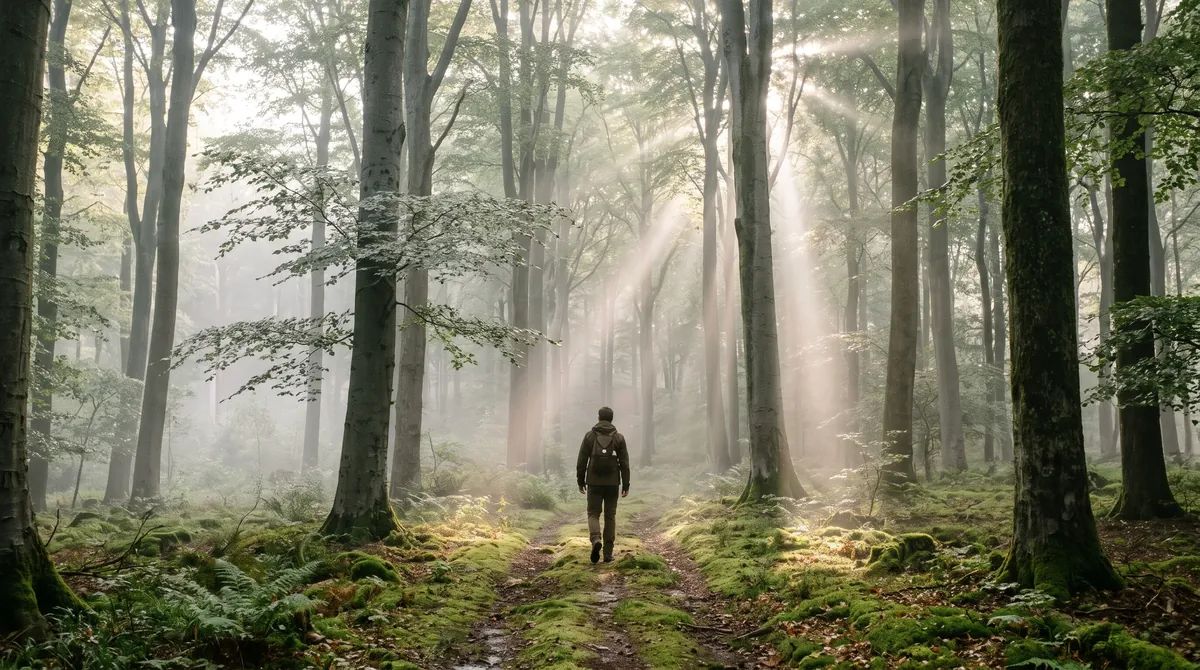
Forest bathing looks almost nothing like a hike. There is no summit to reach and no distance to cover. A group on a guided walk may move only a few hundred metres in an hour, stopping often, looking closely, sometimes simply standing still.
The point is to let the senses lead. You notice the different greens of beech, spruce and fern, the cool air rising from a stream, the smell of resin on a warm day or damp earth after rain. Many people find it calming, and many simply enjoy the feeling of having been somewhere fully, rather than passing through on the way to somewhere else.
There is no summit to reach and no distance to cover.
How to try it yourself
You do not need a guide to begin. A quiet morning, a forest close to home and a little patience are enough. This simple sequence is a good way to start:
- Choose a quiet forest, ideally away from roads, with soft paths and a few places to sit.
- Put your phone on silent and leave it in your bag for the whole walk.
- Walk slowly, much more slowly than usual, and let your breathing settle into the pace.
- Stop every few minutes. Listen to birds, wind and water, and count how many different sounds you can hear.
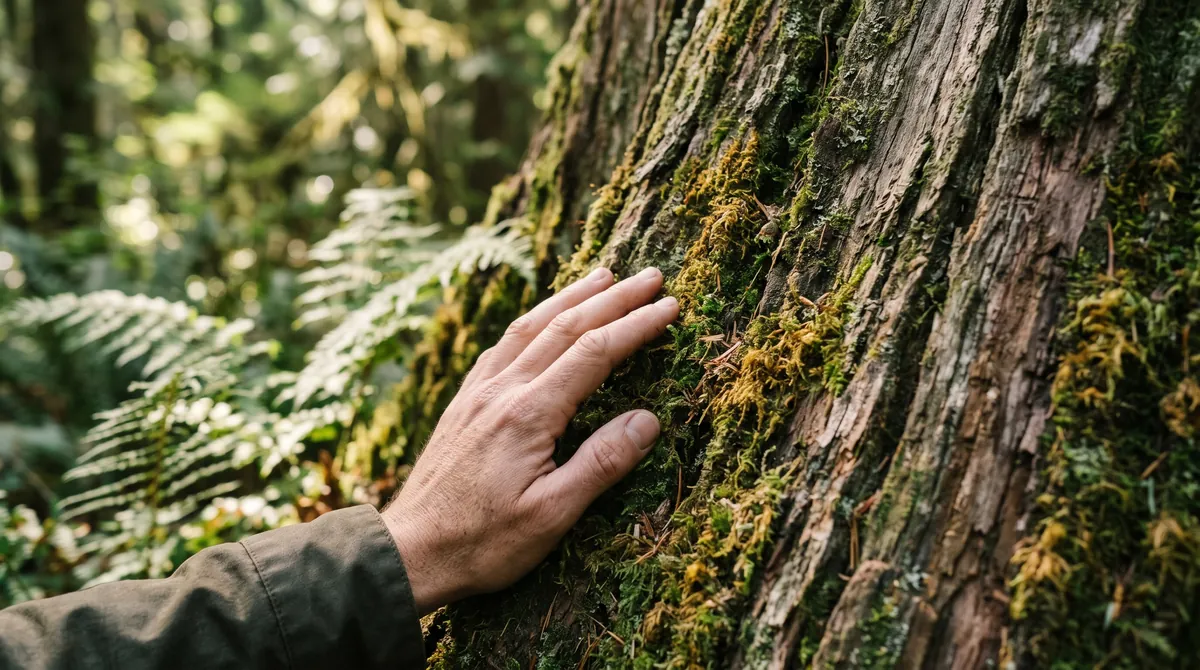
- Touch the bark of different trees, run your fingers over moss, pick up a cone or a leaf and look at it closely.
- Find a comfortable spot, sit down and stay there for about twenty minutes, simply watching and listening.
- End gently, perhaps with a warm drink from a flask, before walking back at the same unhurried pace.
The first time can feel a little unusual, especially if you are used to walking briskly with a goal in mind. That is perfectly normal. After a while the pace starts to feel natural, and small things come into focus: a beetle crossing the path, the pattern of lichen on a stone, the way the wind moves through the canopy long before you feel it on your face. Two hours is a generous length for a first attempt, but even half an hour in a city park woodland can give you a taste of it.
Guided walks in Europe
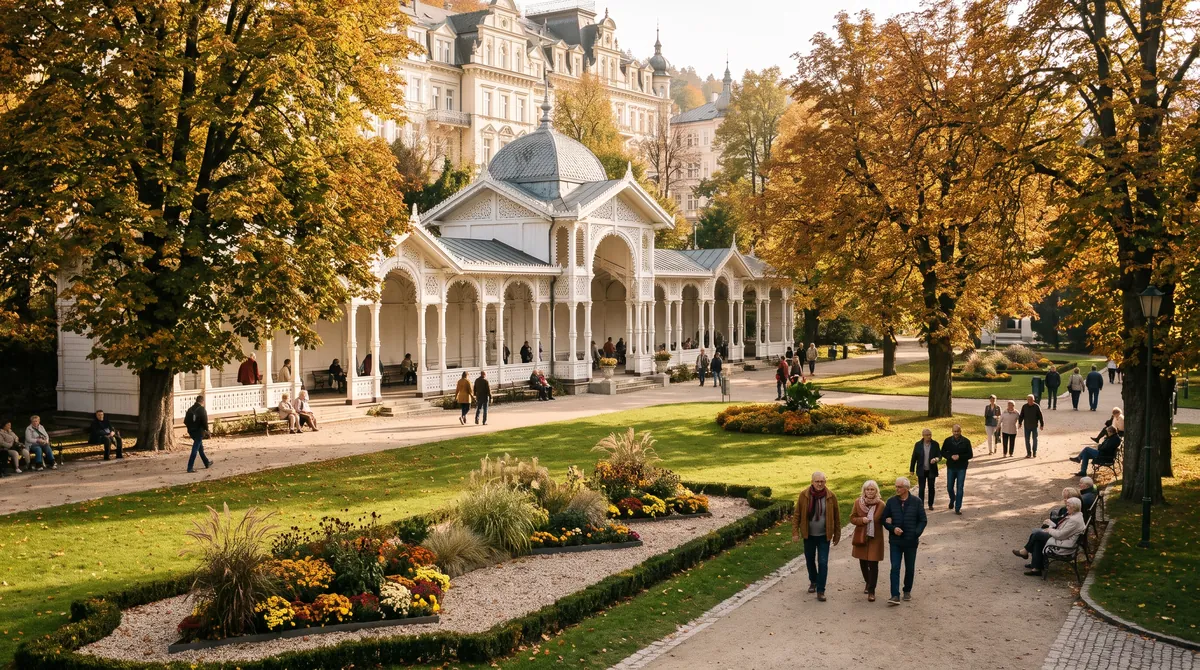
If you would like some company and gentle instruction, guided walks are now offered in many European regions. Tourist offices, nature parks, national park centres and spa towns frequently organise them, often at weekends and in small groups. Guides lead short exercises in looking, listening and breathing, and the walks usually end with a quiet moment together.
A guided walk is a good introduction, especially if you find it hard to slow down on your own. Ask at the local tourist office about current dates, and look out for walks offered in English if your German is still a work in progress.
Good forests in Germany and Austria
Almost any quiet forest will do, but some regions feel made for it. In Germany, the Bavarian Forest offers vast stretches of woodland where nature is left to follow its own course, and the Black Forest combines dark spruce slopes with clear streams and high moorland. The Palatinate Forest in the southwest is a wonderful choice for long, peaceful walks among beech and oak, with sandstone rocks between the trees.
In Austria, the Wienerwald begins at the edge of Vienna and has been a UNESCO since 2005, so a forest bath is possible within reach of the city by tram and bus. The Waldviertel, whose name means forest quarter, spreads across the north of Lower Austria with granite boulders, ponds and quiet woods, and the wooded hills of the Bregenzerwald in Vorarlberg add alpine views to the mix.
The forest in every season
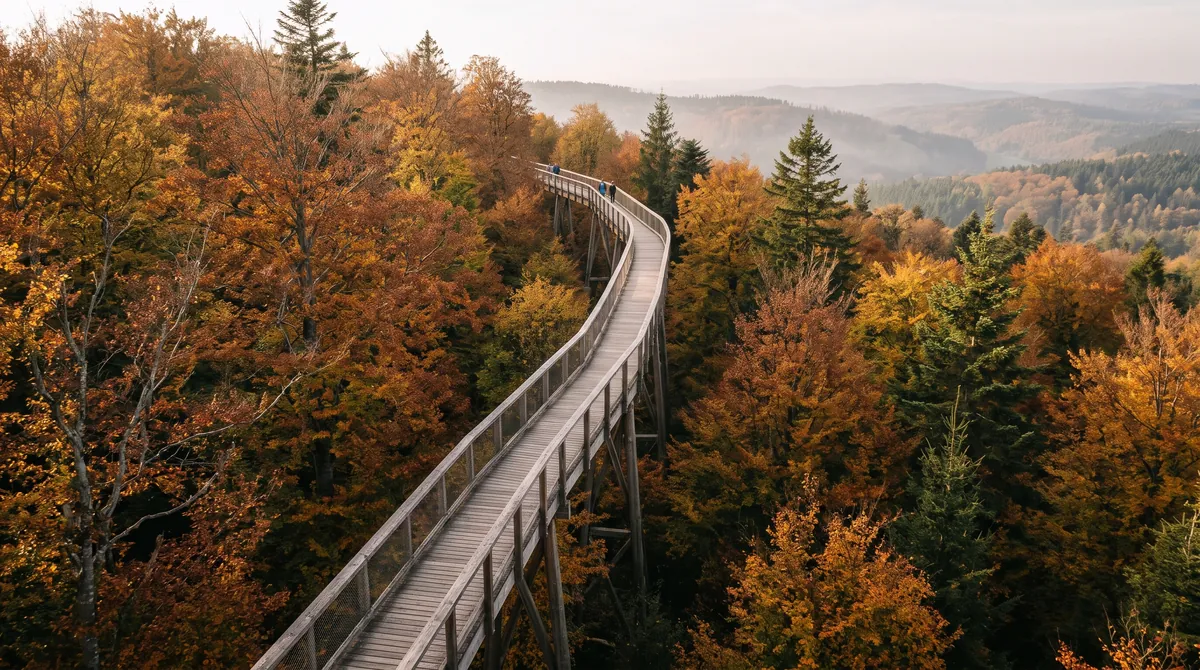
Each season brings its own forest. Spring is a time of fresh, almost luminous beech leaves and carpets of wild garlic and wood anemones. Summer offers deep shade and cool air on the hottest days. Autumn is perhaps the richest season of all, with golden larches, the scent of fallen leaves and mushrooms, and soft, low light. Winter forests are hushed and spacious, and a walk through snow-covered spruce has a stillness all of its own.
Whatever the season, dress in layers, wear shoes that can cope with mud and allow more time than you think you need. Forest bathing rewards those who are in no hurry to leave.
Words in this article
- Shinrin-yoku
- Japanese for forest bathing, a bath in the atmosphere of the forest; the term dates from 1982.
- Waldbaden
- The German word for forest bathing, widely used in Germany, Austria and Switzerland.
- Hinoki
- Japanese cypress, a fragrant conifer that forms the tall stands of the Akasawa forest.
- Biosphere reserve
- A UNESCO designated region where nature conservation and everyday life, farming and forestry are combined.
Questions readers ask
Is forest bathing the same as hiking?
No. Hiking is about covering distance, reaching a viewpoint or a hut. Forest bathing is about slowing down and taking in the forest with all your senses. A forest bathing walk may cover only a few hundred metres in an hour, with frequent stops to listen, touch and look. It suits all ages and requires no particular fitness.
Do you need a guide to try forest bathing?
Not at all. Anyone can try it alone with a quiet forest, comfortable clothes and some time. A guided walk can be a pleasant introduction, though, because a guide suggests small exercises that make it easier to slow down. Many tourist offices, nature parks and spa towns offer such walks, so ask locally about current dates.
What should you wear for forest bathing?
Comfortable, layered clothing that you do not mind getting a little dirty, plus sturdy shoes that can handle mud and roots. Because you move slowly and sit still for a while, you will feel cooler than on a normal walk, so bring an extra layer. A small mat or cushion to sit on and a flask of something warm make it even more comfortable.