
A green weekend: national parks and forest stays in Germany and Austria
Treetop walks, wild valleys and quiet cabins: five forest national parks in Germany and Austria for a weekend of fresh air, with ideas for planning by train.
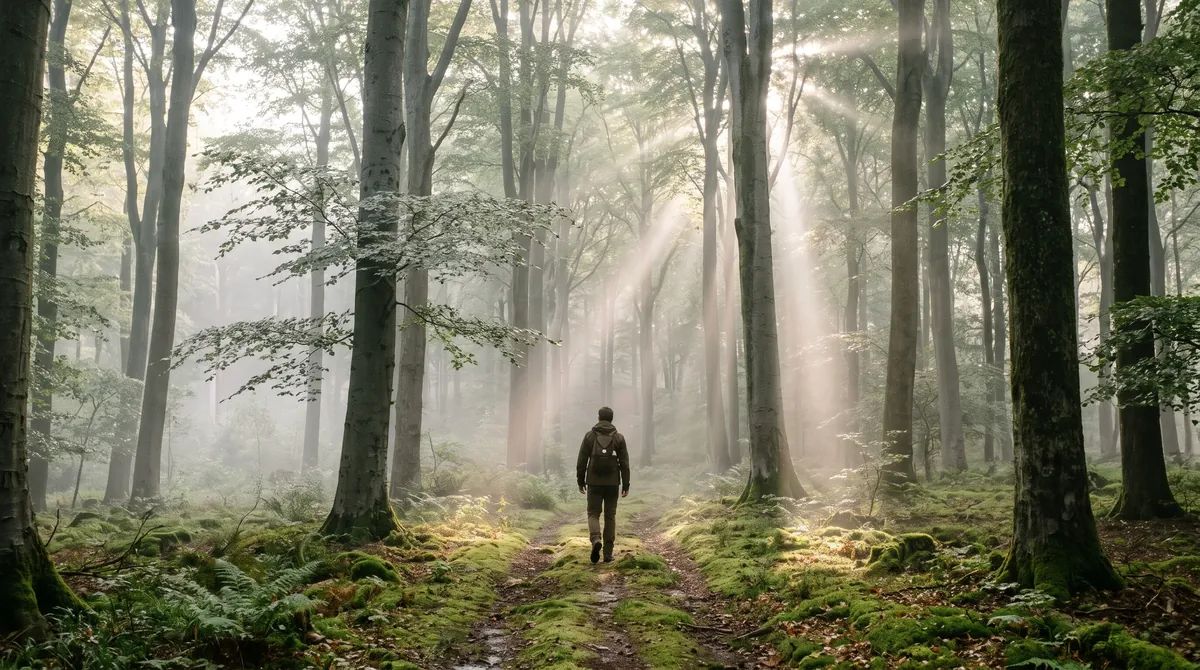
Few things reset a busy week like two days in a big forest. Germany and Austria are rich in protected woodland, from the wild mountain ridges on the Czech border to the beech valleys of Upper Austria. Their national parks combine well marked trails, ranger walks and visitor centres with large areas where nature is simply left to itself. Here are five of the finest for a green weekend, with ideas for staying and getting there.
The Bavarian Forest: where it all began
The Bavarian Forest National Park is Germany’s first national park. It opened in October 1970 in the wooded mountains between Rachel and Lusen and has since grown considerably. Together with the neighbouring Šumava National Park on the Czech side, it forms a vast, continuous forest landscape. Its guiding motto, , means “let nature be nature”, and large parts of the park are left to develop without intervention.
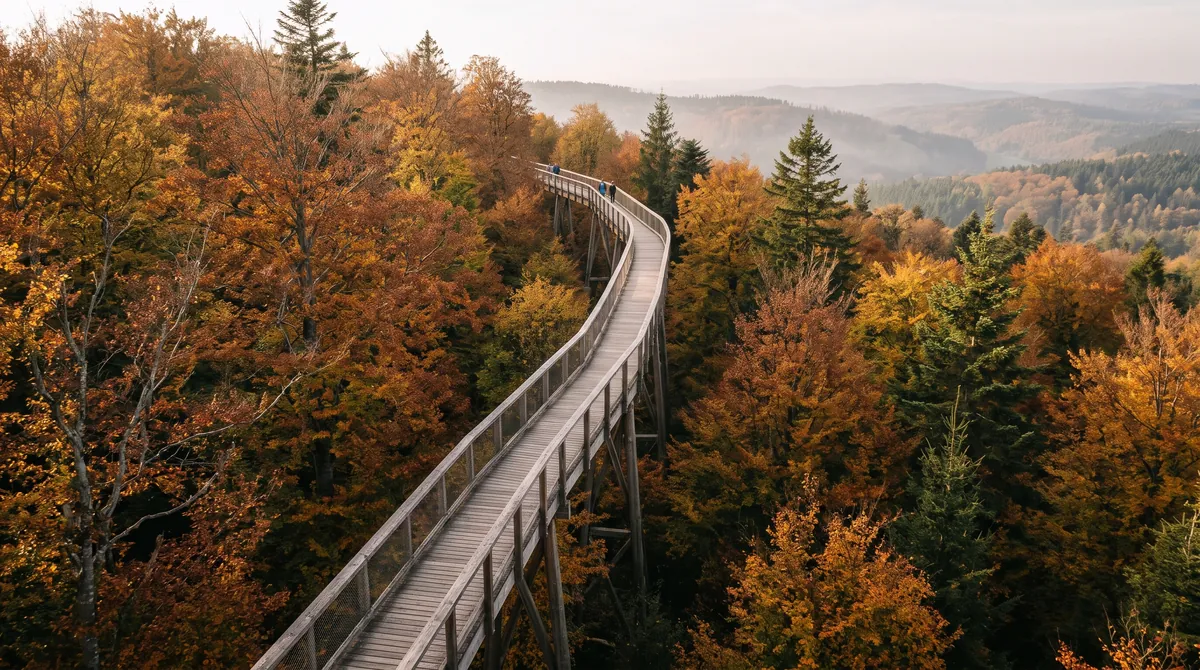
Near Neuschönau, by the Lusen national park centre, a treetop walk opened in 2009. The wooden walkway runs for about 1,300 metres between 8 and 25 metres above the ground and ends at a 44 metre tower shaped like an egg, with wide views over the forest. Nearby, a large animal enclosure shows species such as lynx, wolves, bears and elk in spacious natural surroundings, and a second enclosure lies at the Falkenstein centre.
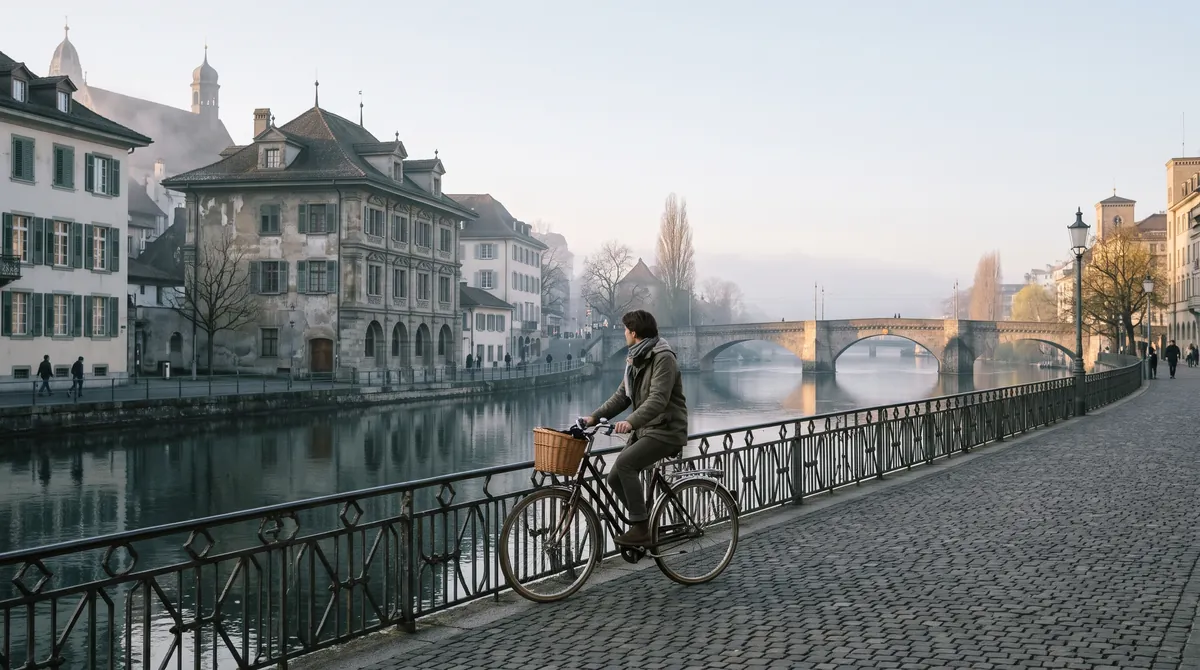
The park is easy to reach without a car. Regional trains run to Zwiesel, Bayerisch Eisenstein and Grafenau, and buses connect the villages and trailheads. In many local municipalities overnight guests receive a guest card with the logo, which covers buses and trains in the region.
Black Forest and Eifel: two younger parks
The Black Forest National Park was founded in 2014 as the first national park in Baden-Württemberg. It covers two areas along the high ridges of the northern Black Forest. At Ruhestein, a national park centre opened in 2020, with exhibitions and a skywalk leading to a lookout tower. From there a path descends to the Wildsee, a dark cirque lake left by the glaciers and framed by forest.
Further north, the Eifel National Park was established in 2004 as the first national park in North Rhine-Westphalia. Its beech forests, reservoirs and open heathland are crossed by the Wildnis-Trail, a route of about 85 kilometres in four stages from Höfen near Monschau to Zerkall. Its waymark is the head of a wildcat, a nod to one of the park’s shyest residents. A single stage makes a fine Saturday walk.
The Harz and the Kalkalpen
The Harz National Park took its present form on 1 January 2006, when two parks founded in 1990 and 1994 were united. It stretches across Lower Saxony and Saxony-Anhalt and climbs to the Brocken, at 1,141 metres the highest summit in the Harz and famous for its mists. A narrow gauge steam railway puffs its way up to the summit from Wernigerode, a lovely way to arrive before walking down through spruce forest and granite boulders.
In Austria, the Kalkalpen National Park in Upper Austria opened in 1997. It protects one of the largest forest wildernesses in the country, a landscape of limestone mountains, deep gorges, clear streams and extensive beech woods. Since 2017 its old beech forests have been part of the transnational UNESCO World Heritage Site of ancient and primeval beech forests of Europe. Visitor centres on the edges of the park are good starting points for walks and ranger tours.
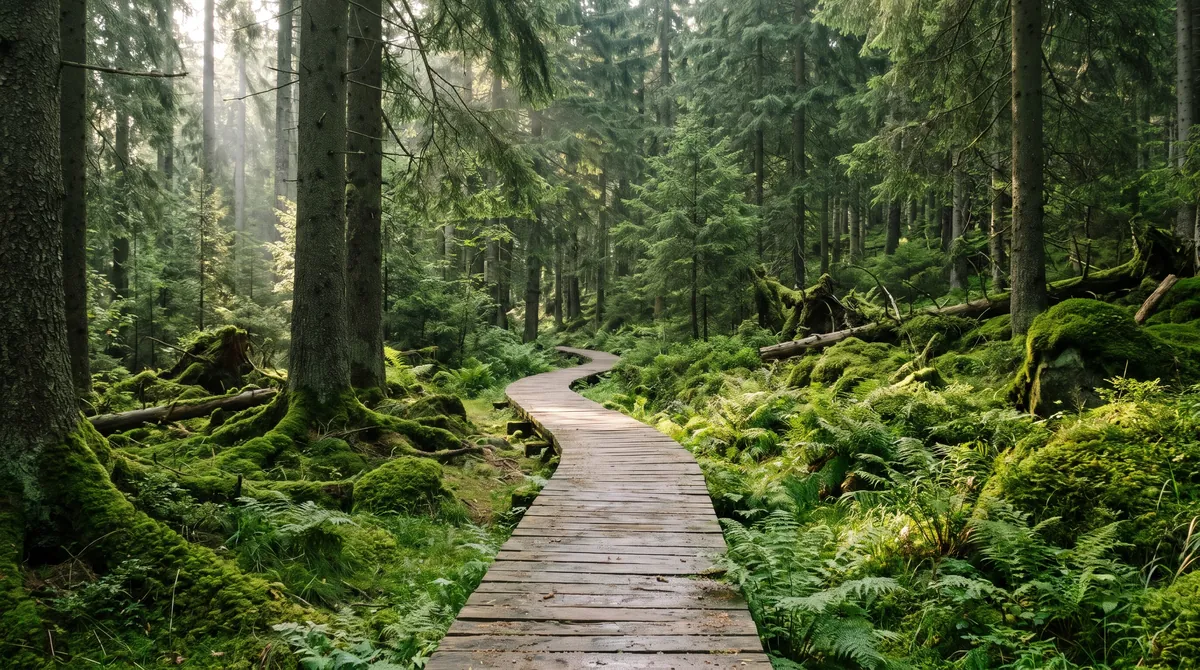
Large areas where nature is simply left to itself.
Treetop walks, cabins and forest hotels
A , or treetop walk, is one of the most memorable ways to experience a forest. Walking among the crowns of beech and spruce gives you a new view of trees you usually see only from below, and gently sloping walkways make them suitable for children and many visitors with limited mobility. Several forest regions in Germany and Austria now have one, and they are especially atmospheric in the soft light of late afternoon.
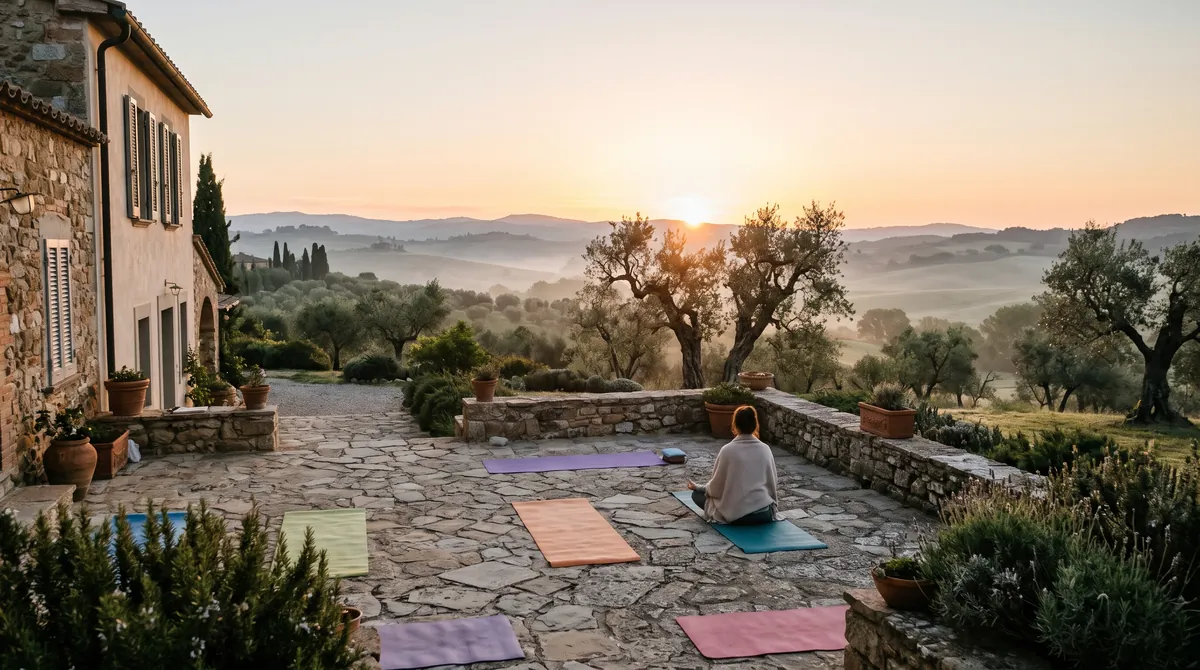
For the night, the choice is wide. Wooden cabins and holiday flats at the forest edge offer privacy and a stove for cool evenings. Forest hotels add saunas, pools and generous breakfasts, while small guesthouses in national park villages bring you close to the trailheads. Look for places within walking distance of a bus stop or station, so the car can stay at home all weekend.
Planning your weekend
A little preparation makes a forest weekend much more relaxed. These points apply to all five parks:
- Arrive by train where possible. All five regions can be reached by rail, with buses linking stations and trailheads.
- Join a ranger walk. National park rangers lead guided tours that reveal details you would easily miss on your own.
- Follow the marked trails. Waymarking is excellent, and visitor centres have maps and current trail information.
- Check the weather. Conditions on the ridges can change quickly, so pack a waterproof layer and warm clothing even in summer.
- Respect the core zones. In the of a park, nature has priority: stay on the paths, keep dogs on a lead and leave plants, stones and wood where they are.
A simple shape works well for two days. Arrive on Friday evening so the weekend begins with a quiet night in the forest. Spend Saturday on a longer walk or a ranger tour, with a picnic by a lake or a lookout. Keep Sunday gentle: a treetop walk, an animal enclosure or a short loop near your accommodation, followed by a late lunch before the train home.
Words in this article
- Natur Natur sein lassen
- “Let nature be nature”, the guiding motto of the Bavarian Forest National Park.
- Waldbahn
- Literally “forest railway”, the regional train network serving the Bavarian Forest.
- GUTi
- The guest card logo in the Bavarian Forest region that lets overnight guests use local buses and trains.
- Baumwipfelpfad
- German for treetop walk, a raised wooden walkway through the crowns of the forest.
- Kernzone
- The core zone of a national park, where nature is left to develop with as little human influence as possible.
Questions readers ask
Can you visit these national parks without a car?
Yes. All five regions are connected to the rail network, and buses link stations with villages, visitor centres and trailheads. In the Bavarian Forest, many municipalities give overnight guests a guest card that covers local buses and trains. Elsewhere, regional tickets and park shuttles make car free weekends easy. Check current timetables before you travel, especially on Sundays.
Which season is best for a forest weekend?
Every season has its appeal. Late spring brings fresh green beech leaves and birdsong, summer offers cool shade on hot days, and autumn turns the beech forests gold and copper. Winter is quieter, with snow on the higher ridges and crisp, clear days. Some visitor facilities and treetop walks have shorter hours in winter, so check current times.
Are national parks suitable for children?
Very much so. Treetop walks, animal enclosures and short themed trails are designed with families in mind, and many visitor centres have interactive exhibitions. Many parks also offer ranger programmes especially for children. Choose shorter walks with a clear goal, such as a lake, a lookout tower or a picnic spot, and bring plenty of snacks.