
Bad, Kur and Kurort: Germany’s spa tradition explained
Why so many German towns begin with “Bad”, what makes a Kurort, and how to spend a slow weekend among spa parks, promenades and pump rooms.
Travel through Germany and the word appears again and again on station signs: Bad Kissingen, Bad Ems, Bad Reichenhall, Bad Wörishofen. Behind it lies one of Europe’s most enduring travel traditions, the Kur, a stay in a town built around springs, gardens and the art of taking your time. Even if you never book a formal programme, knowing a few words makes a weekend in a German spa town far more rewarding.
What “Bad” in a town name means
Bad simply means bath. In a place name it signals that the town has long been known for its springs, its brine, its mud or its bathing culture. Many towns added the word once their reputation was established, and the right to carry it is granted by the authorities rather than chosen freely.
Baden-Baden is a special case. Its doubled name became official in 1931 and is usually read as “Baden in Baden”, the town of baths in the former land of Baden, distinguishing it from namesakes near Vienna and Zürich. Not every spa town carries the prefix, though, so the absence of “Bad” on a sign does not mean there is no spa tradition behind it.
Kurort: a title the state awards
A is a town that has been officially recognised for its natural resources and the facilities to enjoy them. Recognition is regulated by each of Germany’s federal states, which set their own requirements, so the exact list of categories varies slightly from state to state. The town applies, meets the criteria and then carries the title with the addition “staatlich anerkannt”, state recognised.
- Heilbad: the classic spa town with natural resources such as thermal or mineral springs, brine or moor, often named in the title, as in Thermalheilbad or Moorheilbad.
- Kneippheilbad and Kneippkurort: towns built around the water traditions of Sebastian Kneipp.
- Heilklimatischer Kurort: a demanding climate category for places with especially clear air and well marked walking routes.
- Luftkurort: awarded for fresh air and a pleasant climate, often in hills or forest.
- Erholungsort: a lighter title for towns with a restful setting and good facilities for guests.
Along the North Sea and Baltic coasts there are seaside equivalents too, where the sea air and the beach take the place of springs.
Kurpark, Kurhaus and Kurtaxe
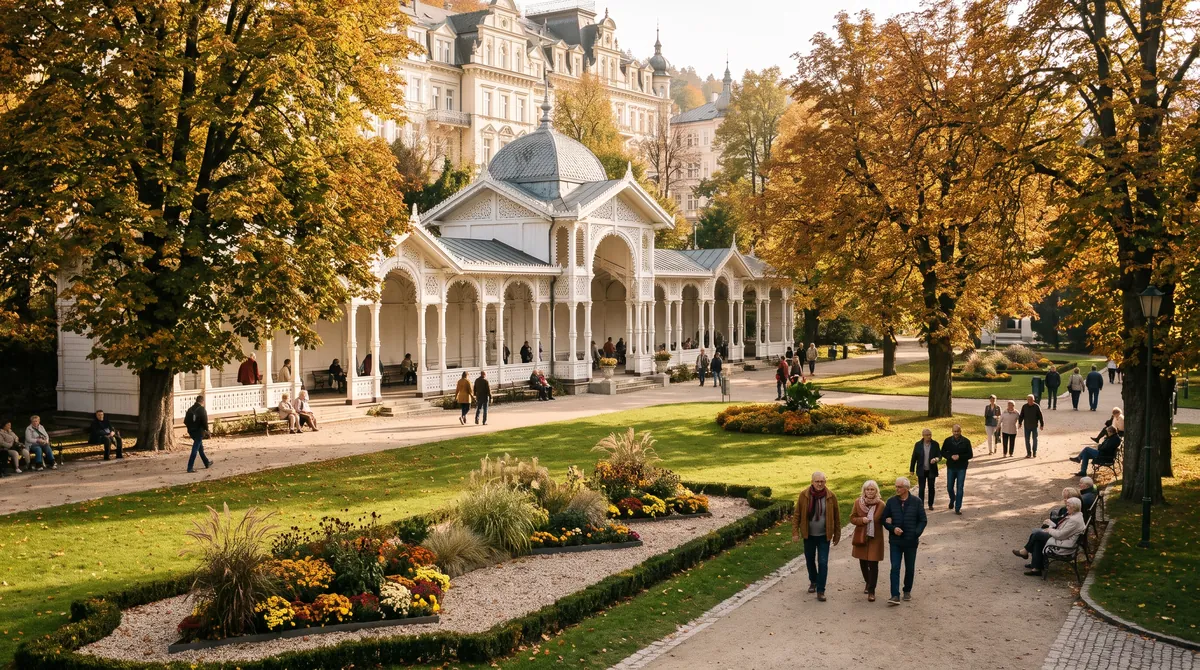
Almost every spa town has a Kurpark, a landscaped garden with old trees, flowerbeds, benches and often a bandstand. It is the heart of the town and the place where the daily stroll, the Kurpromenade, still feels like a small ritual.
The is the grand building at its centre, with ballrooms, concert halls and reading rooms. Many towns also have a or Wandelhalle, a pump room or covered promenade where the springs were once served and where you can walk in comfort whatever the weather.
Overnight guests usually pay a small local visitor’s tax, the . In return you receive a guest card that opens the door to facilities and events provided for visitors. Depending on the town, that may mean spa park concerts, guided walks, reading rooms or local buses, so it is worth asking at check in what is included.
Sebastian Kneipp and the art of water treading
Sebastian Kneipp (1821 to 1897) was a Catholic priest who moved to Wörishofen in Bavarian Swabia in 1855. There he developed a way of life built on five pillars: water, movement, food, herbs and a balanced daily rhythm. The town later became Bad Wörishofen, and his ideas spread across the German speaking world.
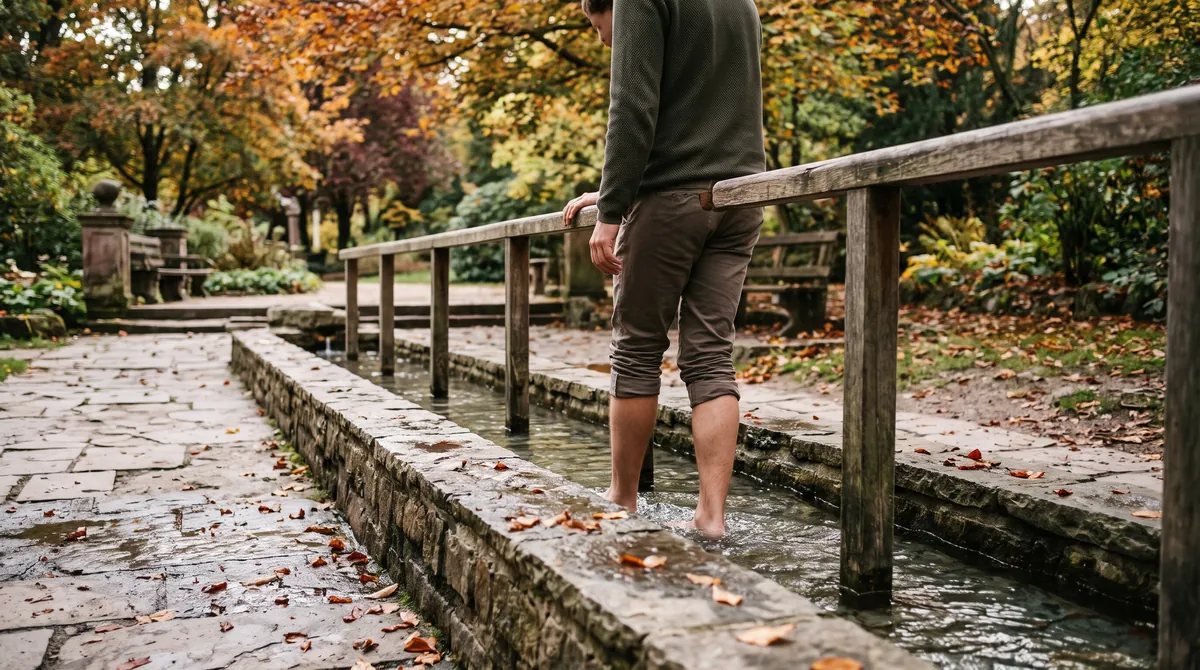
The most famous Kneipp ritual is , water treading. You walk slowly through a shallow basin of cool water, lifting each foot clear of the surface like a stork, then step out and let your feet warm up again. Many spa parks and even village greens have a Kneipp basin with a handrail, and many visitors find the brief, bright chill wonderfully refreshing on a warm afternoon.
Even if you never book a formal programme, knowing a few words makes a weekend in a German spa town far more rewarding.
Three great spa towns on the UNESCO list
In 2021 eleven historic spa towns in seven countries were inscribed together on the UNESCO World Heritage List as the Great Spa Towns of Europe. Three of them are in Germany.
Baden-Baden lies at the edge of the Black Forest. Its Kurhaus faces the Trinkhalle with its long colonnade and murals of Black Forest legends, and the Lichtentaler Allee runs for about 2.3 kilometres along the little river Oos. Bad Kissingen sits on the Franconian Saale, where the Kurgarten is framed by the Arkadenbau, the Regentenbau and the Wandelhalle, with a rose garden a short stroll away. Bad Ems lines both banks of the Lahn, with a Kurhaus whose marble hall hosts concerts and a steep funicular climbing to a viewpoint above the valley.
A restful weekend in a spa town
A weekend is plenty to enjoy the atmosphere without any formal programme. This simple plan works in almost any German spa town:
- Arrive by train on Friday afternoon, collect your guest card and take a first slow walk through the Kurpark.
- On Saturday morning visit the Trinkhalle or Wandelhalle and the old bathhouses, where the architecture alone is worth the stop.
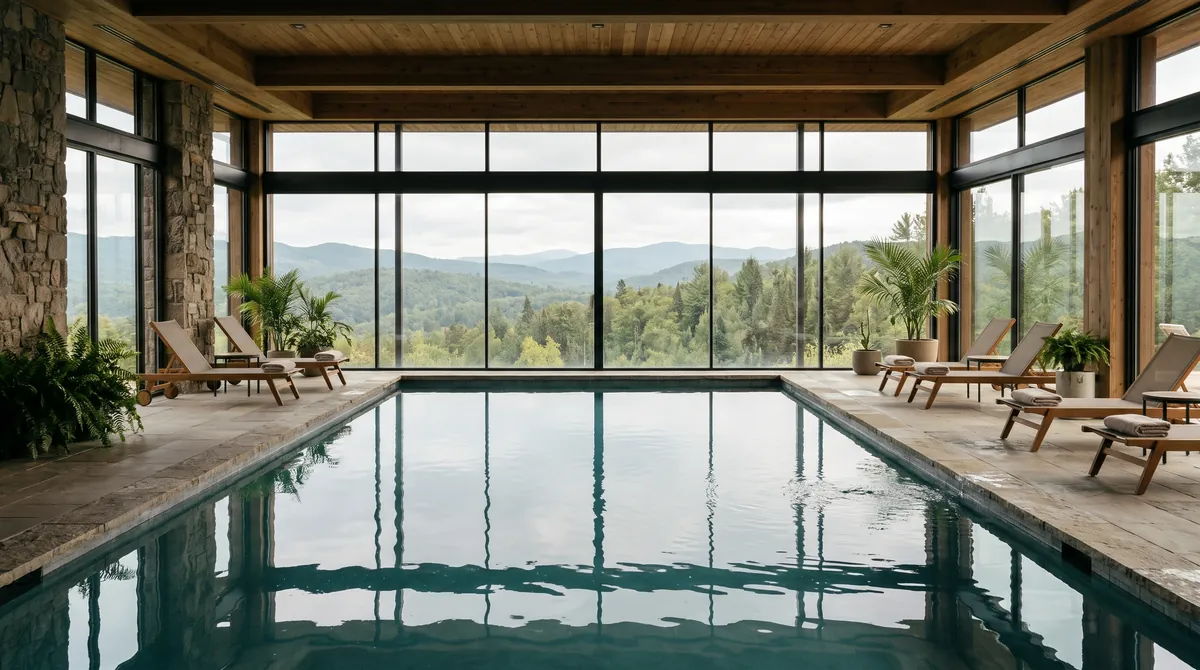
- Spend Saturday afternoon in a thermal bath, with a sauna and a long rest by the pool.
- In the evening, look out for a concert in the Kurhaus or a performance in the spa theatre.
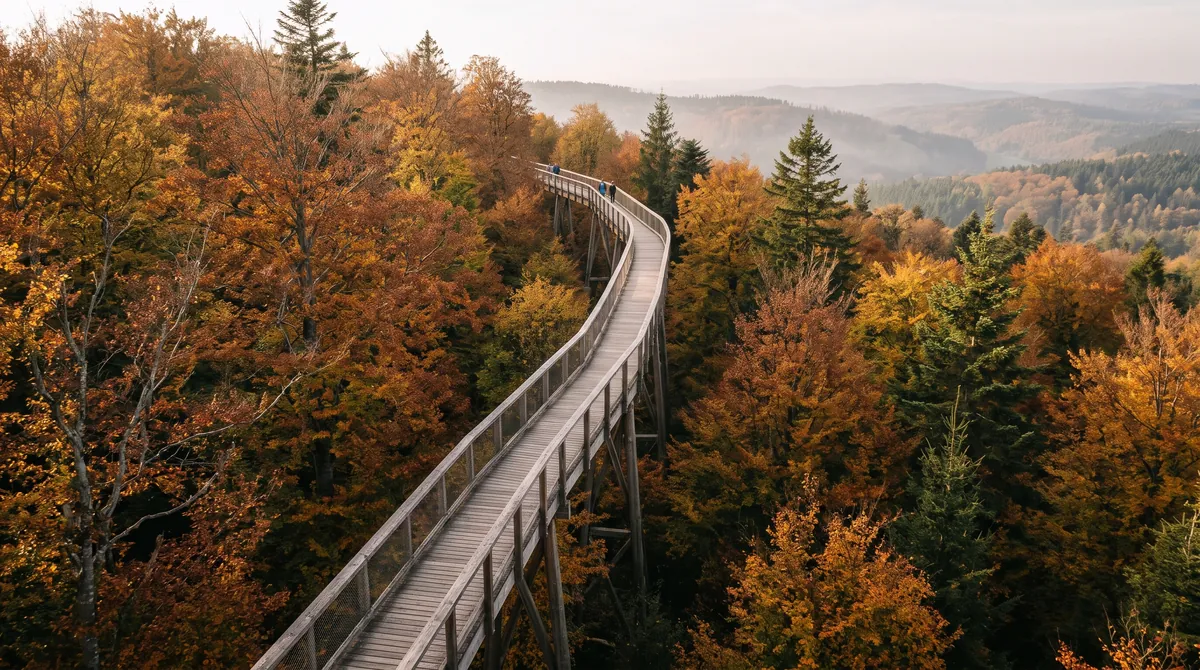
- On Sunday try the Kneipp basin, then walk up into the hills or forest above town before a late coffee and cake.
Words in this article
- Kurort
- A German town officially recognised by its federal state as a spa or climatic resort.
- Kurhaus
- The grand central building of a spa town, with halls for concerts, balls and gatherings.
- Kurtaxe
- A small local visitor’s tax paid by overnight guests, usually in exchange for a guest card.
- Wassertreten
- Water treading: walking slowly through cool water in a shallow basin, a classic Kneipp ritual.
- Trinkhalle
- A pump room or drinking hall where spring water was traditionally served to spa guests.
Questions readers ask
Do you need to book a formal Kur to enjoy a spa town?
Not at all. Spa towns welcome weekend visitors and holidaymakers as warmly as long stay guests. You can walk in the Kurpark, visit a thermal bath, listen to a concert and try the Kneipp basin without booking any programme. If you are interested in a longer spa stay with medical elements, talk to your own doctor first.
What does the guest card include?
That depends on the town. The guest card you receive in return for the Kurtaxe usually gives access to facilities and events provided for visitors, which may include spa park concerts, guided walks, reading rooms and in some regions local buses or trains. Ask at check in or at the tourist office for the current list.
When is the best time to visit a German spa town?
Each season has its charm. Late spring and summer bring flowerbeds, open-air concerts and long evenings in the Kurpark. Autumn colours the old trees and suits long walks in the surrounding hills. In winter the thermal baths and covered promenades come into their own, and a warm pool on a frosty day is a quiet pleasure.