
Thermal waters of Europe: from Budapest to Baden-Baden
Eleven historic spa towns share a World Heritage listing, and Budapest has bathed in warm springs for centuries. How to fold a thermal day into a city break.
Few travel pleasures are as simple as warm water under an open sky. Across Europe, whole towns grew up around natural springs, and their colonnades, pump rooms and grand bathing halls still shape a day out. You do not need a week of treatments to enjoy them. A city break with one long, slow afternoon in is often enough to come home feeling that you have really been away.
Eleven towns, one World Heritage listing
In July 2021, UNESCO inscribed the Great Spa Towns of Europe on its World Heritage List. The listing is unusual because it spans eleven towns in seven countries, all of which developed around mineral springs and flourished as fashionable resorts between the early eighteenth century and the 1930s. What unites them is a shared architecture of leisure: assembly rooms and drinking halls, parks laid out for strolling, theatres, casinos and villas for the summer guests.
- Austria: Baden bei Wien
- Belgium: Spa
- Czechia: Františkovy Lázně, Karlovy Vary and Mariánské Lázně
- France: Vichy
- Germany: Bad Ems, Baden-Baden and Bad Kissingen
- Italy: Montecatini Terme
- United Kingdom: Bath
The little Belgian town of Spa lent its name to the English word for a bathing resort. In the Czech towns, visitors still stroll beneath elegant colonnades with small porcelain cups, sipping mineral water from the springs as part of a slow daily ritual. Bath, already a World Heritage city in its own right, adds honey-coloured Georgian crescents to the mix.
Most of the eleven are small towns that are easy to explore on foot. Their pleasure lies as much in the setting as in the water: shaded promenades, ornate pavilions over the springs and, often, wooded hills with paths that were laid out for guests long ago. A night or two in one of them, combined with a nearby city, makes a gentle and rewarding short trip.
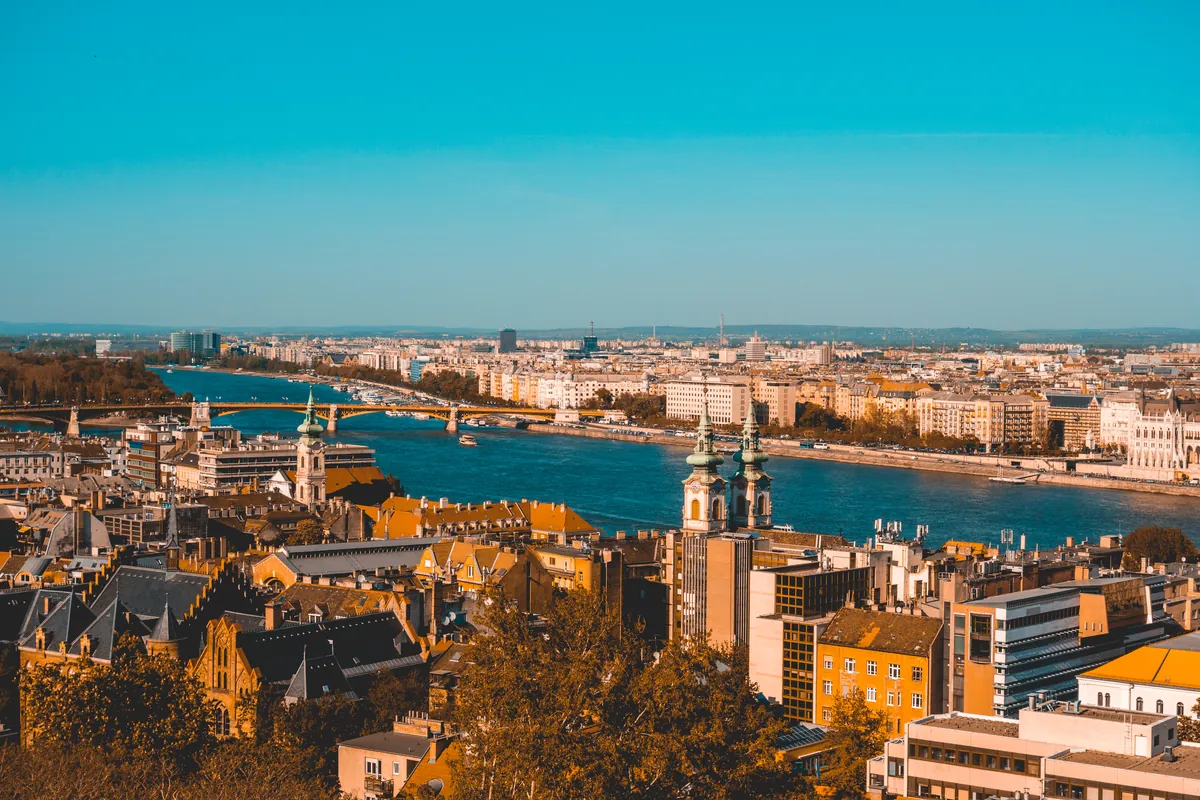
Budapest, a capital of thermal baths
Budapest sits above a great many warm springs, and bathing has shaped life in the city for centuries. The Ottoman period of the sixteenth century left domed bathhouses where light falls through small openings in the roof onto an octagonal pool, a wonderfully atmospheric place to sit quietly in the warmth.
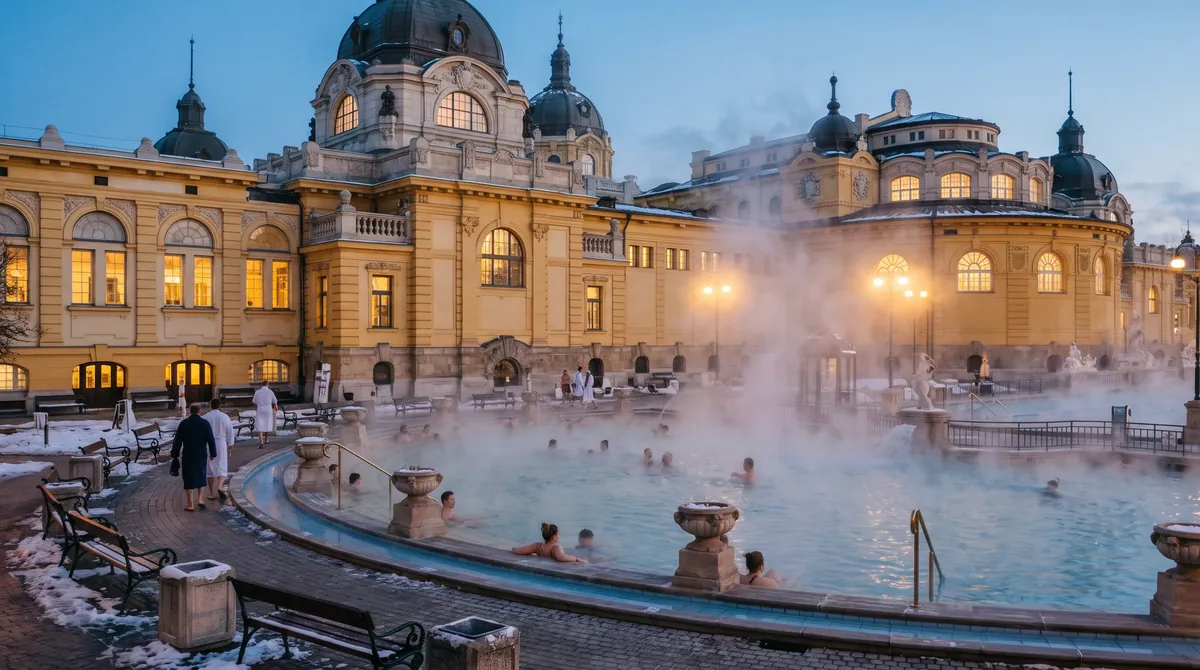
The best known of all is the Széchenyi Baths in City Park. Completed in 1913 in a neo-baroque style, the yellow complex wraps around large outdoor pools that are open all year. In winter, steam rises into the cold air while regulars play chess on floating boards, chest-deep in warm water. Indoors, a series of smaller pools at different temperatures invites you to move slowly from one to the next.
On the Buda side, the Art Nouveau baths at the foot of Gellért Hill are in the middle of a long restoration and are expected to reopen in a few years, so check the current status before you plan around them. The city has several other historic baths, which makes a thermal afternoon easy to arrange in any season.
Baden-Baden and the Roman legacy
The Romans were great bathers, and several of today’s spa towns began as Roman settlements. In Bath, the Roman Baths museum shows the temple and bathing complex of , where the Romans honoured a local goddess whom they identified with Minerva. Steam still drifts over the green water of the great pool, although bathing today takes place in modern facilities nearby.
Baden-Baden, on the edge of the Black Forest, tells a similar story. Remains of Roman baths, uncovered during building work in the nineteenth century, can be visited in the old town. Above them stands a bathing palace that opened in 1877, where guests follow a set sequence of warm air, hot air, steam and pools of falling temperature, largely in silence and without swimwear. Next door, a modern thermal pool complex offers a more relaxed day with indoor and outdoor pools.
Between sessions, the Lichtentaler Allee, a long park avenue beside the little river Oos, is made for an unhurried walk under old trees.
Bathing etiquette and what to pack
Every bathing culture has its own rules, and knowing them makes a first visit far more relaxed. In Budapest and in most pool-based thermal baths, swimwear is standard. In German-speaking countries, sauna areas are usually , and some traditional bathing houses are too, so read the house rules before you go. Lap pools often ask for a swimming cap, and many baths sell tickets for a set length of time, such as two, three or four hours.
- Swimwear, plus a swimming cap if you plan to swim lengths
- Flip-flops or bathing sandals for wet floors
- A bathrobe and two towels, unless rental is included
- A water bottle, because warm water and steam make you thirsty
- A book for the rest rooms, where quiet is the rule
Combining a city break with a thermal day
The easiest way to enjoy thermal water on a short trip is to treat it as one part of the stay rather than the whole point. In Budapest, the baths sit inside the city, so you can spend the morning on the Danube embankments and the afternoon in the water. Baden bei Wien is an easy trip by local rail from central Vienna, and Bath makes a fine day out by train from London. In winter, an outdoor thermal pool on a frosty morning is one of the great pleasures of a European city break; in summer, go early, before the day warms up.
Plan the thermal day for the middle of the trip, not the evening before you fly home. Leave a few hours after bathing for a slow lunch or a walk through the spa gardens, and resist the urge to fill the rest of the day. A thermal afternoon feels best when nothing is waiting for you afterwards.
A thermal afternoon feels best when nothing is waiting for you afterwards.
Words in this article
- Colonnade
- A covered walkway lined with columns; in Czech spa towns, colonnades shelter the springs and the daily stroll.
- Aquae Sulis
- The Roman name for Bath, meaning the waters of Sulis, a local goddess linked with Minerva.
- Textile-free
- A bathing or sauna area where swimwear is not worn, common in German-speaking countries.
- Thermal water
- Water that rises naturally warm from underground springs.
Questions readers ask
Do you need to book a thermal bath in advance?
For the large, famous baths, booking a ticket online in advance often saves time at the entrance, especially at weekends and on holidays. Smaller baths usually work well on the day. Many places sell tickets for a set number of hours, so decide in advance how long you want to stay and arrive early to make the most of it.
Is swimwear worn in European thermal baths?
In Budapest and in most pool-based thermal baths across Europe, swimwear is standard, and lap pools often ask for a swimming cap. In German-speaking countries, sauna areas are usually textile-free, and some traditional bathing houses are too. House rules are normally clearly displayed, so a quick look at them before your visit avoids any uncertainty.
Which spa town suits a first thermal city break?
Budapest is the easiest start, because its baths are part of a large, lively capital with plenty to see between sessions. If you prefer a quieter setting, Baden-Baden combines elegant bathing houses with a park avenue and the Black Forest nearby, while Bath pairs Roman history and Georgian architecture with modern thermal bathing.