
Moving more on a city break: walking, cycling and swimming in town
Sightseeing on foot, a morning loop around a lake, a swim before dinner: how to bring easy movement into a city trip without turning it into a workout.
The best way to know a city is often the simplest: walk it, cycle it, swim in it. Moving through a place at human speed turns sightseeing into something you feel as well as see, from the cobbles under your feet to the cool surprise of a lake on a summer morning. None of this needs a training plan. It is about choosing the slower, more physical way to do what you were going to do anyway.
Walking routes that double as sightseeing
Most historic centres are compact enough to explore on foot, and walking from one sight to the next shows you the streets in between, which is where much of a city’s character lives. Swap one metro ride a day for a walk, follow a river or an old city wall, and use parks as green corridors between museums. Many tourist offices hand out themed walking routes, from architecture trails to riverside promenades, and a simple paper map is often all you need.
Hamburg has one of Europe’s most pleasant urban loops. The path around the , the larger of the city’s two Alster lakes, is about 7.4 km long, almost entirely flat and lined with lawns, villas and views of sailing boats and church spires across the water. Stone markers every 500 metres help runners keep track, but many people simply stroll, stopping for a coffee by the shore. On foot, the full loop takes around one and a half to two hours.
In Vienna, the in the Prater runs dead straight for about 4.5 km from Praterstern to the Lusthaus, a former imperial hunting pavilion. Lined with around 2,500 chestnut trees and largely closed to private cars, it is a favourite with walkers, runners and cyclists, and in spring the blossom makes it especially lovely.
Cycling: the city at bike speed
schemes now operate in many large European cities, including Hamburg, Vienna and Lisbon. You usually rent the bikes through an app and return them at docking stations or in marked zones, which makes them ideal for one-way trips: ride out along a river, then walk back through the old town.
In Vienna, a ride down the Hauptallee and on to the long, car-free paths of the Danube Island makes a relaxed half day. In Hamburg, the Alster loop is just as pleasant by bike as on foot, and in Lisbon the flat riverside route towards Belém is the gentlest place to begin.
Choose routes with dedicated lanes, such as riverside paths and park avenues, and avoid the rush hour on your first ride. Many schemes now include e-bikes, which are a real help on hilly terrain. Take a minute to learn the local cycling rules, and keep your first outing short until you have a feel for the traffic.
Swimming in urban waters
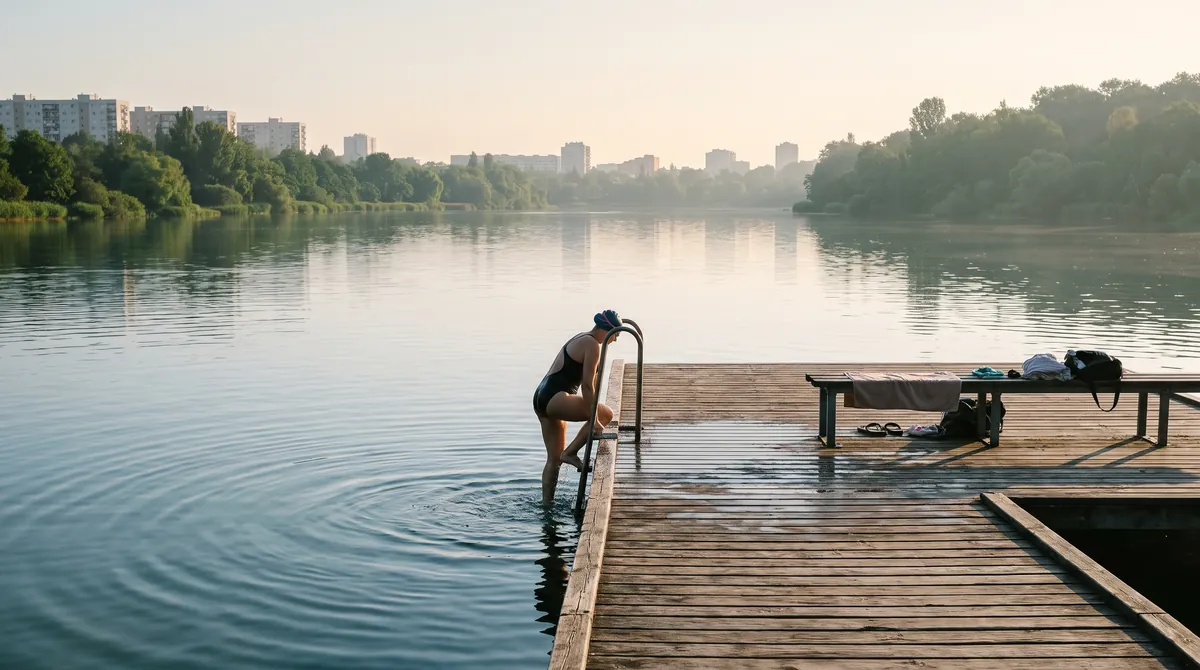
Few things make a city feel more like a holiday than a swim. Vienna is exceptional here. The , a former arm of the Danube that became a calm lake around 150 years ago, has lidos with lawns and jetties as well as free bathing spots along its banks. The Danube Island, about 21 km long, has free beaches of sand, gravel and grass along the New Danube and is easy to reach by underground.
Stockholm is built on islands, and in summer people swim right in the city. Smedsuddsbadet on Kungsholmen, a sandy beach next to Rålambshovsparken, has shallow water close to the shore, while the island of Långholmen has small beaches and rocky coves. The season is short and sweet, roughly June to August, so check the city’s bathing water information before you go.
On the Mediterranean, the sea is part of daily life. In Málaga, the city beach of La Malagueta is about 15 minutes on foot from the historic centre, and an early swim followed by breakfast is hard to beat. In Palma, the city beach of Can Pere Antoni begins just beyond the cathedral, and the seafront promenade invites a walk, run or ride along the bay.
Wherever you swim, use designated bathing areas, follow flags and signs, and look at local water information on the day.
Moving through a place at human speed turns sightseeing into something you feel as well as see.
Early mornings, stairs and viewpoints
Morning is the gift of an active city break. In the first hours of the day, parks and riverbanks belong to runners, dog walkers and delivery bikes, the light is soft and the air is cool. A gentle run or a brisk walk at this hour shows you a city at its most private, and you are back in time for breakfast.
Lisbon turns stairs into sightseeing. The city spreads across steep hills, and its miradouros, or viewpoints, reward every climb. Walk up to the de São Pedro de Alcântara in the Bairro Alto, then cross to Alfama for Santa Luzia and its view over terracotta roofs to the river. The highest of all, the Miradouro da Senhora do Monte above Graça, is wonderful at sunset. Trams and historic funiculars are there when your legs ask for a break.
Practical tips for moving more
- Pack comfortable shoes that work for both a long walk and dinner.
- Bring light swimwear and a quick-drying towel in summer.
- Plan one active highlight per day, such as a lake loop or a swim, and keep the rest flexible.
- Use public transport for the return leg, so a walk never turns into a march.
- Carry a water bottle and refill it at cafés along the way.
Words in this article
- Outer Alster
- Hamburg’s larger Alster lake, circled by a flat path for walking and running.
- Hauptallee
- The long, straight chestnut avenue through Vienna’s Prater park.
- Miradouro
- Portuguese for viewpoint; Lisbon has many across its hills.
- Alte Donau
- A former arm of the Danube in Vienna, now a calm lake used for swimming and boating.
- Bike sharing
- A public scheme of rental bikes, booked through an app and returned at stations or in marked zones.
Questions readers ask
Can you really swim in the middle of a European city?
In several cities, yes. Vienna has the Alte Donau and the Danube Island, Stockholm has city beaches such as Smedsuddsbadet, and Málaga and Palma have beaches within walking distance of their historic centres. Always use designated bathing areas, follow local signs and check current water information before you swim.
Is cycling a good idea in an unfamiliar city?
It can be one of the nicest ways to explore, as long as you start gently. Choose a quiet time of day, pick routes with dedicated lanes such as riverside paths and park avenues, and keep the first ride short. Bike sharing schemes make one-way trips easy, so you can ride out and walk or take a tram back.
How do you fit movement into a city break without getting tired?
Think of movement as a way of sightseeing rather than exercise. Plan one active highlight per day, such as a lake loop, a swim or a walk up to a viewpoint, and do it early while it is cool. Use public transport for the way back, leave space for long lunches and keep the evenings slow.