72 hours in Hamburg: harbour, brick and water
Brick warehouses on the canals, a public plaza high above the port, harbour ferries on a normal ticket and a fish market at dawn: three days in Germany’s great port city.
Hamburg is a city shaped by water. The Elbe carries ocean-going ships far inland, two lakes open up the centre, and canals thread between dark red brick warehouses. Three days let you see the port from a ferry deck, a concert hall plaza and a sandy river beach, and still leave time for a Sunday dawn at the fish market.
A port city of brick and water
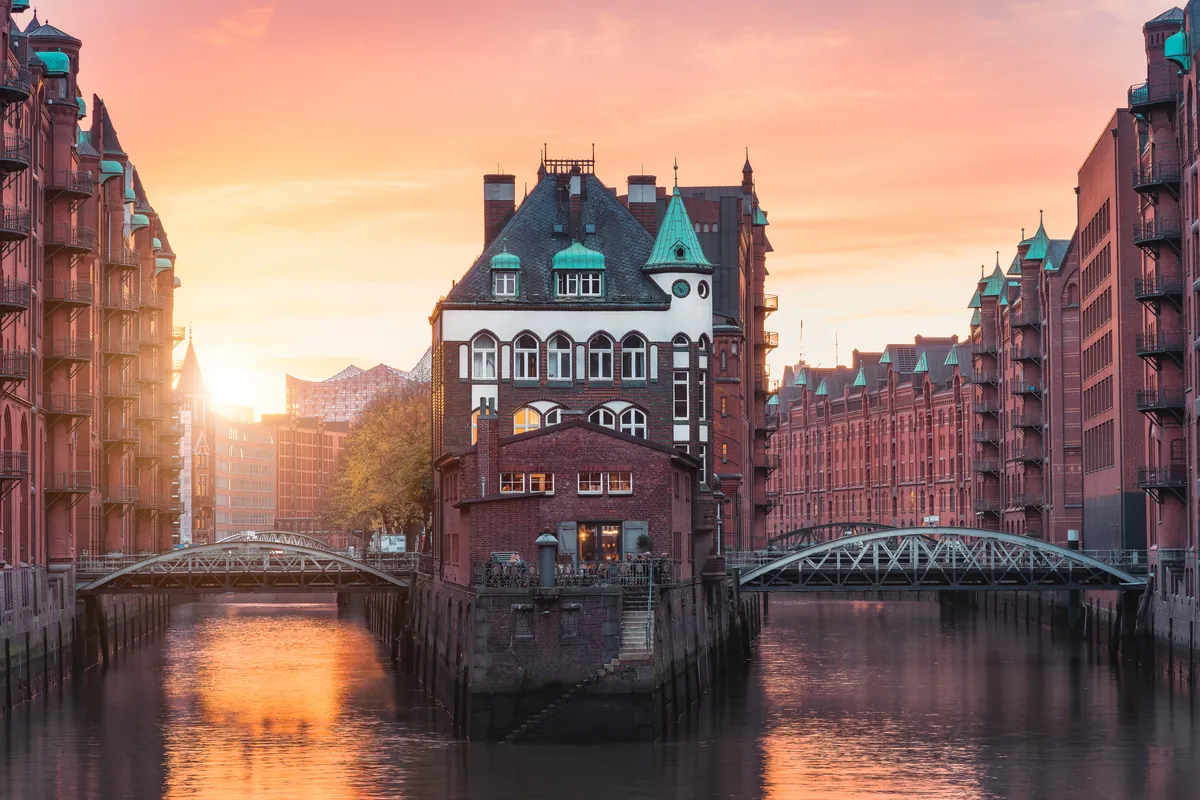
Hamburg’s character comes from trade. Between 1885 and 1927 a district of tall brick warehouses rose on narrow islands in the Elbe: the , built to store goods such as coffee, tea and spices. Right beside it, the Kontorhaus district gathered large office buildings for port businesses from the 1920s onwards. Its icon is the Chilehaus, completed in 1924 to designs by Fritz Höger, with a pointed corner that recalls the bow of a ship.
Together, the Speicherstadt and the Kontorhaus district with the Chilehaus were inscribed as a UNESCO World Heritage Site in 2015. To the south, HafenCity has turned former port land into a new quarter of promenades, squares and contemporary architecture. At its western tip stands the Elbphilharmonie, a wave-crested glass concert hall built on top of an old brick warehouse, which opened in January 2017.
Arriving, getting around and where to stay
Hamburg’s main station is one of the country’s great rail hubs, and an S-Bahn line links the airport with the city centre. Public transport is run by the network, and one ticket system covers the U-Bahn, the S-Bahn, buses and the harbour ferries. Day tickets suit a busy sightseeing day, and the Hamburg Card combines free travel on the network with discounts at many museums and attractions.
For a short stay, the streets around the Binnenalster and the Jungfernstieg put you between the old town, the lakes and the harbour. St. Georg, behind the main station, is lively and close to the Outer Alster, while Altona and Ottensen in the west feel relaxed and residential, with the Elbe and the Sunday fish market close by.
Three days, hour by hour
Day one Warehouses, HafenCity and the Elbphilharmonie
- Morning
Speicherstadt and the Kontorhaus district
Start among the warehouses of the Speicherstadt, where neo-Gothic gables, turrets and iron bridges are mirrored in the canals. Then cross to the Kontorhaus district to see the Chilehaus up close: its dark brick façade sweeps along the street and ends in a sharp point, like the bow of a ship heading out to sea.
- Afternoon
HafenCity and the Elbphilharmonie Plaza
Walk south through HafenCity along its waterside promenades to the Elbphilharmonie. A long, curved escalator carries you up to the Plaza, a public platform at 37 metres that wraps around the building. Access is free with a timed ticket, which you can also book ahead, and the views reach over the river, the cranes and the old town.
- Evening
A concert or the Landungsbrücken
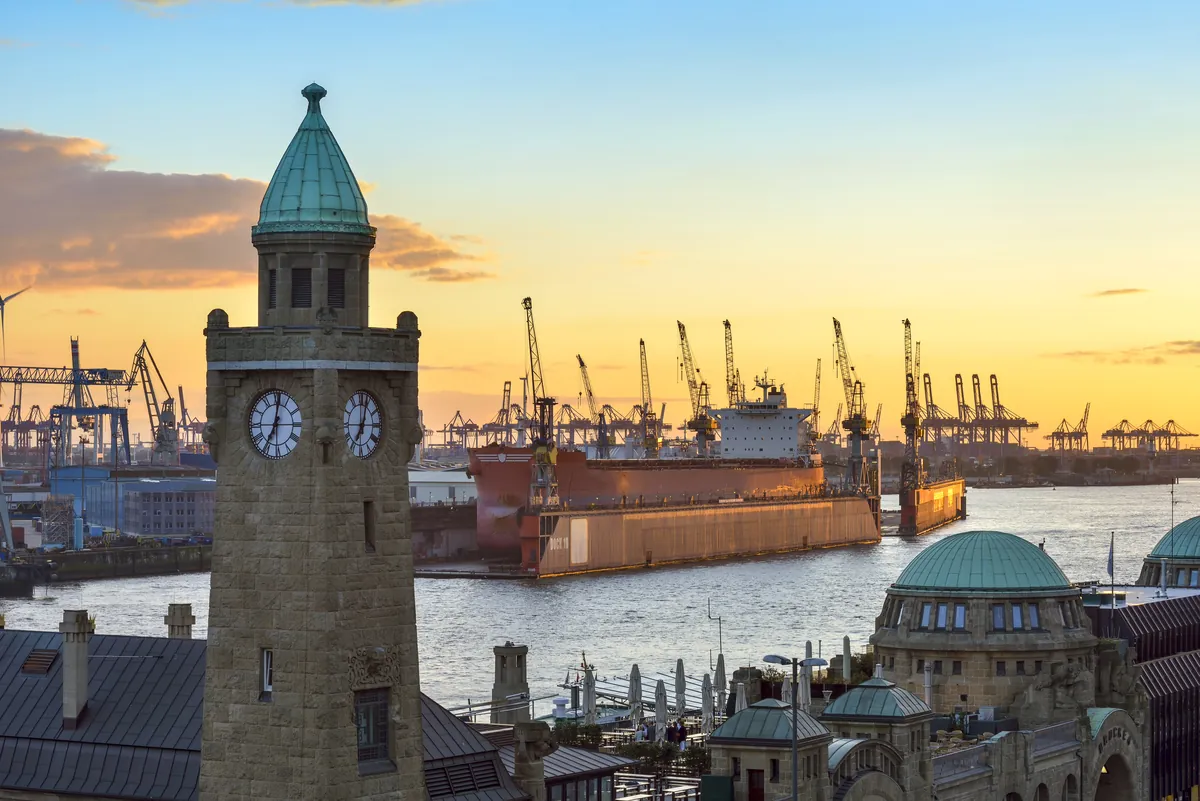
If you have tickets, a concert in the main hall, with its terraces of seats rising around the stage, makes a fine finale. Otherwise stroll west to the Landungsbrücken, the long floating piers of the harbour, and watch the ships and the lights on the Elbe as darkness falls.
Day two Ferry, river beach and Blankenese
- Morning
Harbour ferry line 62
From pier 3 at the Landungsbrücken, board ferry line 62 towards Finkenwerder. It is part of the public transport network, so a normal HVV ticket or day ticket is all you need. From the deck you pass the shipyard docks, the old fish auction hall in Altona and, across the water, the vast container terminals.
- Afternoon
Övelgönne and the Elbe beach
Get off at Neumühlen/Övelgönne and walk west along the Elbe beach, a long stretch of sand where container ships glide past surprisingly close. Small historic houses with front gardens line the path, and the museum harbour at the pontoon keeps a collection of old vessels. Stop for a Fischbrötchen and watch the river traffic.
- Evening
Blankenese and the Treppenviertel
Continue west to Blankenese, once a fishing village on the steep bank of the Elbe and an easy ride by public transport. Its Treppenviertel, the stair quarter, has close to 5,000 steps linking white houses and gardens. Climb towards the Süllberg and watch the sun go down over the river.
Day three Fish market, lakes and the Schanze
- Morning
Fischmarkt in Altona
Rise early on Sunday for the Fischmarkt on the riverbank in Altona. From April to October it opens at 5 am, in winter at 7 am, and it winds down by half past nine; check current times. Listen to the traders calling out their offers, eat a fish roll by the water and look inside the old auction hall.
- Afternoon
Outer Alster and Planten un Blomen
After a rest, walk the loop around the Outer Alster, a little over 7 km of lakeside paths with sailing boats, rowers and grand white villas along the shore. Then cross to Planten un Blomen, the large park near the trade fair grounds, with its Japanese garden, a lake and quiet lawns.
- Evening
Schanzenviertel
End in the Schanzenviertel, a short walk from the park, where the streets around the Schulterblatt fill with people on terraces and pavements as evening falls. The quarter is informal, creative and international, a fine place for a last dinner and a glass of local beer.
Food and drink with a northern accent
Hamburg’s food reflects the sea. The classic snack is the , a bread roll filled with pickled herring, smoked mackerel or fried fish, eaten standing at a kiosk by the water. In bakeries look for the , a flattened, buttery cinnamon pastry that is a local favourite.
Traditional restaurants serve Labskaus, a sailors’ dish of corned beef, potato and beetroot, often topped with a fried egg. Pan-fried plaice is another northern classic. Coffee has a long history in the city, which once stored it by the shipload in the Speicherstadt.
When to go and what to pack
Late spring and summer bring the longest evenings, when the Elbe beach and the banks of the Alster fill with people. From May, Planten un Blomen stages its water light concerts on summer evenings, with illuminated fountains moving to live music; check current dates. Autumn and winter are quieter and suit museums, concerts and cosy evenings indoors, and in the weeks before Christmas, festive markets open across the centre.
Whatever the season, the weather can change quickly this close to the sea. Pack a waterproof jacket and comfortable shoes, and treat a shower as part of the experience: the harbour looks wonderful in moody light, and there is always a museum, a market hall or a warm café nearby to wait it out.
Three days let you see the port from a ferry deck, a concert hall plaza and a sandy river beach.
Words in this article
- Speicherstadt
- Hamburg’s historic warehouse district, built between 1885 and 1927 on islands in the Elbe.
- Fischbrötchen
- A bread roll filled with herring, mackerel or other fish, the classic Hamburg snack.
- Treppenviertel
- The stair quarter of Blankenese, a hillside of narrow lanes with close to 5,000 steps.
- Franzbrötchen
- A flat, buttery cinnamon pastry and a favourite in Hamburg’s bakeries.
- HVV
- Hamburg’s public transport network, covering U-Bahn, S-Bahn, buses and harbour ferries with one ticket system.
Questions readers ask
Do you need a ticket for the Elbphilharmonie Plaza?
Yes, but visiting the Plaza is free. Because the number of visitors at any one time is limited, access works with timed tickets, which you can collect on the spot or book ahead online. The Plaza wraps around the building at 37 metres and offers views over the port, the river and the old town.
Is the Hamburg Card worth it?
It depends on your plans. The Hamburg Card includes free travel on buses, trains and harbour ferries in the HVV network, plus discounts at many museums, attractions and tours. If you expect to use public transport often and visit several museums, it can make sense; compare it with a simple day ticket before you buy.
When is the Hamburg fish market held?
The Fischmarkt in Altona takes place every Sunday morning on the bank of the Elbe. From April to October it opens at 5 am and in winter at 7 am, and the trading winds down by about half past nine. Times can change around holidays, so check before you go, and arrive early for the liveliest atmosphere.