72 hours in Málaga: culture, food and the sea
Moorish fortresses, Picasso’s birthplace, a market behind a medieval gate and sardines grilled in boats on the beach: three unhurried days in Andalusia’s port city.
Málaga rewards a slow first visit. Within a compact old town you can climb an eleventh century Moorish fortress, sit above a Roman theatre, stand in the square where Pablo Picasso was born and still reach the sea in time for lunch. Three days are enough to see the essentials without rushing, and to fall into the city’s rhythm of late lunches, long evenings and walks along the water.
A city of layers between hill and harbour
Málaga lies on the Costa del Sol, yet its centre feels nothing like a resort. Phoenicians, Romans and Moors all left their mark, and the historic core still follows a medieval street plan that slopes from the hill of Gibralfaro down towards the port. The Alcazaba, begun in the eleventh century, guards the eastern edge of the old town, while the Roman theatre at its foot lay forgotten until 1951.
In recent decades the city has added a remarkable landscape of museums. The Museo Picasso Málaga opened in 2003 in the Palacio de Buenavista, and since 2015 a branch of the Centre Pompidou has occupied a glass cube on the harbour front. The street art of the Soho quarter, begun in 2013, adds a more casual layer of colour between the old town and the port.

Getting there, getting around and where to stay
Most visitors arrive at Málaga airport, which is linked to the city by the suburban train. Line C1 reaches Málaga Centro-Alameda in about 12 minutes, a short walk from the old town; make sure you board the train heading for Málaga rather than Fuengirola. Once in town you will hardly need transport at all, as the historic centre, the port and the city beach lie within walking distance of each other.
For a short stay, the historic centre is the obvious base, with the cathedral, the market and the Picasso Museum all close by. Soho, between the Alameda Principal and the port, is a little quieter and full of murals. If you prefer to wake up near the sea, La Malagueta places you a few minutes from the sand and within an easy walk of the centre.
Three days, hour by hour
Day one Fortresses, cathedral and the old town
- Morning
Alcazaba and Gibralfaro
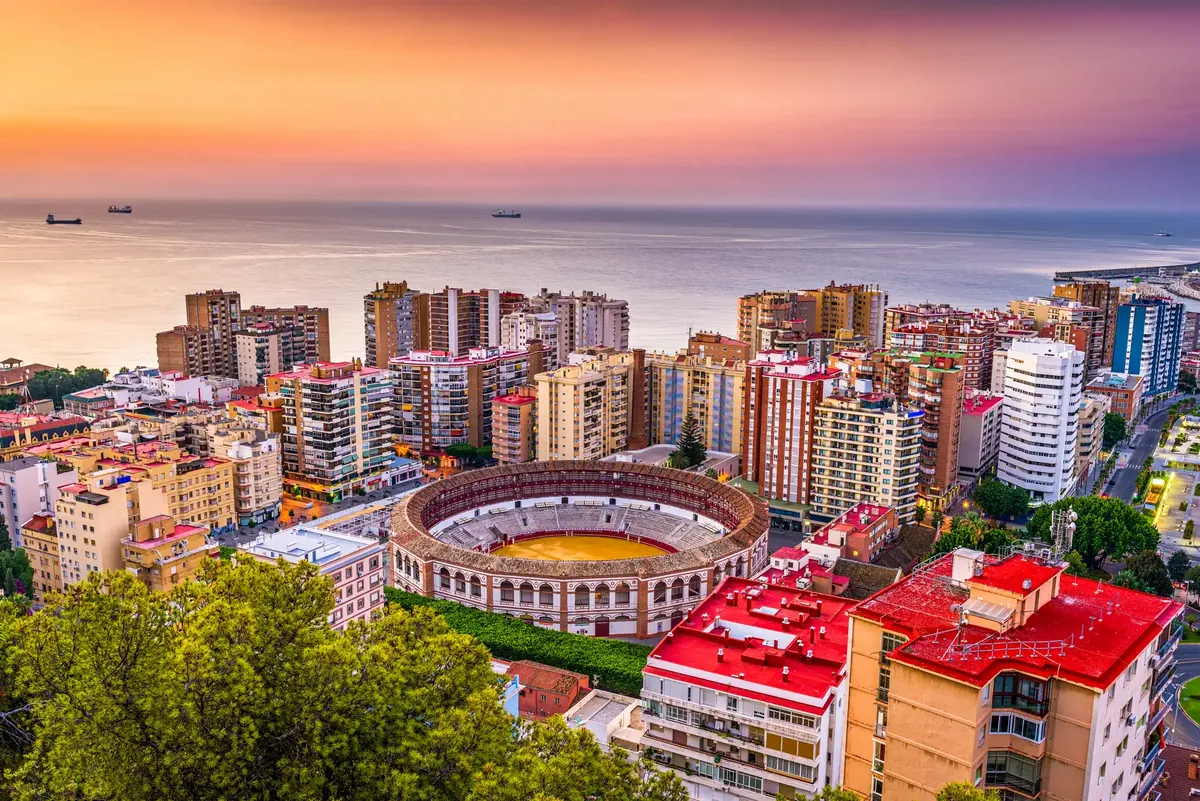
Start early at the Alcazaba, climbing through horseshoe arches, patios and fountains as the city opens out below. A steep path then leads up to Gibralfaro castle, built in the fourteenth century to protect the fortress; bus 35 from the Avenida de Cervantes is the gentler option. From the ramparts the view takes in the bullring, the port and the whole bay.
- Afternoon
Roman theatre and cathedral
Back at the foot of the hill, the Roman theatre dates from the first century and was rediscovered in 1951. A few streets away rises the cathedral, built between 1528 and 1782. Its south tower was never completed, which is why locals call it La Manquita, the one armed lady. Step inside for the cool, lofty nave and the carved choir.
- Evening
Calle Larios and the historic centre
As the heat fades, join the evening stroll along Calle Larios, the elegant pedestrian street that links the Plaza de la Constitución with the port. Then drift into the side lanes for tapas: a glass of sweet Málaga wine, a few slices of cured ham, a plate of fried fish, eaten standing at the counter the way locals do.
Day two Market, Picasso and the port
- Morning
Mercado Central de Atarazanas
Arrive mid-morning when the stalls are full. The iron and glass hall was built between 1876 and 1879, and you enter through a fourteenth century Nasrid gate that once belonged to the Moorish shipyard. Look up at the large stained glass window, then taste olives, almonds, local cheese or fried fish at one of the counters.
- Afternoon
Museo Picasso Málaga and Plaza de la Merced
Walk to the Museo Picasso Málaga in the Palacio de Buenavista, where the collection spans the artist’s long career. Then continue to the Plaza de la Merced, the square where Picasso was born in October 1881. His birthplace on the square is now a museum devoted to his early years and his family, and the benches under the trees invite a pause.
- Evening
Soho, Muelle Uno and the Centre Pompidou
Wander through Soho to see the large murals painted on its façades, then cross to Muelle Uno, the promenade along the harbour. Time your arrival for sunset at the Centre Pompidou Málaga, whose glass cube, given its coloured panels by the French artist Daniel Buren, glows over the water as the light goes.
Day three Beach, espetos and a last stroll
- Morning
La Malagueta
Begin on La Malagueta, the city beach a short walk east of the port. In summer, swim before the sand heats up; in the cooler months the promenade makes a fine walk, with the cathedral tower and the walls of Gibralfaro rising behind you and fishing boats out on the bay.
- Afternoon
Pedregalejo and El Palo
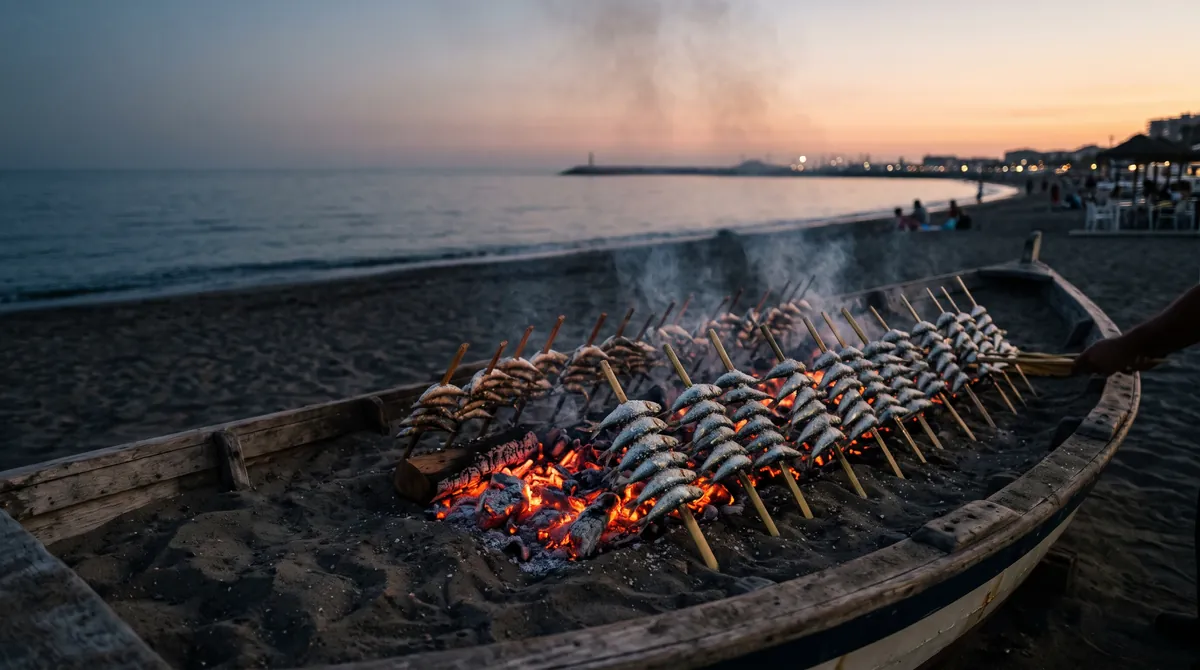
Follow the seafront east to Pedregalejo and El Palo, former fishing districts where lunch means espetos: sardines threaded onto canes and grilled over embers in old boats filled with sand. They are at their best from about May to September. Order a salad and a cold drink alongside, and eat with your fingers.
- Evening
Paseo del Parque and the port
Return to town along the Paseo del Parque, the palm lined promenade between the old town and the harbour, and end where the trip began, beneath the walls of the Alcazaba lit up at night. A final glass on a terrace near the Roman theatre makes a fitting farewell.
With extra time, or instead of the beach on day three, head north of the centre to the Jardín Botánico Histórico La Concepción. Founded in 1855 by Amalia Heredia and Jorge Loring on their country estate, it has belonged to the city since 1990 and is loved for its tropical trees, shaded paths and quiet ponds. Check current opening times before you go.
Eating the Málaga way
Food in Málaga follows the sea and the seasons. Fried fish, known locally as , appears on almost every menu, and in summer chilled ajoblanco, a soup of almonds, garlic and olive oil, is the perfect lunch in the heat. A small glass of the region’s sweet wine is a fine way to end a meal.
Lunch is the main meal and rarely starts before two; dinner begins late, so an early evening round of tapas bridges the gap nicely. Order a few small plates, share them, and move on to the next bar after a drink or two.
When to go
Spring and autumn are the most comfortable seasons for walking, with mild days and warm evenings. July and August are hot, with afternoon highs often around 30 °C, so plan sightseeing for the morning and evening and keep the middle of the day for a long lunch or the beach. Winter is mild and mostly sunny, a good time for museums and quiet streets.
Semana Santa, the week leading up to Easter, is a special time to be in Málaga. Religious brotherhoods carry enormous , ornate processional floats, through the old town on the shoulders of dozens of bearers, followed by bands and crowds. The atmosphere is solemn and festive at once, and the city fills up, so book early if you want to be there. Easter falls on a different date each year.
Three days are enough to see the essentials without rushing, and to fall into the city’s rhythm of late lunches, long evenings and walks along the water.
Words in this article
- Espetos
- Sardines threaded onto canes and grilled over embers, traditionally in old fishing boats filled with sand on Málaga’s beaches.
- La Manquita
- “The one armed lady”, the nickname of Málaga cathedral, whose south tower was never completed.
- Tronos
- The large, ornate processional floats carried through the streets by bearers during Semana Santa in Málaga.
- Cercanías
- Spain’s suburban rail network; in Málaga, line C1 links the airport with the city centre.
- Pescaíto frito
- Andalusian fried fish: small pieces of fish lightly floured and fried, eaten at tapas bars and beach restaurants.
Questions readers ask
Is three days enough for Málaga?
Three days cover the essentials comfortably: the Alcazaba and Gibralfaro, the cathedral and Roman theatre, the Picasso Museum, the market, the port and a long lunch by the sea. The centre is compact and walkable, so you lose little time getting around. With a fourth day you could add the botanical garden of La Concepción or simply spend more time on the beach.
Is a car useful in Málaga?
Not for the city itself. The Cercanías train brings you from the airport to the centre in about 12 minutes, and the old town, the port and La Malagueta beach are all within walking distance. City buses cover the rest, including bus 35 up to Gibralfaro castle and the routes east along the coast towards Pedregalejo and El Palo. A car is only useful for excursions inland.
When is the Atarazanas market open?
The Mercado Central de Atarazanas opens from Monday to Saturday and is closed on Sundays and public holidays. It works mainly in the morning and early afternoon, and the fish stalls are at their best early in the day. Opening hours can change, so check current times before you go, especially around holidays.