72 hours in Stockholm: islands, light and Gamla Stan
Three days across the islands of the Swedish capital, from the lanes of Gamla Stan to the Vasa warship, a slow fika on Södermalm and a first boat to the archipelago.
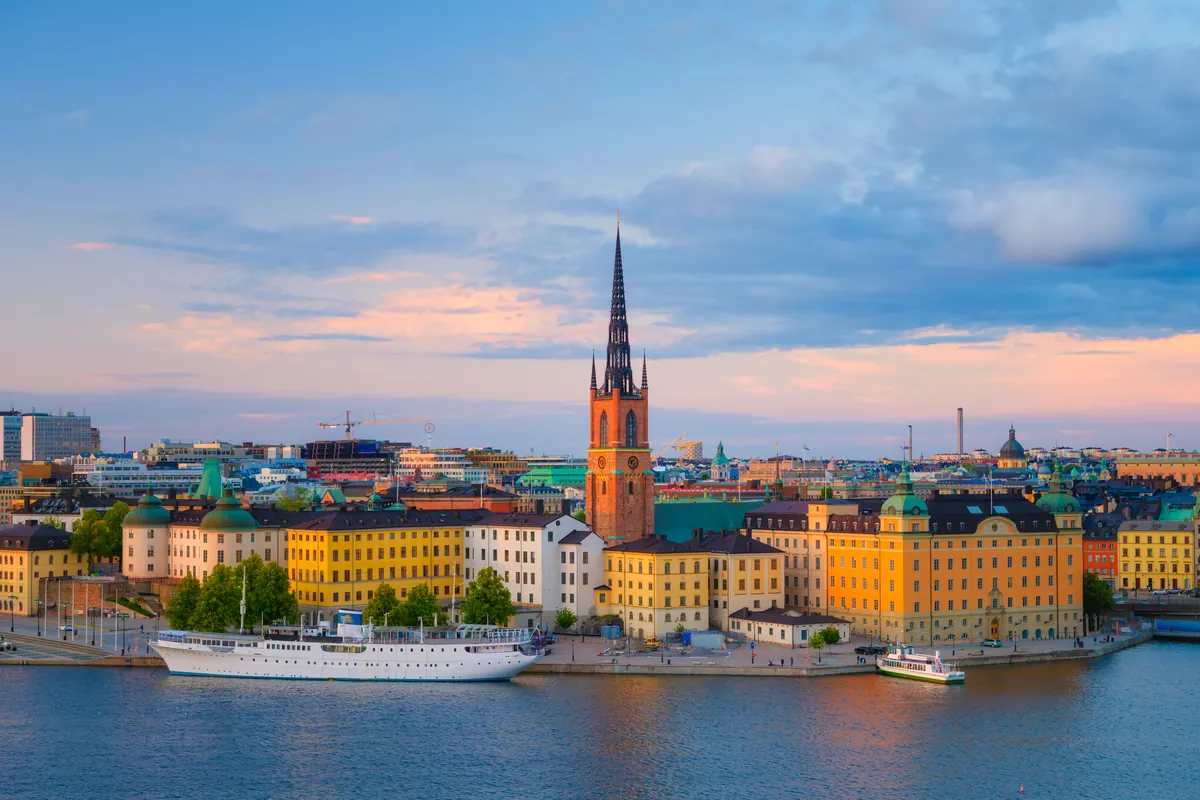
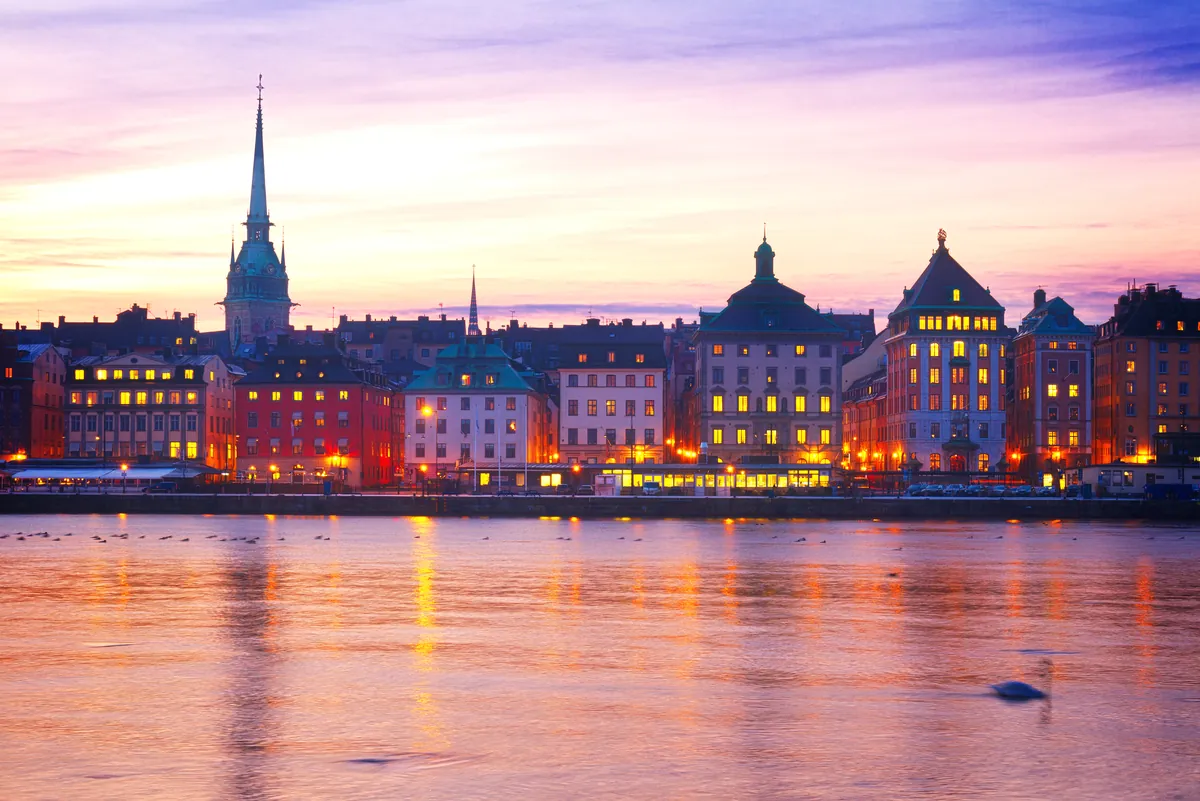
Stockholm spreads across 14 islands at the point where Lake Mälaren meets the Baltic, and almost every walk ends at the water. Copper roofs turn green above the old town, ferries cross between museums, and in June the evening light simply refuses to fade. Three days are enough to see the classic sights without hurrying, to learn the rhythm of and to take a first boat out towards the archipelago.
A city of water, bridges and light
The compact centre makes Stockholm an easy city to read. , the old town, sits on its own island between the Royal Palace and the lake. To the north lie Norrmalm and Östermalm with their stone boulevards and shopping streets. To the south rises Södermalm, the hilly island that residents simply call Söder, and to the east lies Djurgården, a green island of parkland and museums.
Light shapes every visit. Around midsummer Stockholm enjoys nearly 18 and a half hours of daylight, and the sky never fully darkens. In late December the sun rises after half past eight and sets before three, which gives the city its candlelit winter mood. Both seasons have their admirers, and late spring and early autumn offer a gentle middle ground.
Getting there, getting around and where to stay
From Arlanda airport, the Arlanda Express reaches Stockholm Central in about 18 minutes. The commuter train takes around 40 minutes and runs on the regular SL network, although an extra fee applies at the airport station on top of a standard ticket.
Inside the city, SL runs the metro, buses, trams and the Djurgården ferry. You can tap a contactless bank card or phone at the ticket gates, or buy a 24-hour or 72-hour pass in the SL app. Card payment is the norm almost everywhere in Stockholm, from museums to market stalls, and some places no longer accept cash at all.
Much of the centre is best explored on foot. The bridges between the islands are part of the pleasure, and the walk from Gamla Stan up into Södermalm or along the water towards Djurgården shows how closely the city lives with the sea and the lake. Keep public transport for longer hops and for rainy afternoons.
For a short stay, base yourself in Norrmalm near the central station for convenience, in Gamla Stan for atmosphere, in Östermalm for elegant streets close to the water, or in Södermalm for a relaxed, residential feel with plenty of small cafés.
Copper roofs turn green above the old town, ferries cross between museums, and in June the evening light simply refuses to fade.
Three days, hour by hour
Day one Gamla Stan and the royal island
- Morning
Stortorget and Mårten Trotzigs gränd
Start early on Stortorget, the old town’s main square, where tall gabled houses in ochre and red face the former Stock Exchange, now home to the Nobel Prize Museum. Then look for Mårten Trotzigs gränd, a stepped lane between Västerlånggatan and Prästgatan that narrows to about 90 centimetres, the slimmest street in the city.
- Afternoon
Royal Palace and Riddarholmen
Watch the changing of the guard in the outer courtyard of the Royal Palace, held daily in summer around midday, so check current times. Walk on to Riddarholmen, where the burial church of Swedish monarchs raises its slender spire, and stand on Evert Taubes terrass for a wide view across Riddarfjärden.
- Evening
Stockholm City Hall
Cross the water to Stockholm City Hall, the red brick landmark completed in 1923, whose Blue Hall hosts the Nobel banquet every December. The 106 metre tower normally opens in summer, but a renovation is planned for 2027 and 2028, so check access. Afterwards, stroll the waterfront as the light softens.
Day two Djurgården, ships and open-air history
- Morning
Vasa Museum
Walk along Strandvägen and over the bridge to Djurgården, and begin at the Vasa Museum. The warship sank on her maiden voyage in 1628, lay in the mud for 333 years and was raised in 1961. Seeing her dark carved hull fill the great hall is one of the finest museum moments in Scandinavia.
- Afternoon
Skansen
Climb the hill to Skansen, founded in 1891 by Artur Hazelius and the world’s oldest open-air museum. Farmsteads, workshops and manor houses moved here from all over Sweden stand among the trees, and an enclosure of Nordic wildlife sits alongside. Allow at least three hours, longer on a fine summer day.
- Evening
Djurgården ferry to Slussen
Return across the water on the Djurgården ferry, which runs to a terminal near Slussen and accepts regular SL tickets. Watch the palace and the old town slide past, then climb up into Södermalm for dinner in one of the neighbourhood’s relaxed local restaurants.
Day three Södermalm, fika and the first islands
- Morning
Monteliusvägen
Begin with the view. Monteliusvägen is a path of about 500 metres along the northern heights of Södermalm, looking across Riddarfjärden to Riddarholmen, the old town and the tower of City Hall. Early in the day you may have the benches almost to yourself.
- Afternoon
SoFo
Wander east to SoFo, the blocks south of Folkungagatan, with independent design shops, vintage stores and small cafés. This is the moment for a proper fika: coffee, a cardamom or cinnamon bun and no reason at all to rush. Swedes treat the pause as a social ritual rather than a snack.
- Evening
Fjäderholmarna
In summer, boats from Slussen and Nybroplan reach Fjäderholmarna in about 25 minutes. These small islands are the closest taste of the archipelago, with smooth granite rocks, boat sheds and evening sun on the water. Check the last return boat, and outside the season end instead with a walk along Strandvägen.
Fika, the pause that holds the day together
Fika is both a noun and a verb in Swedish. It means a coffee break with something sweet, shared with colleagues, friends or family, and many workplaces build it into the day. It is less about the pastry than about stopping for a while together.
The classic companion is the , the cinnamon bun, soft and spiced and scattered with pearl sugar. Cardamom buns are just as loved. On 4 October Sweden even celebrates Cinnamon Bun Day, a tradition introduced in 1999 by the Swedish Home Baking Council, and bakeries across the country fill their windows.
When to go
June brings the long light, outdoor cafés and the Midsummer weekend, when many residents head out to the islands and the countryside. July and August are warm and relaxed, with the fullest ferry timetables and the most boats to the archipelago. September brings crisp, clear days and quieter museums.
Winter has its own pleasures: Christmas markets in the old town, candles glowing in windows and, in cold spells, ice on the lakes. Days are short, so save the museums for the dark afternoons and use the late morning light for walks along the water.
Words in this article
- Fika
- A Swedish coffee break with something sweet, shared with others at work or at home. The word is both a noun and a verb.
- Kanelbulle
- The Swedish cinnamon bun, usually topped with pearl sugar and celebrated each year on 4 October.
- Gamla Stan
- Stockholm’s old town, on its own island beside the Royal Palace, with medieval lanes and the square Stortorget.
- Riddarfjärden
- The bay of Lake Mälaren between Gamla Stan, Södermalm and Kungsholmen, seen from Monteliusvägen.
- SoFo
- The area south of Folkungagatan on Södermalm, known for small design shops, vintage stores and cafés.
Questions readers ask
Is three days enough for Stockholm?
Three days cover the essentials comfortably: Gamla Stan and City Hall on the first day, the Vasa Museum and Skansen on Djurgården on the second, and Södermalm with a short boat trip on the third. You will not see every museum, but you will get a real feel for the city, its islands and its daily rhythm of coffee and water.
Do you need cash in Stockholm?
Very rarely. Card payment is the norm almost everywhere, from museums and cafés to public transport, and some places no longer accept cash at all. You can tap a contactless bank card or phone at the SL ticket gates or buy passes in the SL app, so a card is usually all you need for a short stay.
Can you climb the City Hall tower?
The 106 metre tower of Stockholm City Hall normally opens to visitors in the summer season, with a lift for part of the way and stairs to the top. A renovation is planned for 2027 and 2028, so check current access before you go. Guided tours of the halls, including the Blue Hall, run separately.