On the water: boat trips worth the morning
From Hamburg’s harbour ferries to the Stockholm archipelago and the Tagus, the boat trips that change how you see a place, and how to choose them well.
Every port city has a second face, and it only shows itself from the water. The skyline settles into a single line, the old warehouses reveal why they were built where they stand, and a coast that looked crowded from the promenade turns into cliffs, coves and pine. A boat trip does not need to take the whole day. Often the best ones last less than an hour and ask nothing more of you than a morning.
Why the water changes the trip
Seen from a deck, a city makes sense in a new way. Harbours were the reason many European cities grew in the first place, and their churches, customs houses and merchant homes face the water because that was where travellers once arrived. Approaching by boat puts you back in that position, and you read the layers of a place in the order they were built.
There is also the simple pleasure of slowing down. On a boat, you cannot hurry. The engine sets the pace, the wind takes the edge off a warm day, and for half an hour nobody needs to look at a map. On a short break, that pause is often the moment the trip settles.

City harbours on a public transport ticket
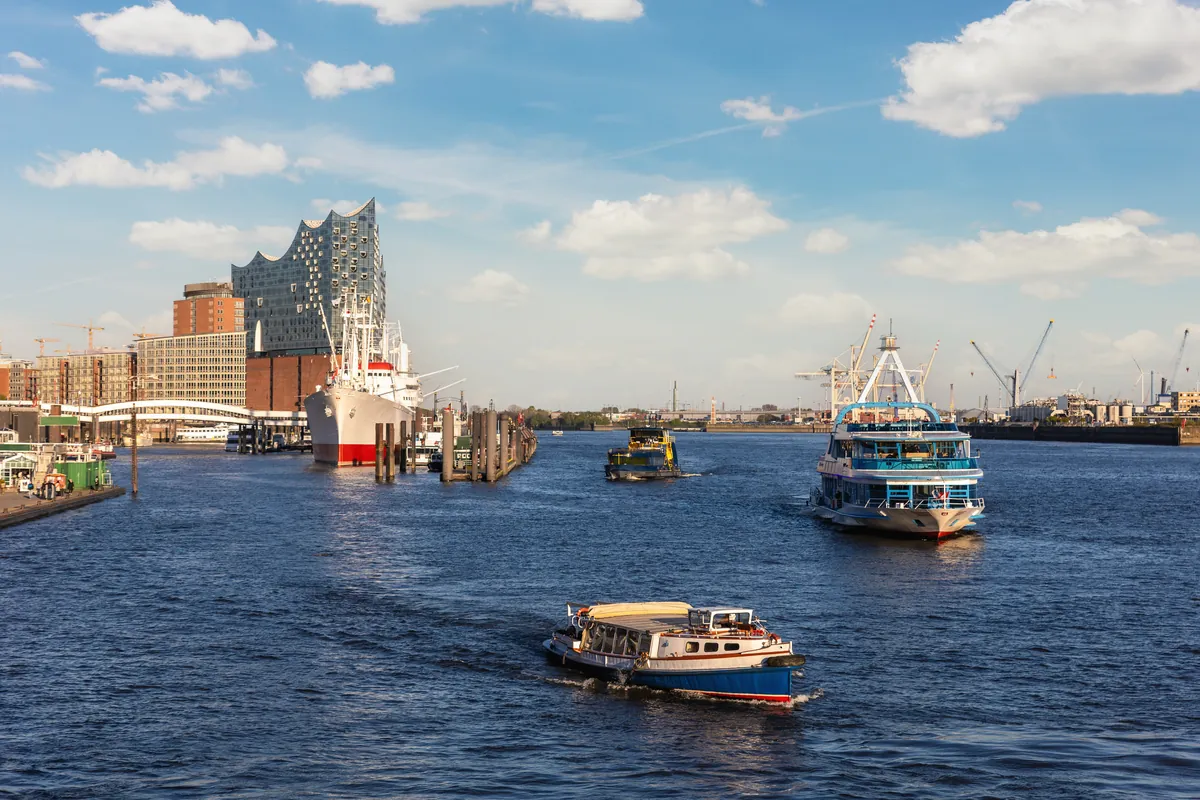
Some of the finest boat trips in Europe are simply public transport. In Hamburg, the harbour ferries belong to the city’s transport network, so an ordinary ticket covers them. Line 62 leaves from the St. Pauli and runs west along the Elbe, past the shipyard docks, the fish auction hall and the museum harbour at Övelgönne, before crossing to Finkenwerder. Get off at Övelgönne for the sandy Elbe beach and the old settlement behind it, then catch a later boat back.
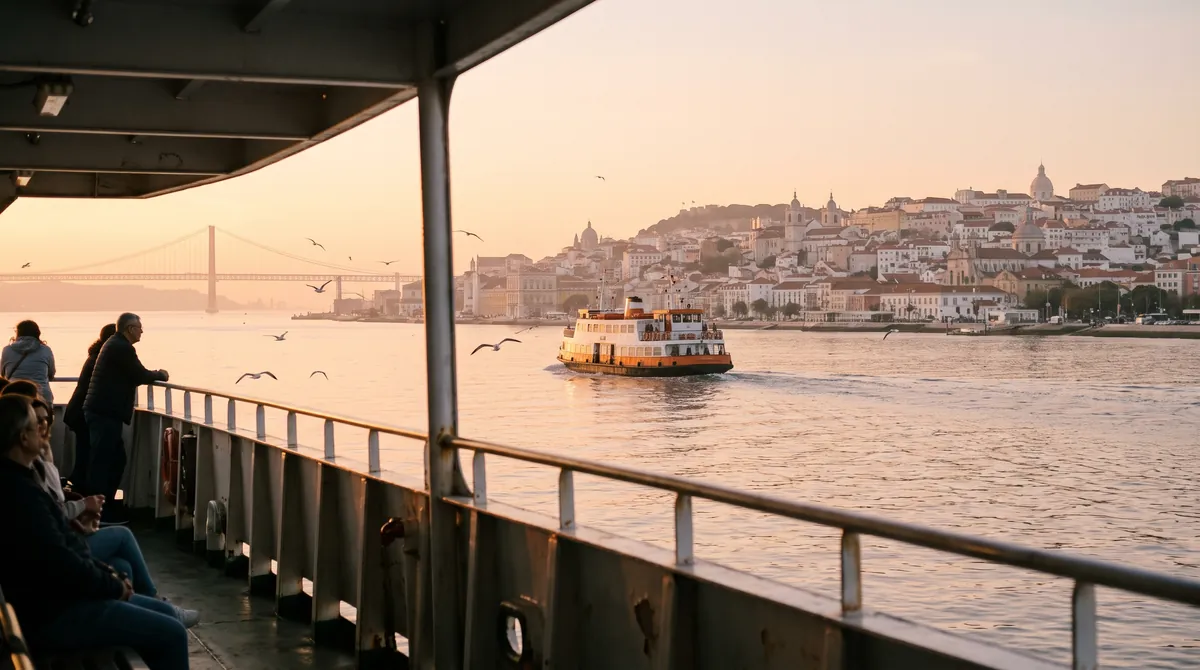
In Lisbon, the commuter ferry from Cais do Sodré to Cacilhas crosses the Tagus in about ten minutes. It is a working boat full of people going about their day, which is part of its appeal. From the deck, the city rises in pale tiers above the river. On the south bank, the frigate Dom Fernando II e Glória, launched in the nineteenth century and now a museum ship, rests in a dry dock close to the ferry terminal, and a short stroll along the riverside opens up one of the widest views of Lisbon there is.
Island boats in the Stockholm archipelago
Stockholm is built on islands, and its stretches far out into the Baltic. The public Waxholm boats, part of the region’s transport system, leave from Strömkajen in the city centre and call at small jetties where islanders wait with shopping bags and bicycles. Even the ride out to Vaxholm shows you how the city gradually gives way to granite, pine and red wooden houses.
If time is short, Fjäderholmarna is the closest group of islands, about 25 minutes by boat from Slussen or Nybroplan. Boats run mainly in the warmer months, from late spring to early autumn. The islands are small enough to explore at an easy pace, with smooth rocks for sitting in the sun and long views back towards the city.
Coasts and coves: Mallorca and Málaga
On Mallorca, the coast is often at its finest where roads cannot reach. From Port de Sóller, boats follow the Tramuntana cliffs to Sa Calobra, where the gorge meets the sea, and the views of sheer rock, sea caves and old watchtowers are the whole point of the journey. In the south, boats from Colònia de Sant Jordi cross to Cabrera, a small archipelago declared a national park in 1991. Only authorised boats may land there and daily visitor numbers are capped, which keeps the islands wonderfully quiet. Many trips add a swim at the Blue Cave when the sea allows.
In Málaga, sailing boats and catamarans leave from the port beside Muelle Uno. Out in the bay, the city arranges itself neatly: the Malagueta beach, the cathedral, the Gibralfaro castle on its hill. Sunset sails are popular, yet a morning sail on a calm day has its own appeal, with clear light on the mountains behind the city and the water still flat. Dolphins are sometimes seen in the bay, a lovely bonus whenever they appear.
A boat trip does not need to take the whole day. Often the best ones last less than an hour.
Calm mornings and steady sea legs
On many coasts, the morning is the calmest part of the day. As the land warms, a often builds in the afternoon, bringing more wind and a livelier swell. If you are unsure of your sea legs, choose an early departure, and a larger boat rather than a small, fast one.
A few habits help. Sit in the middle of the boat, where the motion is gentlest, and stay outside in the fresh air. Keep your eyes on the horizon or a fixed point on land rather than on your phone. Eat something light beforehand and keep sipping water. If you know you are prone to seasickness, ask at a pharmacy for advice before you travel.
- A windproof layer, even in summer, since it is always cooler on the water
- Sun cream, a hat and sunglasses, because light reflects off the sea
- Swimwear and a small towel if the trip includes a swimming stop
- Water and a snack, especially for longer island trips
- A dry bag or a simple plastic bag to keep your phone safe from spray
How to judge a boat tour
Public ferries are straightforward, while organised tours vary widely, and a few questions help you choose. How large is the boat, and how many people will be on board? Smaller boats feel more personal and can slip into shallow coves, while larger ones are steadier in a swell. How much time is spent ashore or swimming, and how much simply cruising? A half day trip with an hour on an island is a very different experience from three hours at sea.
Check whether there is shade on deck, whether drinks are included or you should bring your own, and what happens if the weather turns. Well run tours reschedule when the wind is too strong, which is a good sign rather than a disappointment. Look at the route itself rather than the photographs, and ask whether the boat stops for a swim.
Words in this article
- Landungsbrücken
- The historic landing stages in Hamburg’s St. Pauli district, where many harbour ferries and boat trips depart.
- Archipelago
- A group of islands; Stockholm’s stretches far out into the Baltic Sea.
- Sea breeze
- A wind blowing from the sea towards land, usually building in the afternoon as the land warms.
- Torrent de Pareis
- A gorge in Mallorca’s Tramuntana mountains that meets the sea at the cove of Sa Calobra.
Questions readers ask
Do you need to book Hamburg’s harbour ferries in advance?
No. The harbour ferries are part of Hamburg’s public transport network, so you simply board with a valid ticket, just as you would a bus or train. Line 62 from St. Pauli Landungsbrücken is the classic choice for sightseeing. It can be busy on sunny weekend afternoons, so a weekday morning usually gives you more space at the rail and a calmer crossing.
Can you visit Cabrera from Mallorca on a day trip?
Yes. Boats cross to the Cabrera archipelago from Colònia de Sant Jordi in the south of Mallorca, and many trips include time ashore and, when the sea allows, a swim at the Blue Cave. Because Cabrera is a national park, only authorised boats may land and daily visitor numbers are capped, so book ahead in summer and check the conditions on the day.
What helps if you get seasick easily?
Choose a morning departure, when the sea is often calmer, and a larger, steadier boat. Sit in the middle, stay in the fresh air and watch the horizon rather than a screen. A light meal beforehand suits many people. If you know you are prone to seasickness, ask at a pharmacy for advice before you travel, and start with a short harbour crossing.