
Learning by doing: workshops that make a trip
A two or three hour class often becomes the part of a short break you remember longest. Cooking, tile painting, crafts, baking and wine, and how to choose well.
On a short break, most of what you see passes in front of you. A workshop reverses that. For two or three hours you stand at a counter, a painting table or a loom, using your hands while someone explains how things have always been done here. Long after the museum labels blur, you remember the smell of the dough and the weight of the brush.
Why a class stays with you
Hands-on experiences slow a trip down in the best way. You spend a whole morning in one room, with a small group and a teacher who knows the place well, and the conversation drifts from technique to markets, family recipes and the best season for oranges. It is one of the easiest ways to meet people on a short break without forcing it.
You also take something home. Sometimes it is an object, a painted tile or a small glass bowl. More often it is a skill: the patience to cook a sofrito of onion, garlic and tomato slowly in olive oil, the feel of a dough that has rested long enough, a recipe you will cook again next winter while thinking of the trip.
Cooking in Andalusia and Mallorca
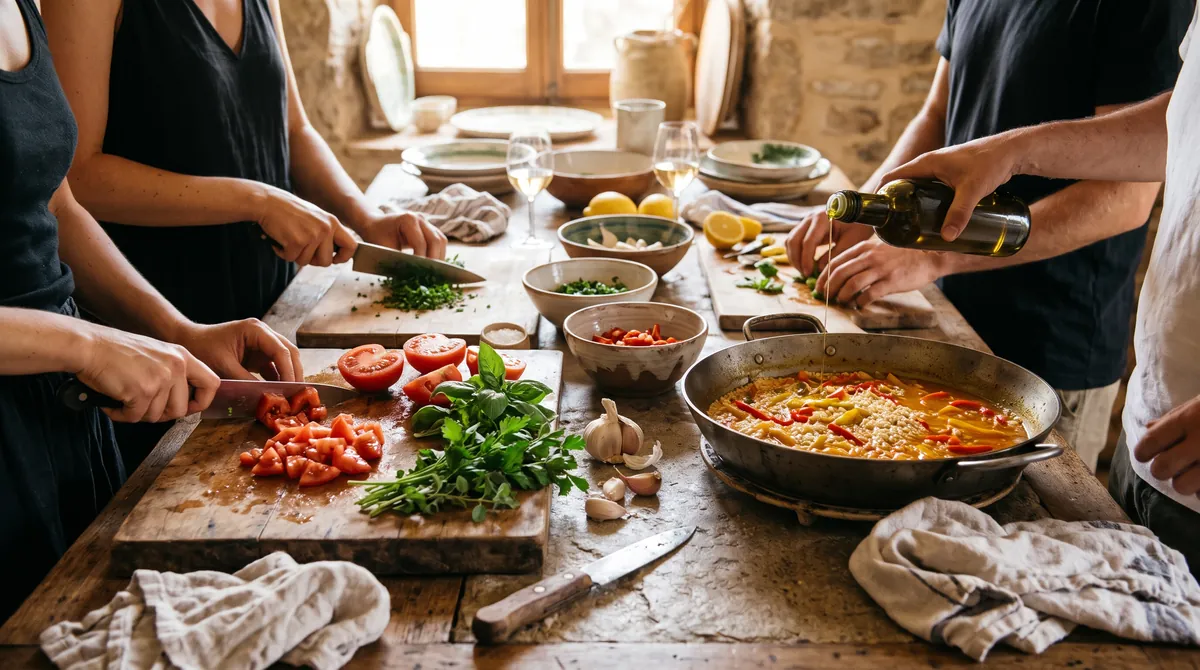
The best cooking classes start at the market. In Málaga, the Atarazanas market is the natural place to begin, with its stalls of fish, olives, almonds and seasonal fruit. Back in the kitchen, you might make , the cold almond and garlic soup closely tied to Málaga, or a deep red salmorejo in the style of Córdoba, thicker than gazpacho and topped with chopped egg and ham.
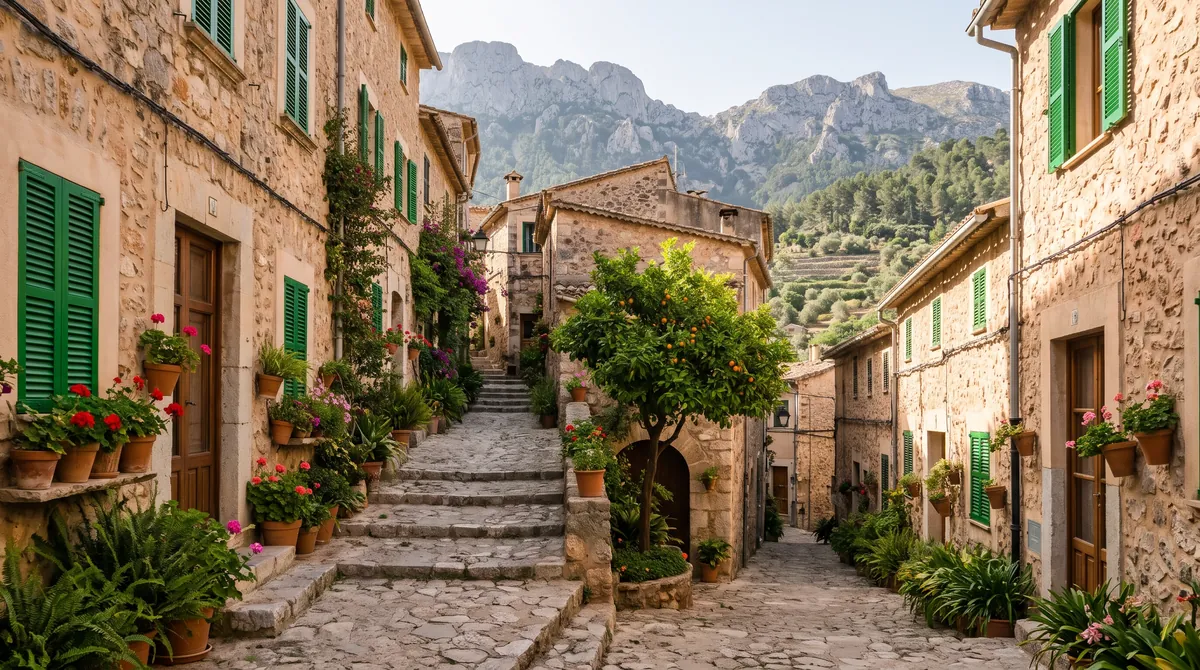
On Mallorca, classes often turn to the island’s country cooking: tumbet, layers of fried potato, aubergine and pepper with tomato sauce, or simple pa amb oli, bread rubbed with tomato and dressed with olive oil. The Mercat de l’Olivar in Palma is a good place for the shopping part of the morning. Many classes end around a shared table, which is half the pleasure.
Tiles, glass and cloth: crafts with a long history
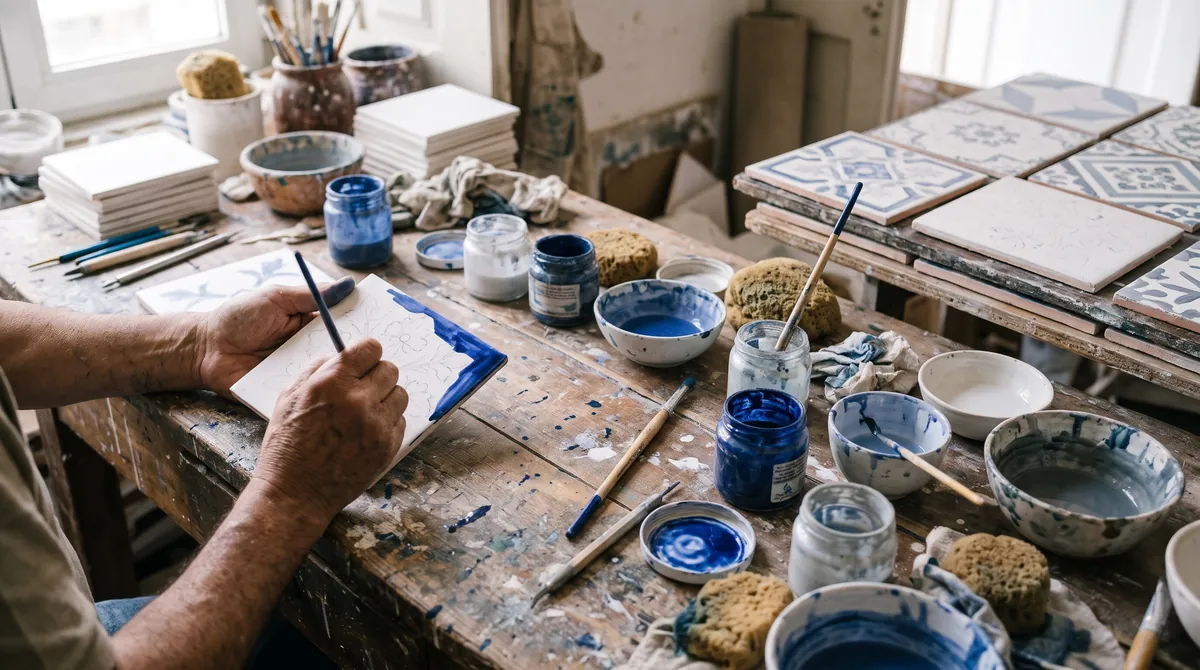
Lisbon is a city dressed in tiles. Azulejos cover church interiors, staircases and whole façades, and painting your own is one of the most popular hands-on experiences in the city. Before or after a class, visit the National Tile Museum, housed in the former Madre de Deus convent founded in 1509. Its collection follows the craft across several centuries, and seeing the patterns up close makes your own brushwork far more interesting.
Mallorca has its own craft traditions. Glassblowing on the island goes back several centuries, and watching a glassmaker turn a glowing gather of glass on a long pipe is mesmerising. The , or “cloth of tongues”, is a Mallorcan ikat fabric: the yarn is dyed before weaving, so the finished pattern looks like flickering flames. Only a handful of workshops still weave it, and a visit shows how much patience goes into a single tablecloth.
Olive oil completes the picture. Oil from the island carries its own protected designation of origin, Oli de Mallorca, and a tasting explains the difference between green, peppery oils from early in the harvest and rounder, milder ones.
Long after the museum labels blur, you remember the smell of the dough and the weight of the brush.
Baking in Stockholm and Vienna
In Sweden, baking is part of everyday life and tied to the ritual of , the coffee break shared with friends or colleagues. A cinnamon bun class teaches you to roll and twist a soft dough, often scented with cardamom, and to finish it with pearl sugar rather than icing. Sweden even has a Cinnamon Bun Day, every 4 October, created in 1999 to celebrate home baking. Traditional crafts suit a Stockholm weekend too, from weaving to painting a wooden horse in the style of Dalarna.
Vienna is the place for pastry. In a strudel class, you learn to stretch the dough over the backs of your hands and across a floured cloth until, as the saying goes, it is thin enough to read a newspaper through. Then come the filling of apples, raisins, cinnamon and buttered breadcrumbs, the careful roll, and the long, fragrant wait while it bakes.
Wine belongs to Vienna as well. The city is one of very few capitals with sizeable vineyards inside its boundaries, on the slopes towards the Vienna Woods and across the Danube. Tastings often focus on Wiener Gemischter Satz, a white wine made from several grape varieties grown together in the same vineyard, and an evening at a , a wine tavern serving the grower’s own wine, rounds off the day nicely.
How to choose a good workshop
A little research makes all the difference. Look for small groups, ideally a dozen people or fewer, so you actually get to work rather than watch. Check the language of the class and whether recipes or instructions come in writing. Ask how long the hands-on part lasts, and what you take home, whether a meal, a finished piece or a set of recipes.
- Book a class early in the trip, so you can use what you learn in the days that follow
- Mention allergies and dietary needs when booking, not on the day
- Wear clothes that can take a splash of oil, paint or flour
- Ask whether finished pieces need drying or firing, and how they travel home
- Leave the hours afterwards free, as classes often run long in good company
Words in this article
- Azulejo
- A painted, glazed ceramic tile, used across Portugal on façades, church walls and staircases.
- Roba de llengües
- Mallorca’s “cloth of tongues”, an ikat fabric whose yarn is dyed before weaving to create flame-like patterns.
- Fika
- The Swedish coffee break, usually with something sweet, shared with friends or colleagues.
- Heuriger
- A Viennese wine tavern serving wine from the grower’s own vineyards.
- Ajoblanco
- A cold soup of almonds, garlic, bread and olive oil, closely associated with Málaga.
Questions readers ask
Do you need any experience to join a cooking or craft class?
No. Most classes for travellers are designed for complete beginners, and the teacher guides you step by step. What matters more is choosing a small group, so you get time at the counter or the table yourself. If you already cook or paint, ask whether there is a more advanced session, as some workshops offer longer or more technical versions.
How do you bring a painted tile home?
Painted tiles usually need to be fired in a kiln before the colours are fixed, which can take a day or more. Ask when you book whether the workshop fires pieces on site and how long it takes. Scheduling the class on the first or second day gives the tile time to be ready before you leave. Wrapped in clothes, it travels well in a suitcase.
Are workshops suitable for people with food allergies?
Usually, yes, as long as you say so in advance. Mention allergies and dietary needs when you book rather than on the day, so the teacher can adapt recipes or prepare alternatives. Baking classes in particular rely on flour, butter, eggs and often nuts, so it is worth asking what will be used. A good teacher will be glad to explain every ingredient.