
Walking holidays at an easy pace: how to plan three good days
A walking holiday needs no summits or long days. How to choose terrain, distances and regions for three relaxed days on foot, with your luggage sent ahead.
Some of the best travel happens at about four kilometres an hour. A walking holiday at an easy pace lets you notice what a car or a train skips: the smell of pine resin after rain, a village bakery opening its shutters, the moment a path turns and the sea appears. It needs no summits, early alarms or heroic distances. With a little planning, three days on foot can feel like a much longer holiday.
Choose the right distance and terrain
The most common mistake is planning too much. For an easy-going trip, 10 to 15 km a day on good paths is plenty for most people who walk regularly at home. That leaves time for a long lunch, a swim or a church visit along the way, and it means arriving at your inn with energy to spare for the evening.
Height gain matters as much as distance. A flat 15 km along a coast or a river feels very different from 10 km with a steep climb in the middle. When you read a route description, look at the , the surface and how much of the walk is in shade. Forest tracks, old towpaths, vineyard lanes and coastal paths make the most relaxed walking.
- Little total ascent, ideally spread across the day
- Wide, firm paths rather than rocky ground
- Villages or cafés every few hours
- Clear waymarking
- Bus or train stops along the way, in case you want to shorten a
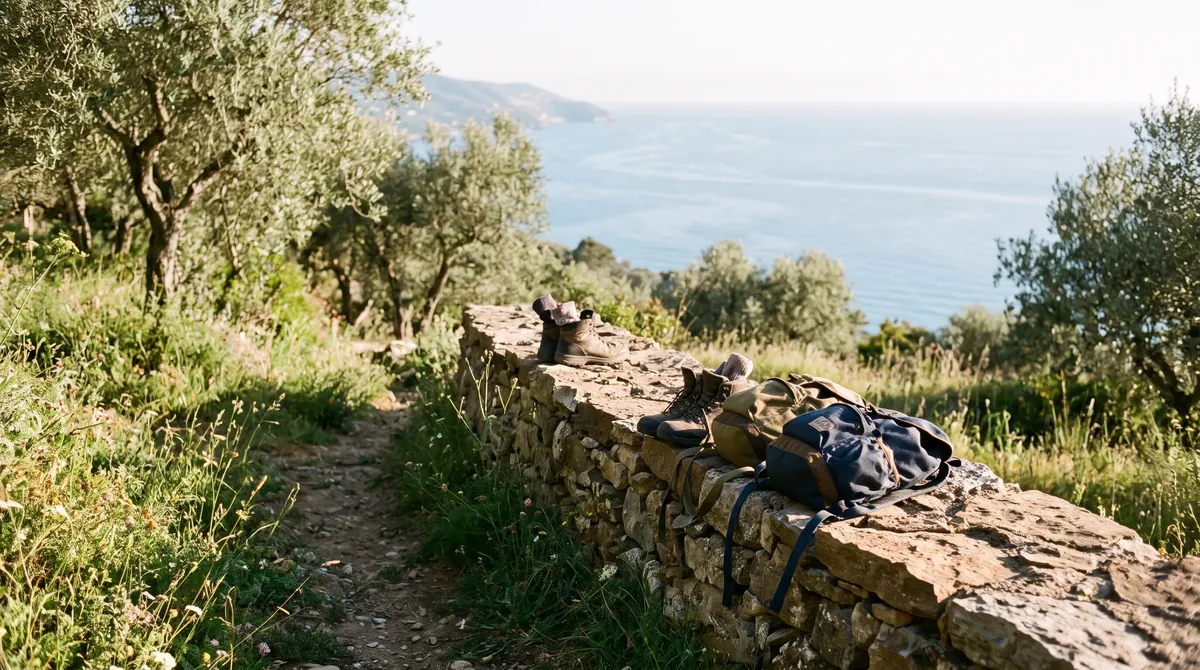
Self guided walking and luggage transfer
One of the pleasures of an easy walking holiday is carrying nothing more than a light daypack. walking holidays, offered in many regions, include route notes, rooms booked in a chain of inns or guesthouses and : your suitcase travels by van each morning and is waiting at the next stop when you arrive. You walk at your own pace, alone or with your companions, with no group to keep up with.
You can also arrange this yourself. Many walking regions have local services that move bags between accommodation, and guesthouses on popular routes are used to walkers arriving in the afternoon. Booking a few nights in a single base and taking day walks from there is another simple option, especially for a three day trip.
The evenings are part of the reward. Arriving on foot gives a village a different feel: you know the shape of the hills around it, you have seen its church tower from far off, and dinner tastes of a day well spent outdoors. Choose places to stay where you can walk to supper and sit outside afterwards, and the holiday will feel complete even on short days.
Long distance trails, one stage at a time
Marked long distance trails are usually divided into stages, many of them designed to end in a village with somewhere to sleep. You do not need to walk the whole trail. Picking two or three of the gentlest stages makes a satisfying short holiday, and the waymarking does most of the navigation for you.
In Germany, two seals of quality help with planning. The Qualitätsweg Wanderbares Deutschland label, awarded by the German Hiking Association, goes to well marked long distance routes, while the seal of the German Hiking Institute is given to trails judged especially rewarding to walk, including many shorter routes. Both are checked again every few years.
Some of the best travel happens at about four kilometres an hour.
Good regions for an easy pace
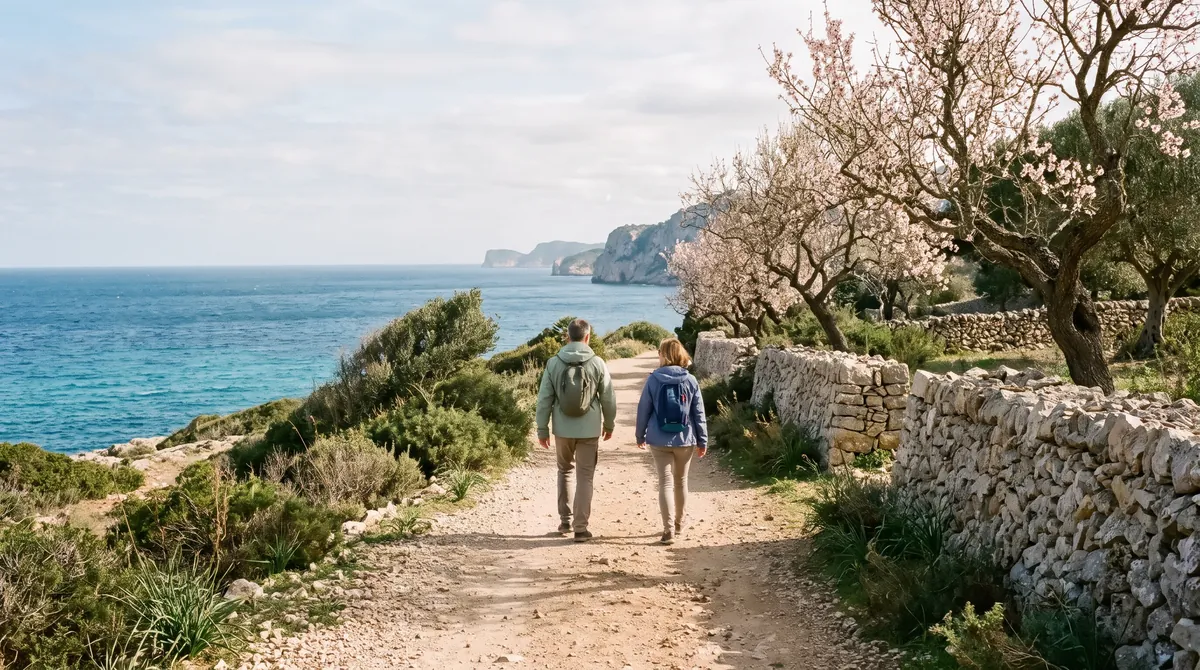
Mallorca in spring is a classic. While the Tramuntana mountains draw keen hikers, the island also has gentle coastal paths and quiet country lanes through the central plain, with wildflowers in spring and almond blossom in late winter. Around the Llevant peninsula near Artà, flat coastal walks lead past quiet coves, and the small natural park of Mondragó in the southeast is known for short, easy walks between turquoise bays.
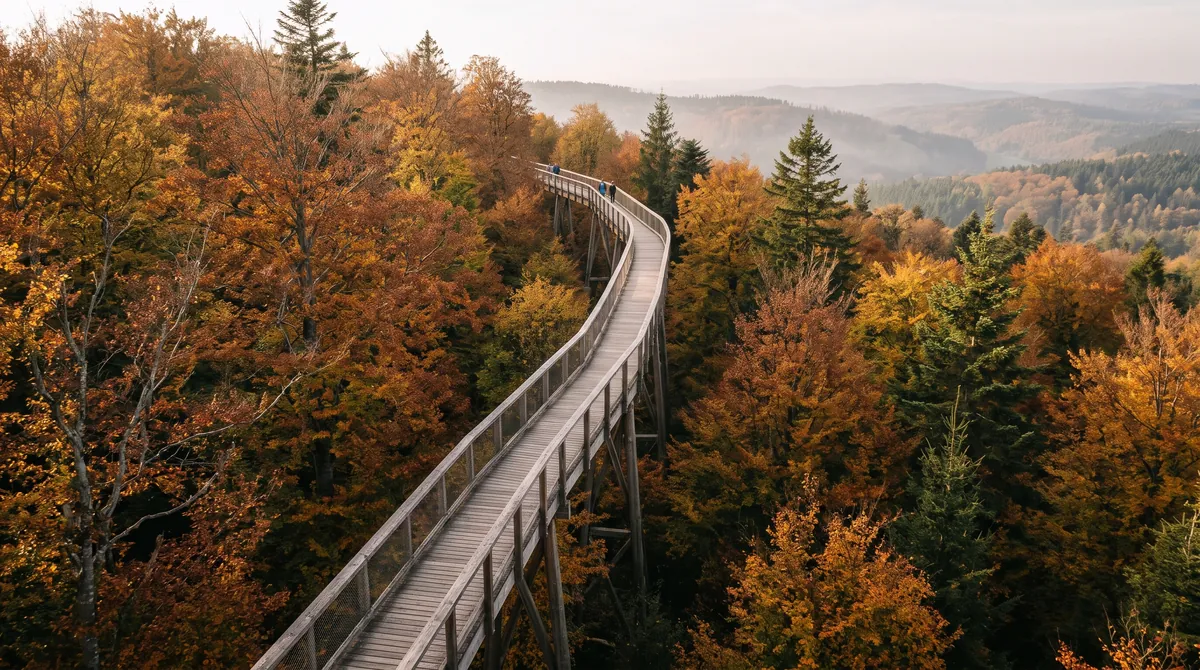
In Germany and Austria, forest trails offer shade, soft ground underfoot and inns at regular intervals. Low mountain ranges, river valleys and lake regions are ideal, and the paths are generally very well marked. A riverside path below vineyards or a loop through beech woods makes an easy and rewarding day.
For something different, try the Stockholm archipelago. The Stockholm Archipelago Trail links twenty islands over roughly 270 km and uses public ferries between its sections, so you can walk one or two island stages and let the boat carry you onwards. Car-free Utö, with its old mining village and beaches, and Grinda, with its swimming coves and forest paths, both suit an unhurried pace. Ferries are seasonal, so check timetables before you go.
Shoes, layers and the art of resting
Comfortable feet decide the whole trip. Light walking shoes or trail shoes are enough for good paths, and there is no need for heavy boots. Whatever you choose, break them in at home over several walks before you travel, and pack the socks you walked in. A few plasters in the daypack are always worth having.
Dress in layers you can add and remove as the day changes: a breathable shirt, a light fleece and a thin waterproof jacket cover most spring and autumn days. Carry water, a snack and sun protection, and refill your bottle whenever you pass a café.
Build rest into the plan. On a three day trip, a shorter middle day or a lazy afternoon in a village square keeps the holiday feeling like a holiday. When you walk with friends of different fitness, let the slowest walker set the pace, agree on meeting points and choose routes with shortcuts, so that everyone can shape the day to suit them.
Words in this article
- Stage
- One section of a long distance trail, usually walkable in a day and ending somewhere you can sleep.
- Luggage transfer
- A service that moves your bags from one place to stay to the next while you walk.
- Self guided
- A walking holiday without a guide, with route notes and rooms booked in advance.
- Premiumweg
- A German walking trail certified by the German Hiking Institute for the quality of the walking experience.
- Total ascent
- The sum of all uphill sections on a route, measured in metres.
Questions readers ask
Do you need to be fit for an easy walking holiday?
You do not need to be an athlete. If you enjoy walking for a couple of hours at home, a trip with 10 to 15 km a day on good paths is very manageable. Choose routes with little ascent, plan a shorter middle day and pick stages with bus or train connections, so you can shorten any day you like.
Is a self guided walking holiday suitable for solo travellers?
Yes, it is a popular choice for people travelling alone. The route notes and waymarking handle the navigation, your rooms are booked in advance and your luggage travels ahead. You walk at your own pace and meet other walkers in the evening at the inns along the way, or enjoy the quiet if you prefer.
When is the best time for gentle walking in Mallorca?
Spring is the favourite season, with wildflowers, mild days and green fields, and autumn is lovely too. Late winter brings the almond blossom to the plains. In the height of summer, walks are best kept short and early in the morning, with the rest of the day for swimming and long, shaded lunches.