Lofoten in four days: light, fishing villages and short hikes
North of the Arctic Circle, Lofoten rises straight out of the sea. A four day plan for fishing villages, white beaches and short hikes in the northern light.
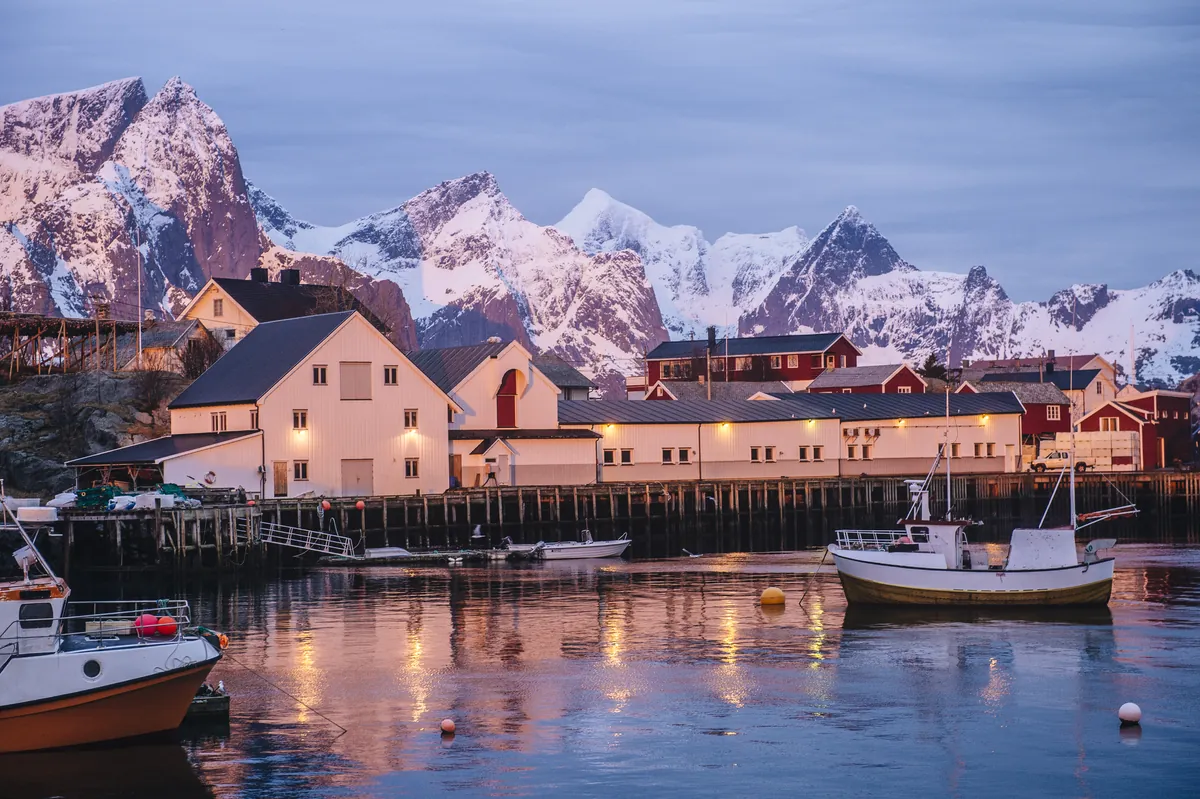
The Lofoten Islands rise out of the Norwegian Sea in a jagged line of granite peaks, with red fishermen’s cabins at their feet and beaches of pale sand between the headlands. They lie well north of the Arctic Circle, yet the Gulf Stream keeps the climate milder than the latitude suggests. Four days is enough to drive the length of the main islands, walk a few short trails and watch the light change over the water, which is what Lofoten does best.
Getting there and getting around
Most journeys start in Bodø on the mainland. From there, short regional flights take you to Leknes or Svolvær, or you can board the car ferry from Bodø to Moskenes, a crossing of about three to three and a half hours that runs all year. The ferry docks a short drive from Reine and is a fine way to watch the islands appear on the horizon. In summer, book a place for your car well ahead.
You can also drive the whole way. Since 2007, the E10 has linked Lofoten with the mainland by road, without a ferry, and it runs the length of the islands to the village of Å at the very end. Another option is to fly to Evenes, the airport for Harstad and Narvik, and drive about three hours to Svolvær.
Once on the islands, a rental car makes all the difference. Buses connect the main villages, but the best beaches and trailheads are spread out, and a car lets you follow the weather. Distances are modest, though the roads are narrow and winding, so allow more time than the map suggests.
Where to stay: rorbuer and fishing villages
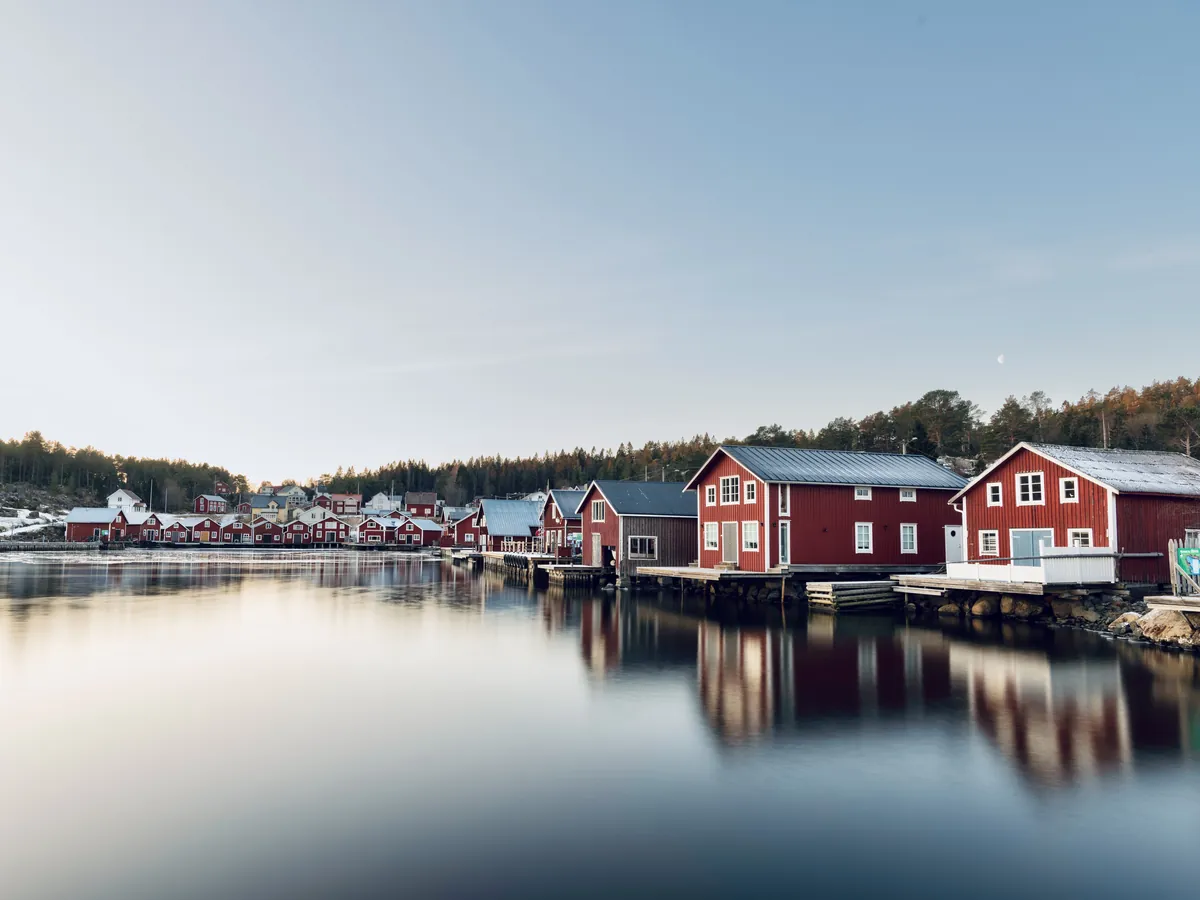
The classic Lofoten stay is a , a fishermen’s cabin built at the water’s edge, often on stilts and usually painted red or ochre. Fishermen once lodged in them during the winter cod season. Today many have been restored for visitors, and waking to the sound of the sea beneath the floorboards is the essence of a Lofoten morning.
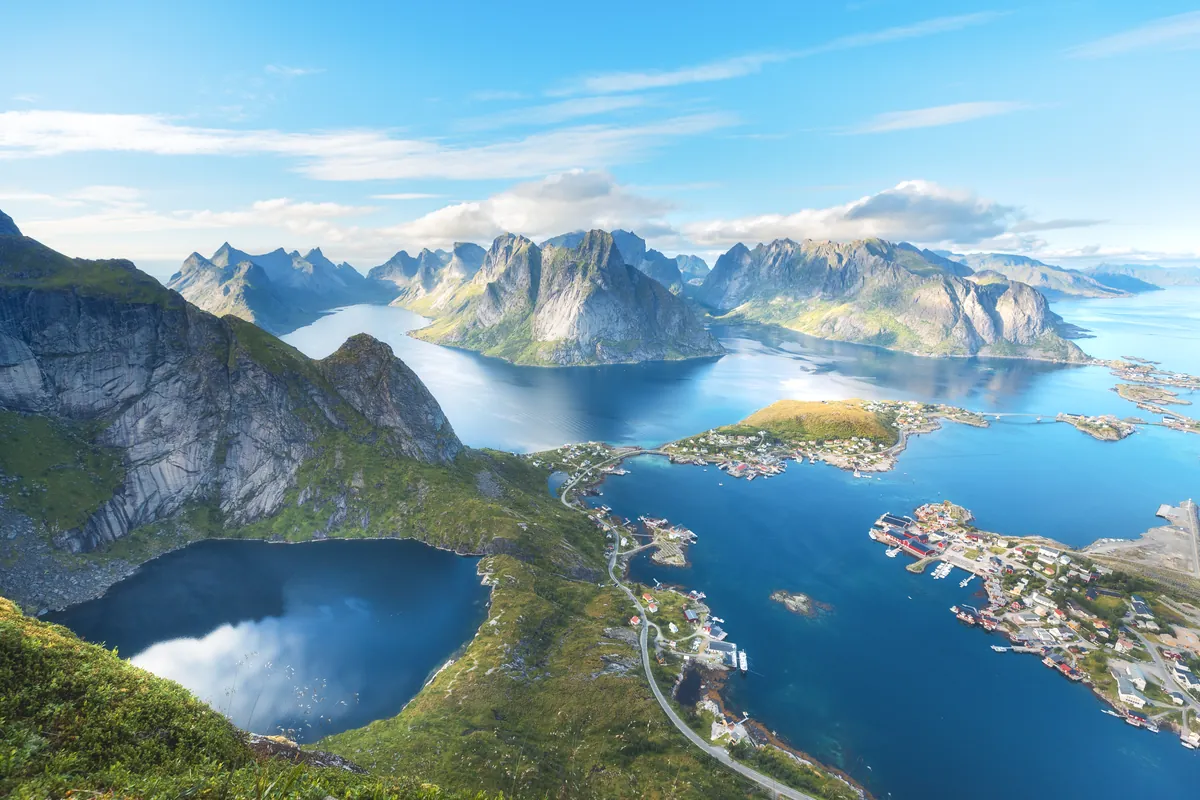
Base yourself in two places if you can. In the west, Reine and Hamnøy sit among steep peaks and narrow fjords, close to the ferry and the famous views. Further east, Henningsvær spreads across a cluster of small islands linked by bridges, with galleries, a harbour full of boats and a calmer, more open feel. Nusfjord, on Flakstadøya, is one of the oldest and best preserved fishing villages in Norway, its wooden buildings gathered tightly around a small harbour.
Waking to the sound of the sea beneath the floorboards is the essence of a Lofoten morning.
A four day route
Lofoten works best from west to east or the other way round, so you never retrace your steps. A simple plan looks like this, with plenty of room for the weather to have its say.
- Day one: arrive in Moskenes or Leknes, settle into a rorbu near Reine and walk to the bridge at Hamnøy for the evening light on the peaks.
- Day two: climb Reinebringen in the morning if the trail is open, drive to Å at the end of the road, then continue to Nusfjord in the afternoon.
- Day three: head to Vestvågøy for Haukland and Uttakleiv beaches, walk the coastal path between them and stay out late for the light.
- Day four: drive east to Henningsvær, wander the harbour and the small islands, and finish in Svolvær before your flight or the drive home.
Short hikes and long beaches
Reinebringen is the best known short hike in Lofoten. A staircase of nearly 2,000 stone steps, built by Nepalese Sherpas, climbs the steep slope above Reine to a viewpoint over the village, the fjords and the peaks beyond. It is short but steep, so take your time, and check locally whether it is open, as the trail closes at times for maintenance work.
For something gentler, head to Vestvågøy, near Leknes. Haukland beach is a sweep of white sand and turquoise water below the mountains, and an old coastal path leads around the headland to Uttakleiv, avoiding the road tunnel. Uttakleiv faces the open sea and is one of the classic places to watch the in summer.
When to go: midnight sun, northern lights and stockfish
Lofoten changes completely with the seasons. From about the end of May to the middle of July, the midnight sun never sets, and you can hike or walk the beaches at any hour. Late summer brings darker nights, and from late August or September to around mid April, clear skies can bring the northern lights rippling over the peaks.
Late winter has its own beauty. From January to April the , the migrating Arctic cod, arrive to spawn, and the fishing season brings the harbours to life. The fish are hung in pairs on wooden racks to dry in the cold wind, and by early summer they have become , a tradition that reaches back to the Viking era. The laden racks are one of the most memorable sights of the islands in spring.
Whatever the month, the weather can change within an hour. Pack layers, a waterproof jacket and good walking shoes, even in July.
Travelling with care
Lofoten’s small communities welcome visitors who tread lightly. Park only in marked spaces, since many roadside spots now have overnight parking bans, and use campsites or official parking areas if you travel by camper van. Norway’s right to roam, , lets you walk freely on uncultivated land and pitch a tent at a respectful distance from houses, but it does not extend to driving or parking off the road.
Take your rubbish with you, stay on marked paths where they exist, and give grazing sheep and nesting birds plenty of space. Treat the beaches as you would a garden you were invited into, and the islands will stay as beautiful for the next visitors as they were for you.
Words in this article
- Rorbu
- A traditional fishermen’s cabin at the water’s edge, often on stilts, now frequently rented to visitors. The plural is rorbuer.
- Skrei
- Arctic cod that migrate from the Barents Sea to the waters around Lofoten to spawn in late winter.
- Stockfish
- Unsalted cod dried in the open air on wooden racks, a Lofoten speciality.
- Allemannsretten
- Norway’s right to roam, allowing access to uncultivated land on foot, with rules on respect and distance.
- Midnight sun
- The weeks around midsummer when the sun stays above the horizon around the clock.
Questions readers ask
Is four days enough for Lofoten?
Four days is enough to see the main islands at a relaxed pace if you have a car. Spend two nights in the west around Reine and Hamnøy and two further east near Henningsvær or on Vestvågøy, and you avoid long drives back and forth. Leave some flexibility, because the weather often decides which day suits hiking and which suits villages.
Do you need a car in Lofoten?
A car is the easiest way to explore. Buses link the main villages, but beaches, trailheads and viewpoints are spread out, and with your own car you can follow clear weather from one island to the next. Book early for summer, when demand is high, and remember to park only in marked spaces, since overnight parking is restricted in many places.
When is the best time to see the northern lights in Lofoten?
The season runs from late August or September to around mid April, when the nights are dark enough. Clear skies matter above all, so watch the cloud forecast as closely as the aurora forecast. Autumn is a good compromise: nights are properly dark, temperatures are milder than in midwinter, and the days still offer useful hours of daylight for walks.