
Walking Mallorca’s north coast: the Tramuntana for beginners
Dry stone terraces, old mule paths and sea views: how first-time walkers can explore the Serra de Tramuntana, from easy coastal stretches to the long GR 221.
The Serra de runs along Mallorca’s northwest coast, a chain of limestone mountains that falls steeply into the sea. Its paths were built for mules, charcoal burners and farmers, and many of them are still paved with stone and edged with walls. You do not need to be a mountaineer to enjoy them. With good timing and a few sensible habits, a beginner can spend three days here walking from village to village and returning by bus or tram.
A landscape shaped by hand
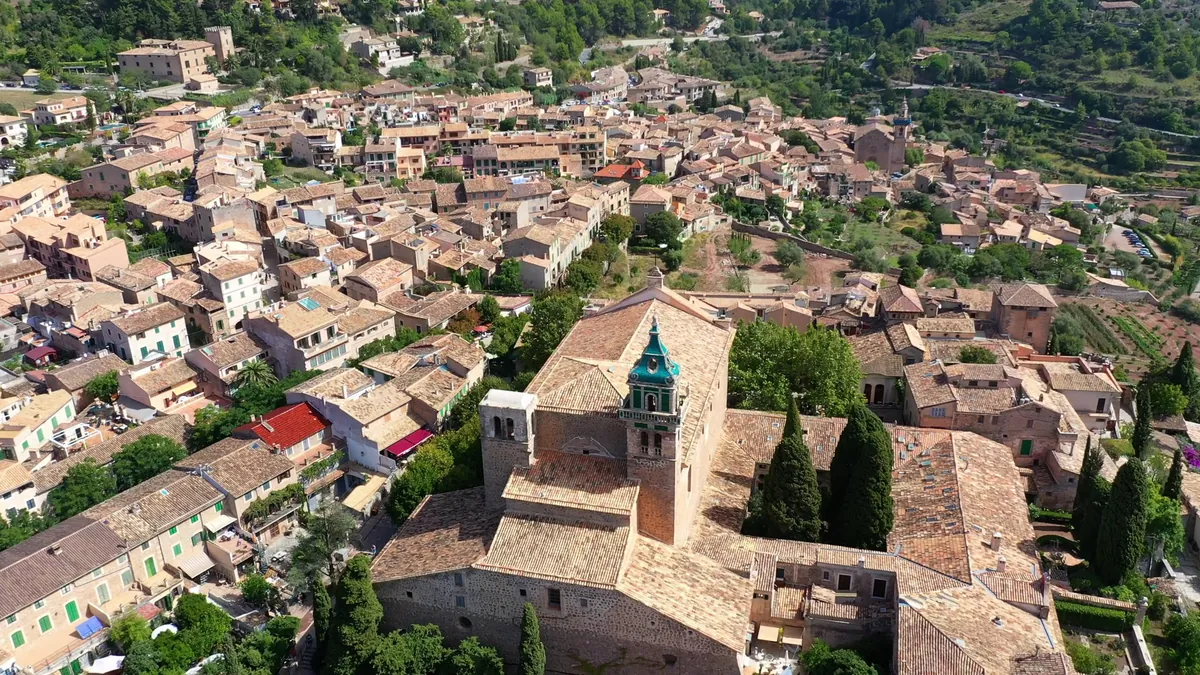
In 2011 UNESCO inscribed the Serra de Tramuntana on the World Heritage List as a cultural landscape. The listing recognises centuries of farming in a steep, dry setting: terraces held up by dry stone walls, known locally as , networks of channels and cisterns that gather and share water, and the paths that connect farms, villages and the sea. UNESCO highlights how water techniques introduced in the Islamic period were combined with the farming systems of the Christian settlers who arrived in the 13th century.
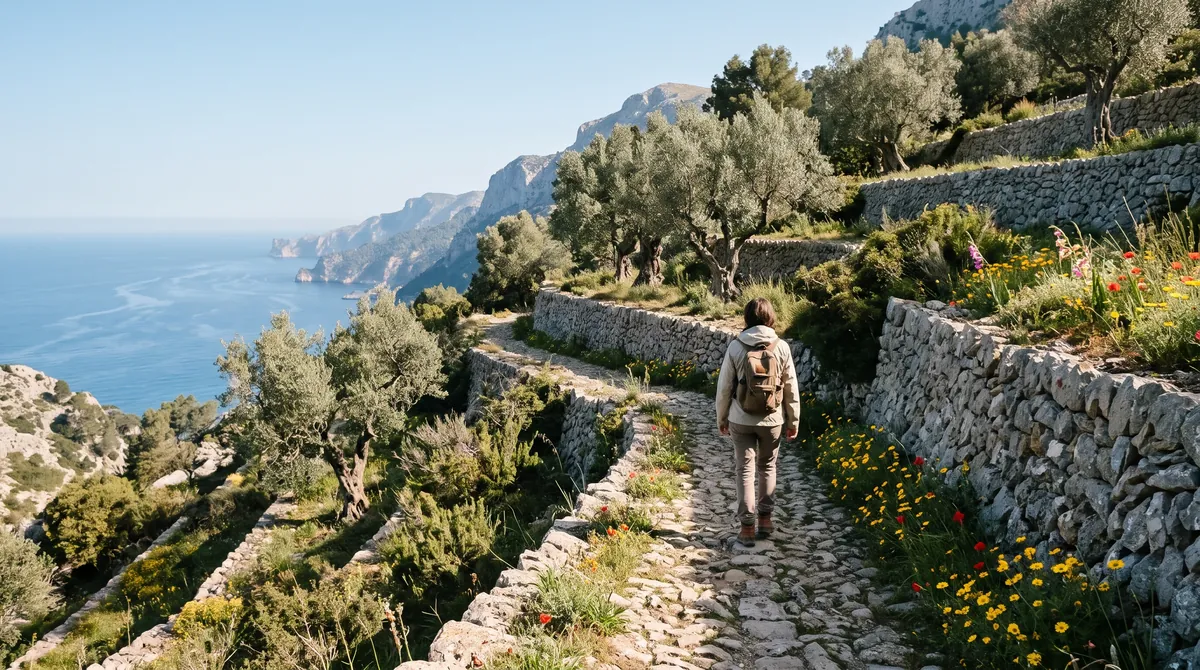
For walkers, this means the landscape itself is the story. Olive trees hundreds of years old grow on terraces above the sea, stone steps climb through holm oak woods, and old lime kilns and charcoal burners’ platforms appear beside the path. Every few minutes there is a wall, a channel or a stairway that someone built by hand.
For walkers, this means the landscape itself is the story.
The GR 221, the Dry Stone Route
The GR 221, known in Catalan as the , or Dry Stone Route, crosses the range from Port d’Andratx in the southwest to Pollença in the north. It is usually walked in around eight to ten stages, with variants that add further options. Along the way, mountain refuges run by the Consell de Mallorca, the island council, offer dormitory beds and meals, and are booked online in advance.
Beginners need not walk the whole route. Single stages make excellent day walks, especially in the central section around Deià, Sóller and the mountains towards Lluc, where refuges such as Can Boi in Deià and Muleta near Port de Sóller sit close to the path. Some stages are long and rocky, with real climbs, so start with a short one and see how it feels.
Easy walks to start with
The classic first walk follows the coast from Deià to Port de Sóller as part of the GR 221. Waymarked paths and old tracks lead past terraced olive groves and farmhouses with the sea below on your left, then descend towards the lighthouse at Cap Gros above the port. Allow about three and a half hours without long stops, and return by bus.
Near Deià, the viewpoint above Sa Foradada looks down on a rocky peninsula pierced by a great hole in the rock. The estate of Son Marroig, once home to Archduke Ludwig Salvator and now a museum, overlooks it. The path down to the peninsula crosses private land, so check current access before you set out. The view from above is lovely at sunset in any case.
For a level, gentle outing in the high mountains, the path around the Cúber reservoir circles the water in about an hour, with the peaks of the central range all around. It starts beside the Ma-10 mountain road and is a fine place to watch for birds of prey circling over the ridges.
For more ambitious walkers
Once you have found your stride, the Tramuntana offers bigger days. Puig de Galatzó, at 1,027 metres, rises where the municipalities of Estellencs, Puigpunyent and Calvià meet in the southwest of the range. Routes to the summit are signposted, but the climb is steep and stony and best kept for walkers with some experience on rocky ground.
From the Cúber reservoir, a longer walk descends through a gorge beside a water channel, passing through short tunnels, to the Tossals Verds . It is a satisfying full day for confident walkers and shows how water is still carried through these mountains.
When to go and how to get around
The best walking months are February to May, when almond blossom gives way to wild flowers, and October and November, when the heat has gone and the light is clear. Summer is hot, shade is limited on many sections and springs can run dry, so in July and August walk early, keep it short and carry plenty of water. Winter is often mild, though snow can settle on the high peaks.
Public transport makes linear walks easy. The heritage railway from Palma to Sóller opened in 1912, and an electric tram has linked Sóller with Port de Sóller since 1913. Buses run along the mountain road between Port de Sóller, Deià, Valldemossa and Palma. Check current timetables, and set off early in high season when seats fill quickly.
- Walking shoes or boots with good grip, as many paths are stony
- At least one and a half litres of water per person, more in warm weather
- Sun hat, sunglasses and sun cream, even in spring
- A light layer for wind on ridges and headlands
- A map or an offline route on your phone, as the signal can fade in valleys
Stay on marked paths. Much of the Tramuntana is private land, and many routes pass through working farms and estates. Close every gate behind you, leave livestock undisturbed and follow the waymarks where signs ask you to.
Words in this article
- Marjades
- Mallorcan word for the farming terraces held up by dry stone walls across the Tramuntana.
- Ruta de Pedra en Sec
- Catalan name of the GR 221, the Dry Stone Route across the Serra de Tramuntana.
- Tramuntana
- The north wind in Catalan, which gives its name to Mallorca’s northwestern mountain range.
- Refuge
- A mountain hostel on the GR 221 with dormitory beds and meals, run by the island council.
Questions readers ask
Is the Tramuntana suitable for beginners?
Yes, if you choose your walks carefully. Coastal routes such as Deià to Port de Sóller and the circuit around the Cúber reservoir follow marked paths and old tracks without technical sections. Start with shorter walks, wear shoes with good grip and carry water. Leave summits such as Puig de Galatzó until you have more experience on rocky ground.
Do you need to book the GR 221 refuges?
Yes, it is wise to book in advance, especially in spring and autumn when the route is most popular. The refuges are run by the Consell de Mallorca and reservations are made online. They offer dormitory beds and meals, so you can walk with a lighter pack, but check what is included, such as bed linen and towels, before you set off.
Can you walk in the Tramuntana in summer?
You can, with care. Start at first light, choose shorter routes with shade or sea breezes, and carry more water than you think you need, because springs along the way can run dry. Many walkers save the longer stages for spring and autumn and spend summer days on short coastal walks followed by a swim.