
Boutique hotel or holiday flat: choosing for three nights
Location, check-in, breakfast, fees and licences: a practical comparison for city breaks, with a checklist to run through before you book.
For a week or more, a holiday flat often wins without much discussion. For three nights the arithmetic changes. Every hour counts, arrival and departure take up a larger share of the trip, and one-off fees weigh more heavily when they are spread over only a few nights. Here is how to weigh a small hotel against a rented flat, point by point, so that the choice suits the trip rather than habit.
Location comes first
Whatever you choose, the address matters more than the décor. Aim for a base within walking distance of the places you most want to see, so you can return in the afternoon to rest or change without planning a journey. On a short trip, saving twenty minutes each way soon adds up to an extra museum or a long lunch.
Then look at the street itself. A lively square is wonderful at dinner time and less so at two in the morning. Streets known for nightlife, rooms above bars and windows facing a tram line can all be noisy after dark. Small hotels usually know which of their rooms are quiet. With a flat, read the description closely, look at the street on a map and ask which way the bedroom faces.
Transport links count too. A base close to a metro, tram or bus stop on a direct line from the airport or main station makes arrival and departure far easier with luggage, and on the last morning it lets you keep sightseeing until the final hour.
On a short trip, saving twenty minutes each way soon adds up to an extra museum or a long lunch.
Arrival, keys and the first coffee
Arrival is where the two options differ most. A hotel with a staffed reception lets you arrive on a late flight, leave bags before check-in and collect them after check-out, which can give you most of a fourth day in the city. Many flats work with key boxes, door codes or a meeting at a fixed time, and a delayed train can turn the handover into a long evening on the phone.
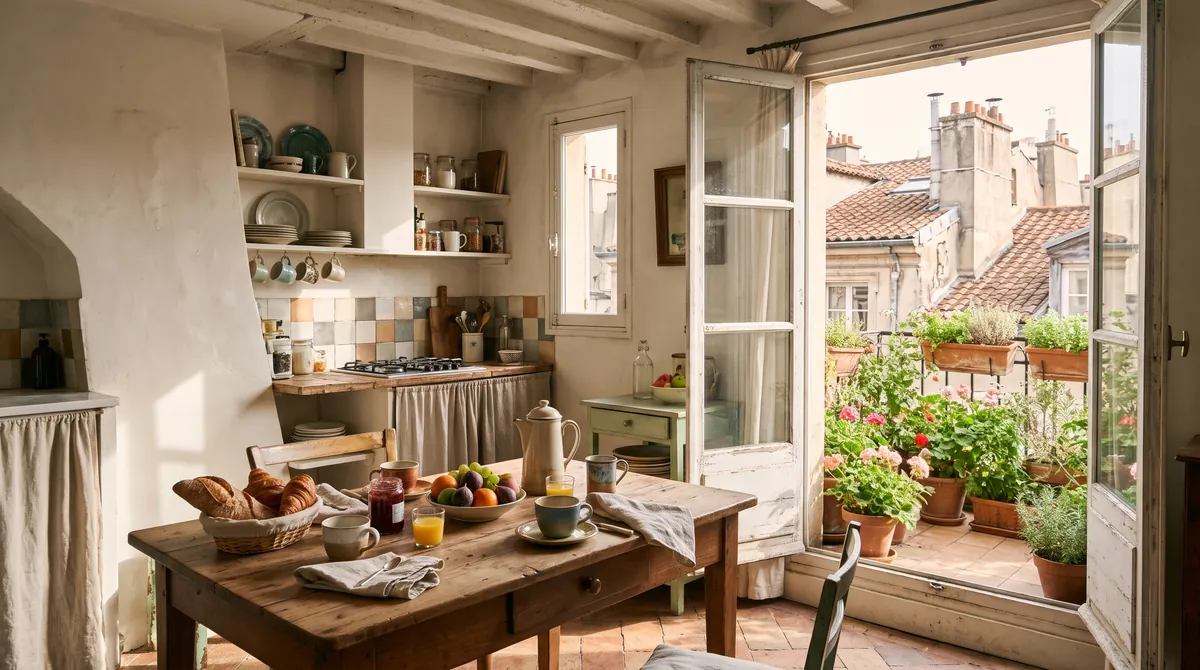
Breakfast is the other quiet advantage of a small hotel. A coffee a few steps from your room, and someone who can tell you which bakery opens early, makes the first morning easy. A flat offers the freedom of your own kitchen, but on the first day the cupboards are usually empty, so plan a café breakfast or a quick shop on arrival.
What a short stay really costs
Compare the total price for the whole stay rather than the nightly rate. Holiday flats often add a one-off , and some set a of three nights or more. Spread across a week, a cleaning fee hardly matters. Spread across three nights, it can make a flat cost more than a comfortable hotel room.
A applies to both. Many cities and regions collect one per person per night, among them the Balearic Islands, Lisbon, Barcelona and Amsterdam. Hotels usually add it to the bill at departure, while flats may include it in the booking or collect it separately. It is a modest sum, but worth including before you compare offers.
Licences and registration numbers
Holiday rentals are regulated in many places, and the rules have grown clearer. In the Balearic Islands, advertisements for holiday rentals must show a tourism registration number, and Spain has added a national registry for short-term rentals. In Portugal, holiday lets need an registration, and its number should appear in every listing, in Lisbon as elsewhere.
Since May 2026, an EU regulation has required online platforms to display the registration number wherever a country or city runs a registration scheme. For travellers the advice is simple: check that a number is shown before you book. A visible number tells you the flat is registered under local rules, which adds peace of mind for a short trip.
Comfort details, and when a flat wins
Comfort on a short trip comes down to sleep. Ask about bed sizes, blackout curtains or shutters, air conditioning in summer and heating in winter. In older buildings check whether there is a lift, because a fourth floor walk-up feels very different with a suitcase in hand.
A small hotel adds things that are easy to overlook: luggage storage, a place to receive a parcel, advice on where to eat, a table booked on your behalf. A flat wins clearly for families who need two bedrooms and a kitchen, for groups of friends who want a shared living room, and for anyone staying longer than a long weekend. If you love cooking with market produce, a flat also turns the shopping into part of the trip.
A checklist before you book
Run through these questions for every option on your shortlist. Most take a minute to answer from the listing or a short message to the host or hotel.
- Is it within walking distance of what you most want to see?
- Is the street quiet at night, and which way does the bedroom face?
- How does check-in work if you arrive late?
- Can you leave luggage before check-in and after check-out?
- What is the total price, including cleaning fee and tourist tax?
- Is there a minimum stay, and does it change at weekends?
- For a flat: is a registration or licence number shown in the listing?
- Are there blackout curtains, air conditioning or heating, and a lift?
Words in this article
- Alojamento Local
- The Portuguese registration for holiday lets; its number should appear in every listing.
- Tourist tax
- A charge per person per night that many cities and regions collect on top of the room price.
- Cleaning fee
- A one-off charge added to many holiday flat bookings, whatever the number of nights.
- Minimum stay
- The shortest booking a property accepts, often longer at weekends and in high season.
- Key box
- A small coded safe by the door that holds the keys for self check-in.
Questions readers ask
Is a holiday flat cheaper than a hotel for three nights?
Not always. The nightly rate of a flat may look lower, but cleaning fees and minimum stays can change the picture on a short trip. Compare the total price for the whole stay, including tourist tax, and weigh what is included: breakfast, luggage storage and a staffed reception all have real value when time is short.
How can you tell whether a holiday flat is registered?
Look for a registration or licence number in the listing. In the Balearic Islands and in Portugal it is required in advertisements, and under EU rules that have applied since May 2026 platforms must display it wherever a registration scheme exists. If no number is shown, ask the host before booking, or simply choose another property.
What does a small hotel offer that a flat does not?
A staffed reception for late arrivals, a place to leave luggage before check-in and after check-out, breakfast a few steps away, and people who know the neighbourhood. On a three night trip these details save time and make the first and last days easier, which is why many travellers prefer a hotel for short city breaks.