
Yoga, meditation or silence: choosing your first retreat
Yoga holiday, meditation course, silent week or walking retreat: how to find the right format, what to ask before booking and how to come home gently.
A first retreat can feel like a step into the unknown. Will there be chanting, will you have to sit cross legged for hours, will everyone else already know what to do? In truth, most retreats are friendly, well organised and designed with newcomers in mind. The trick is choosing a format that suits you, and asking a few clear questions before you book.
Four kinds of retreat
The word retreat covers very different experiences. Most fall into one of four broad families, though many combine elements of several.
- Yoga holidays: one or two classes a day, often a dynamic morning session and a gentler one before dinner, with free time in between. Ideal if you want structure but also a proper holiday.
- Meditation retreats: guided sittings, walking meditation and talks, usually with a calm, regular timetable and quiet evenings.
- Silent retreats: days spent largely without conversation, sometimes with meditation, sometimes simply with walks, reading and rest.
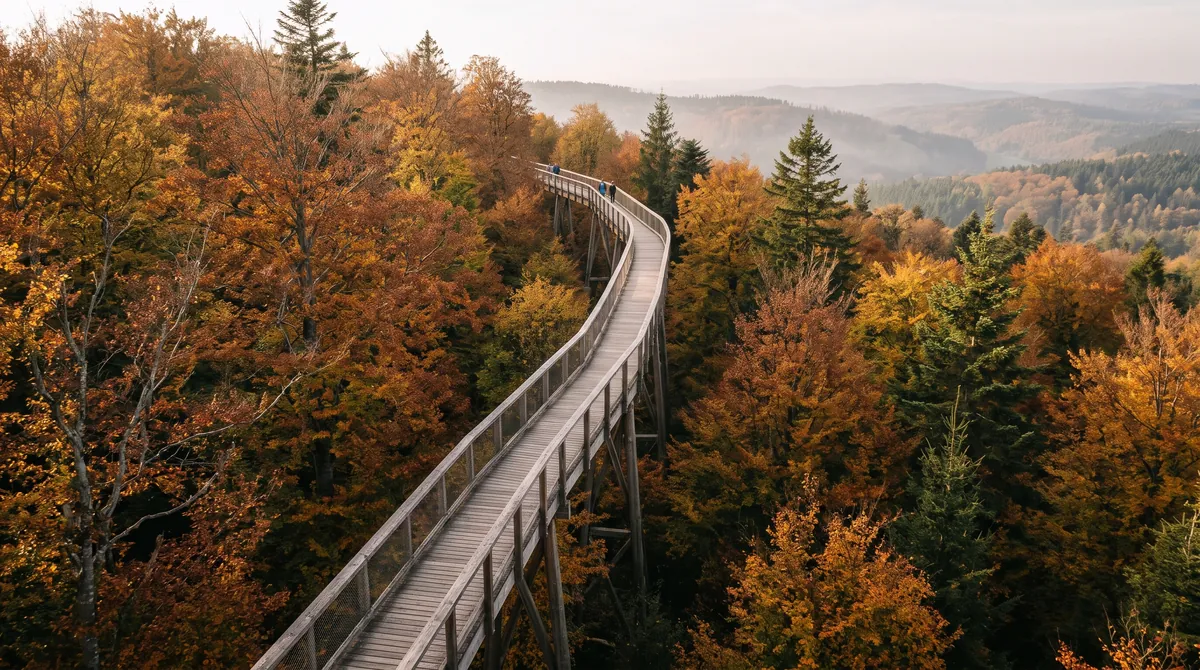
- Creative and walking retreats: writing, painting, photography or long walks in a beautiful landscape, with a relaxed group and good food at the end of the day.
A simple way to choose is to think about what you enjoy on an ordinary free day. If you love to move, a yoga or walking retreat will feel natural. If you are curious about sitting still and paying attention, a meditation retreat is a gentle introduction. A silent retreat suits people who already enjoy their own company and long for a few days without small talk, and creative retreats are perfect if you have a project waiting for time and space.
Yoga classes on retreats often follow , a broad family of slower, posture based styles, or the more flowing . If one style is new to you, ask whether classes are suitable for beginners.
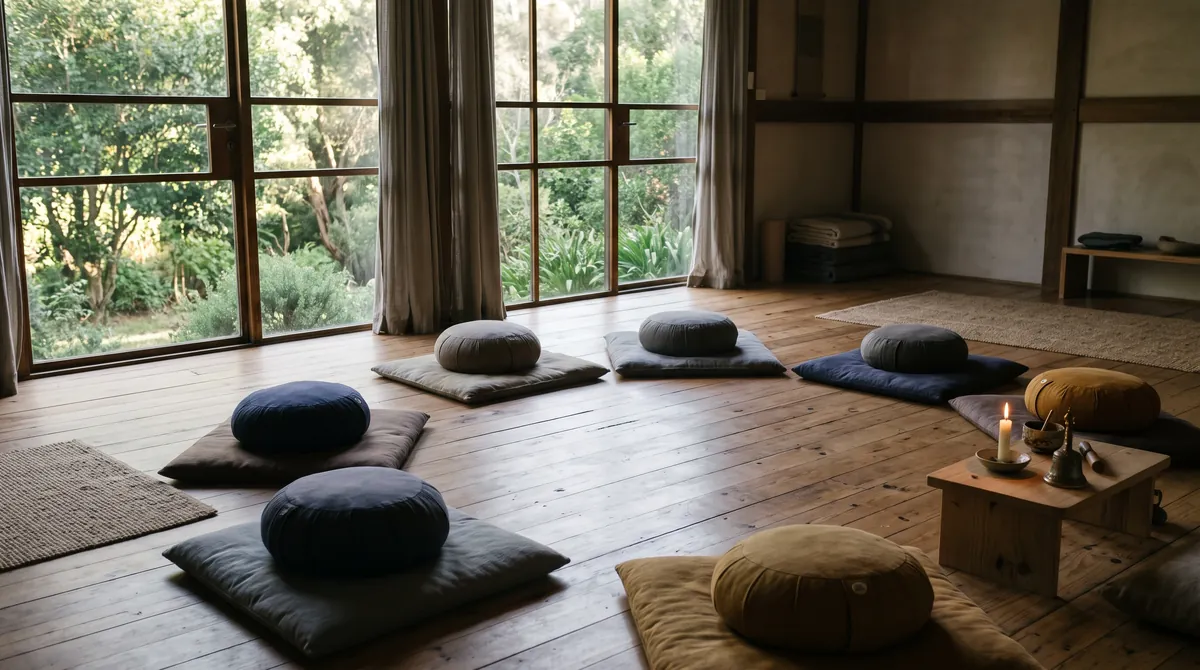
A weekend or a week
If you are unsure, start with a weekend. Two or three nights are enough to get a feel for the rhythm of a retreat day, the style of a teacher and how you enjoy spending time in a group. A week gives you room to settle in, and by the middle of it the timetable often feels less like a schedule and more like a natural flow.
Most retreats follow a similar shape, with an early start, the main sessions in the morning and free time in the afternoon. Evenings tend to be quiet, and many people find themselves going to bed earlier than at home.
Rooms, meals and the setting
Accommodation ranges from simple shared rooms to comfortable private ones, so check what is included and whether single rooms are available. Meals are usually vegetarian, fresh and generous, often cooked with local vegetables, and many retreats happily cater for vegan or other preferences if you mention them in advance.
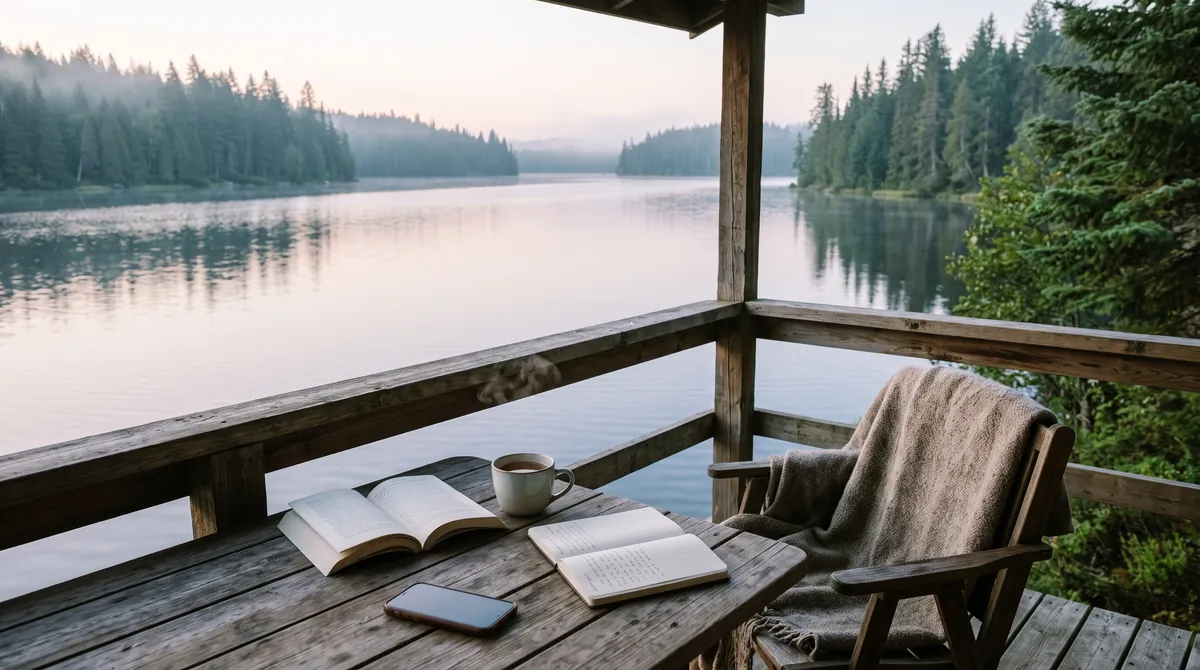
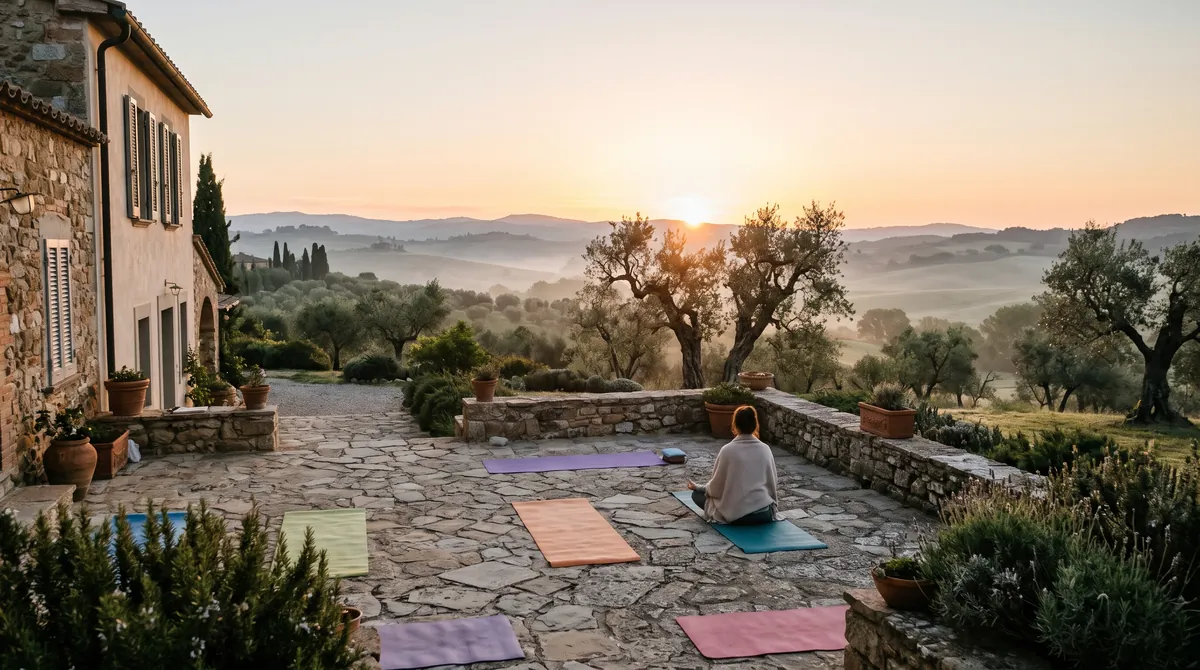
The setting does a great deal of the work. On Mallorca, countryside fincas among almond and olive trees host many yoga weeks, and several of the island’s hilltop sanctuaries offer simple guest rooms with wide views across the plain. Across Europe, monasteries open their guest houses to visitors, and the German tradition of invites guests to share the rhythm of monastic life for a few days. In the north, cabins by Swedish and Finnish lakes offer long summer light, wooden saunas and a deep, unhurried quiet.
The setting does a great deal of the work.
What to ask before you book
A good retreat will gladly answer questions. These are the ones that matter most for a first timer:
- How long has the teacher been teaching, and in which tradition?
- Is the retreat suitable for complete beginners?
- How many people are in the group?
- How strict is the timetable, and can sessions be skipped?
- Is silence expected, and if so, for how much of the day?
- What are the rooms like, and are phones welcome or set aside?
Silent retreats often practise what is called , which usually means no conversation and sometimes no reading or writing either. Knowing this in advance makes it far easier to enjoy.
What to pack
Retreat packing is refreshingly simple. Comfortable, layered clothes, a warm jumper for early mornings and evenings, sturdy shoes for walks and a pair of slippers or thick socks for indoor sessions cover most needs. A notebook, a novel or two, a refillable water bottle and an alarm clock that is not your phone complete the kit. Most retreats provide yoga mats and cushions, but check before you travel.
Arriving and coming home
Try to arrive with time to spare. A relaxed journey, with a buffer of an hour or two, means you start the first evening already a little calmer. On the way home, resist the urge to switch straight back into everyday life. Plan a quiet evening, leave the inbox for the next morning and keep one small ritual from the retreat, a short walk, a few minutes of stillness or a slower breakfast, for the weeks that follow.
It also helps to tell friends and colleagues that you will need a day to catch up. The first conversations after a quiet week can feel surprisingly loud, and a gentle return lets the calm of the retreat travel home with you rather than fading on the train.
Words in this article
- Finca
- A rural estate or farmhouse in Spain, on Mallorca often surrounded by almond, olive or carob trees.
- Kloster auf Zeit
- German for a monastery stay for a limited period, sharing the community’s rhythm of prayer, work and quiet.
- Noble silence
- A retreat practice of refraining from conversation, sometimes also from reading and writing.
- Hatha yoga
- A broad family of slower, posture based yoga styles, often the gentle basis of retreat classes.
- Vinyasa
- A flowing yoga style in which movements are linked with the breath in continuous sequences.
Questions readers ask
Do you need yoga experience for a yoga retreat?
Usually not. Many yoga holidays welcome complete beginners and offer variations for every pose, and teachers are used to mixed groups. Check the level when booking and mention that you are new. If a retreat is described as intensive or advanced, it is better to start with a gentler format and build up from there.
Are phones allowed on a retreat?
It varies. Some retreats ask guests to hand in phones or keep them switched off, others simply suggest using them as little as possible. Silent and meditation retreats tend to be stricter. Ask before booking, and if you will be offline, leave the phone number of the retreat with family or colleagues for emergencies.
Can you join a retreat on your own?
Most guests do. Retreats are among the easiest holidays to take alone, because the timetable, shared meals and group sessions create a natural sense of company. At the same time, nobody expects constant conversation, and free afternoons give you space to read, walk or rest on your own terms.