
How to plan three days without rushing them
One anchor per half day, neighbourhoods in clusters and one evening left open: the method behind the 72 hours series, for short trips that feel generous.
Three days sounds short, yet it is long enough to know a city a little. The difference between a trip that feels generous and one that feels like a checklist rarely lies in how much you see. It lies in how the days are shaped. This is the method behind the 72 hours series: a few firm decisions, a lot of space, and a rhythm that follows the city rather than fighting it.
One anchor per half day
Start with the things you really want. Not a list of twenty sights, but six anchors at most: one for each morning and each afternoon of the three days. An can be a museum, a market, a walk along the old harbour, a palace garden or a long lunch. It is the fixed point of that half day, and everything else arranges itself around it.
Six anchors may sound modest. In practice, each one brings its own surroundings: the café on the square outside the museum, the street of bookshops you pass on the way, the viewpoint you only find because you walked. Those unplanned moments are often what you remember most, and they need room.

Cluster neighbourhoods and never cross the city twice
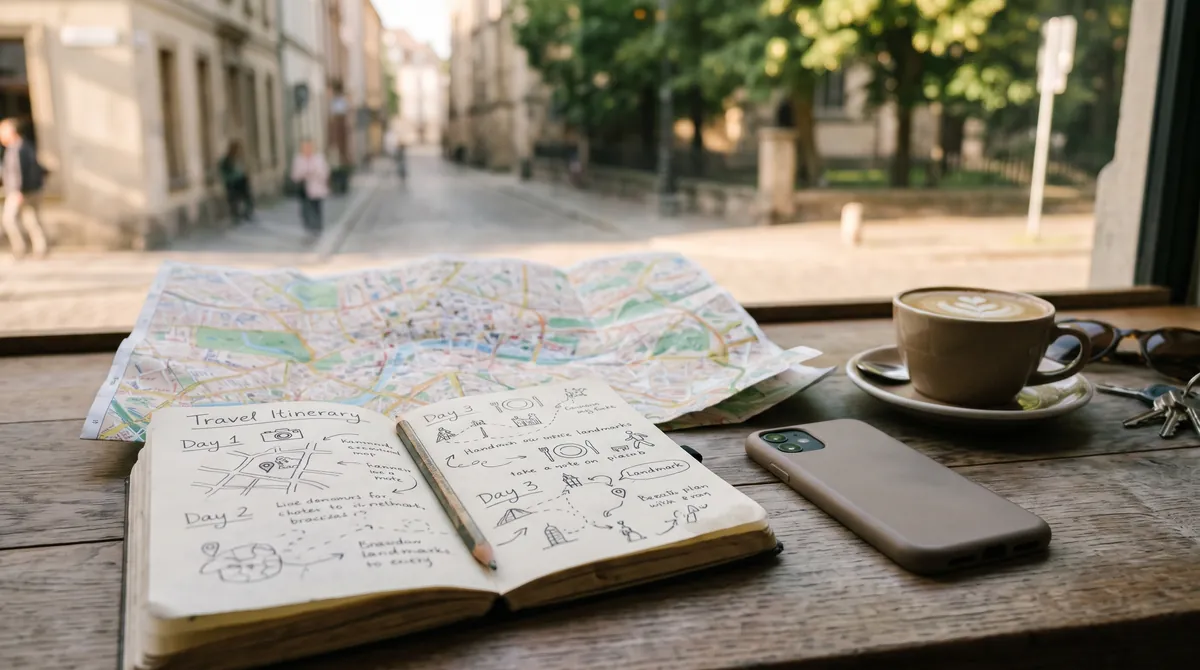
Once you have your anchors, put them on a map. You will see that they fall into groups. Think of each group as a , and plan each half day within one cluster, so you walk rather than ride and never cross the city twice in a day. In Vienna, the Hofburg and the Albertina stand side by side and fill a morning together. In Lisbon, Belém with its monastery and tower lies some way west of the centre, so give it a whole half day rather than squeezing it in.
Mornings are precious. Popular sights are quietest when they open, markets are at their liveliest early, and the light on old stone is at its softest. Put your most popular anchor first thing in the morning, and keep slower, more flexible plans for the afternoon, when the crowds are at their peak.
The difference between a trip that feels generous and one that feels like a checklist rarely lies in how much you see.
Shape the first and last day
The arrival day is rarely as long as it looks on paper. Journeys take longer than planned, check-in takes time, and the first hours in a new place are tiring in a pleasant way. Keep that afternoon light: a walk through your own neighbourhood, a first view over the city, an early dinner close by. It sets the tone for everything that follows.
The last day needs a plan for your luggage. Many hotels store bags after check-out, and many stations offer lockers, so you can enjoy the final morning without pulling a suitcase over cobblestones. Choose a last anchor close to the station or the airport connection, and leave a generous margin for the journey home.
Book only what sells out
Very little needs booking in advance, and leaving things open gives you freedom. The exceptions are worth knowing. Major museums and palaces often work with a , especially in high season. A special dinner, the one meal you have been looking forward to, is worth reserving. So are concerts, opera evenings and guided visits that run only on certain days.
Everything else can wait. Leave at least one evening entirely open, without a reservation or a plan. Walk until something draws you in, follow the sound of music from a square, or simply sit by the water. That free evening often turns into the one you talk about afterwards.
The method in seven steps
Put together, the planning takes an hour or two, ideally a week or so before you leave. Work through it in this order.
- Choose up to six anchors, one for each morning and afternoon.
- Mark them on a map and group them by neighbourhood.
- Assign each group to a half day, with the most popular sight first thing in the morning.
- Keep the arrival afternoon light and plan the last day around your luggage.
- Book only timed tickets, a special dinner and events with fixed dates.
- Add one view and one market, and leave one evening open.
- Check opening days, since many museums close on one day of the week.
A view, a market and a local rhythm
Two things belong in almost every short trip. The first is a view: a hill, a tower, a rooftop or a ferry crossing that shows the city as a whole, ideally early in the trip so the map in your head makes sense. The second is a market, where you see what people really eat and what is in season. Both tell you a great deal about a place in a single hour.
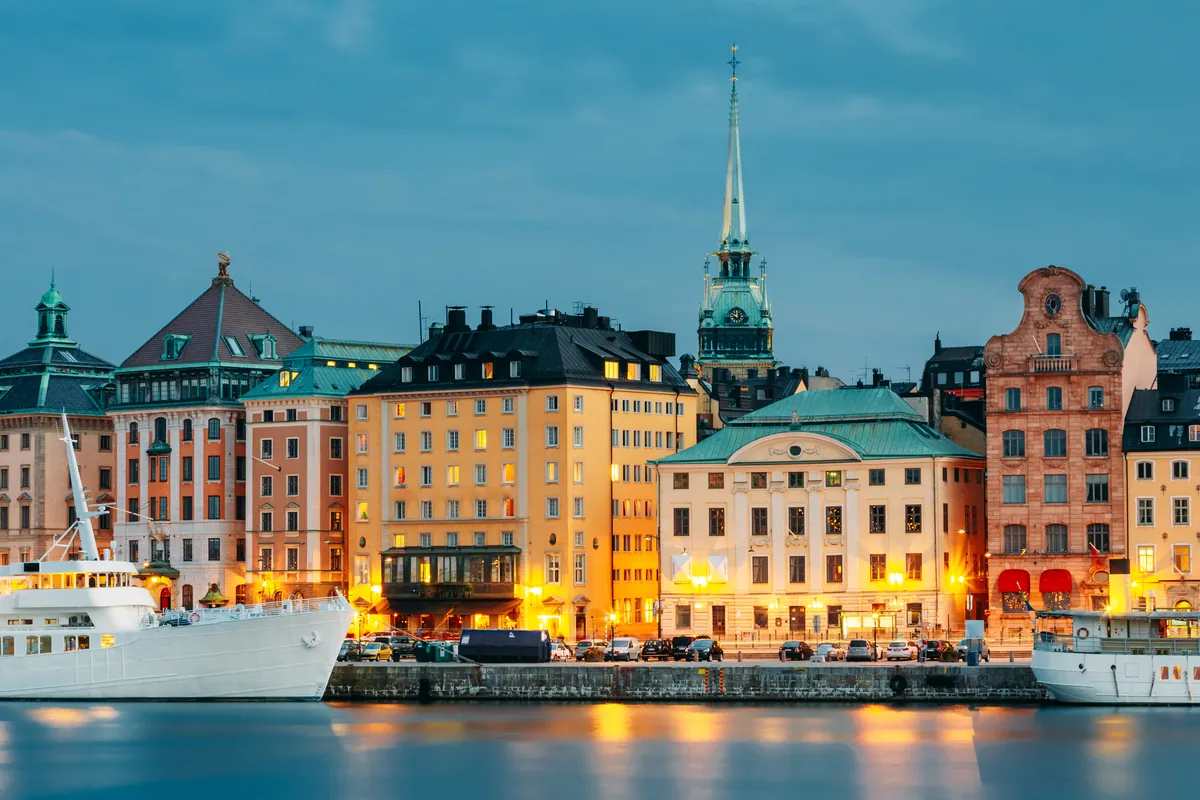
Finally, follow the local rhythm. In Spain, that means late lunches and later dinners. In Stockholm, it means a coffee break in the afternoon, and in Vienna, an hour in a coffee house is not lost time but part of the city itself. Fitting into these habits makes three days feel longer, and far more relaxed.
Words in this article
- Anchor
- The one fixed plan for a half day, such as a museum or market, around which everything else is arranged.
- Neighbourhood cluster
- A group of sights close enough together to explore on foot within one half day.
- Timed ticket
- An entry ticket valid for a specific time slot, common at popular museums and palaces.
- Left luggage
- A service for storing bags for a few hours, offered at many stations and by many hotels.
Questions readers ask
What if the weather turns on one of the three days?
Keep one indoor anchor in reserve for each day, such as a museum, a covered market or a long lunch, and swap it in when the rain starts. Because each half day sits within one neighbourhood, swapping is easy: you simply move an anchor from the afternoon to the morning, or from one day to the next, without crossing the city.
Does this method work when travelling with children?
Yes, and it may suit families even better. Six anchors leave time for playgrounds, ice cream and rest, and clustering neighbourhoods keeps walking distances short. You might reduce the anchors to one per day and treat the other half day as free time. Keep the arrival afternoon especially light, since the first hours in a new place are tiring for everyone.