
3 days in Amsterdam: canals, gables and museums
Three days in Amsterdam, from the canal ring and the Jordaan to the Rijksmuseum, the Vondelpark, a free ferry across the IJ and a bike ride along the Amstel.
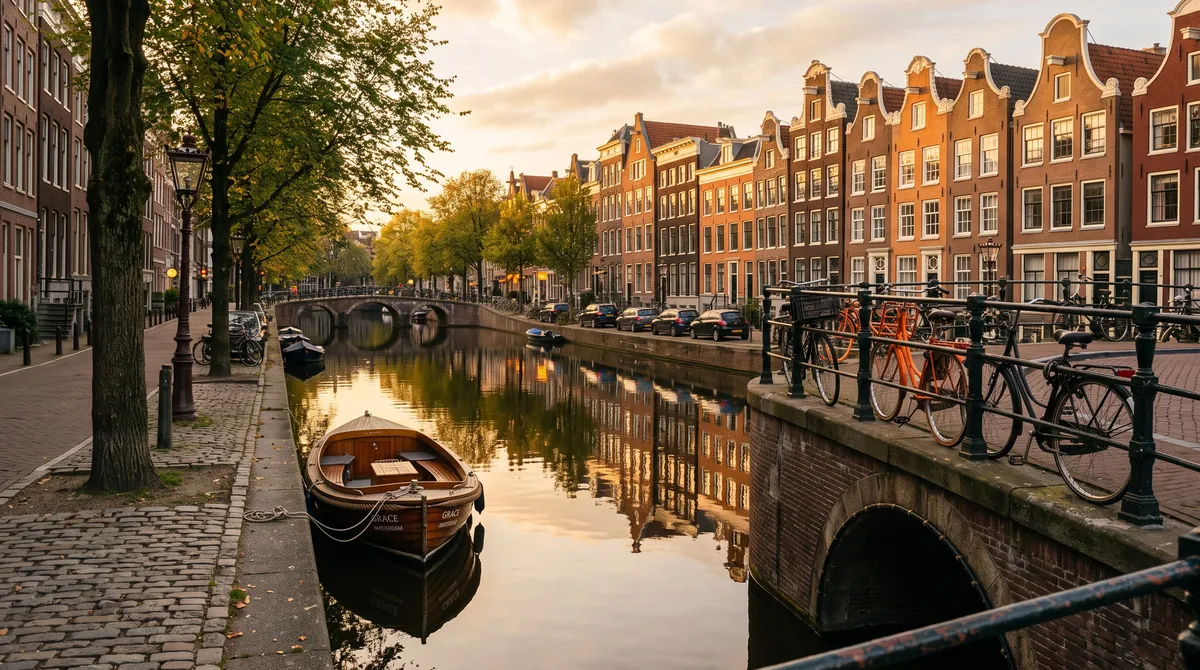
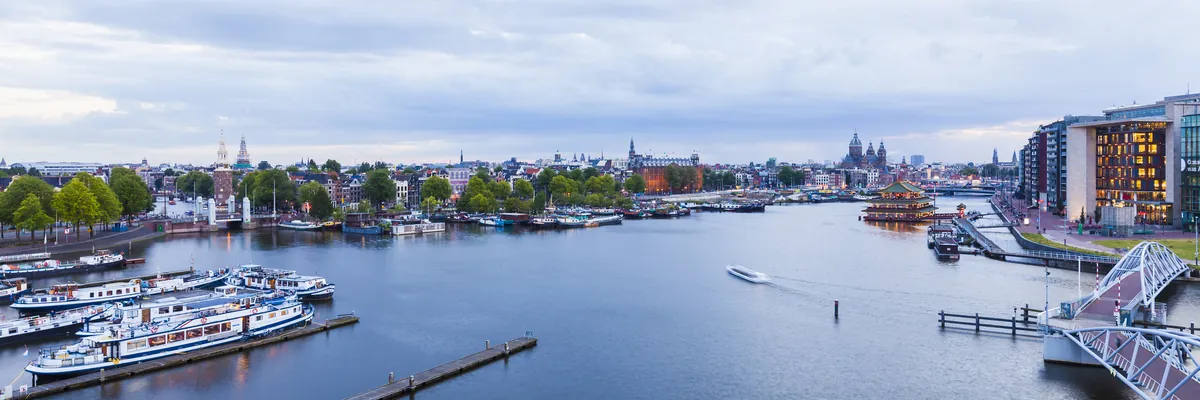
Amsterdam is best understood at water level. Its canals curve in neat arcs around the old centre, lined with tall, narrow houses whose gables lean gently towards the street, and every few minutes another bridge invites you to cross. Three days give you the canal ring, the great museums of the Museumplein, a market afternoon in De Pijp and a ferry ride across the IJ.
A city of canals and gables
The canal ring, the , was laid out in the 17th century as the city grew rich on trade. Three main canals, the Herengracht, the Keizersgracht and the Prinsengracht, run in concentric arcs outside the older Singel, and in 2010 the Seventeenth-Century Canal Ring Area inside the Singelgracht was inscribed as a UNESCO World Heritage Site.
Look up as you walk. The gables at the top of the houses come in many shapes, from simple spouts and steps to elegant necks and bells, and many still carry a hoisting beam with a hook. Staircases inside are steep and narrow, so furniture has long been lifted up the outside and in through the windows.
West of the canals, the Jordaan grew up as a district of workers and craftsmen, and many of its streets and canals are named after flowers and trees. Behind doorways here and across the centre are hofjes, almshouse courtyards built around a garden. People still live in them, so visitors are asked to come quietly.
Getting there, getting around and where to stay
Trains run from the station beneath Schiphol airport to Amsterdam Centraal in about 15 to 20 minutes, several times an hour. Centraal is the hub for the trams, the metro and the ferries across the IJ, all run by the city transport company GVB.
You can tap in and out with a contactless bank card, or buy a GVB ticket valid for one or more days, which is simpler for a busy stay. Remember to check in when you board a tram and check out again as you leave.
Stay in the canal ring or the Jordaan to step out onto the water each morning, in De Pijp for markets and a neighbourhood feel, or near the Museumplein and the Vondelpark for green space and an easy walk to the museums.
Three days, hour by hour
Day one Canals, courtyards and the Jordaan
- Morning
Begijnhof and the Nine Streets
Start at the Begijnhof, a hushed courtyard reached through a doorway off the Spui, where tall houses circle a lawn and one of the two wooden houses that survive in the centre still stands. Then wander west into the Nine Streets, small lanes crossing the canals between the Singel and the Prinsengracht, full of independent shops.
- Afternoon
Westerkerk and the Jordaan
Walk to the Westerkerk, completed in 1631, whose Westertoren rises about 85 metres, the tallest church tower in Amsterdam. Rembrandt was buried here in 1669, although the exact place of his grave is unknown. Then cross the Prinsengracht into the Jordaan and wander its quiet canals and streets named after flowers.
- Evening
A small boat on the canals
In the late afternoon, take a canal trip in a small, open boat, which can slip under low bridges and along the narrower side canals. Watch the gables turn gold in the evening sun, then stay out on the water as the lights strung along the arches of the bridges come on.
Day two Museums, park and market
- Morning
Rijksmuseum and the Van Gogh Museum
Begin on the Museumplein with a booked time slot at the Rijksmuseum, where Rembrandt’s Night Watch hangs at the end of the Gallery of Honour among works by Vermeer and other masters of the Golden Age. With energy for a second collection, cross to the Van Gogh Museum, which holds the largest collection of his work in the world.
- Afternoon
Vondelpark and the Albert Cuyp Market
Walk through the Vondelpark, opened in 1865 and named after the poet Joost van den Vondel, past its ponds and lawns. Then continue to De Pijp and the Albert Cuyp Market, held every day except Sunday, for cheese, herring and a stroopwafel, two thin waffles pressed together with syrup, made fresh as you watch.
- Evening
De Pijp
Stay in De Pijp for the evening. Built in the late 19th century as a district for workers, it is now a grid of narrow streets with small restaurants serving food from across the world. Before dinner, take a turn around the Sarphatipark, a green square of lawns and old trees at its heart.
Day three Across the IJ and along the Amstel
- Morning
Ferry to the NDSM wharf
From behind Amsterdam Centraal, free ferries cross the IJ to Amsterdam Noord. Take the one to the NDSM wharf, a crossing of about 15 minutes, where a former shipyard has become a creative quarter of studios, street art and waterside terraces. The views back across the water are part of the pleasure.
- Afternoon
A bike ride along the Amstel
Back in the centre, rent a bike and follow the Amstel south, past the white drawbridge known as the Magere Brug, and on towards the edge of the city, where the river widens between meadows and the landscape opens out. Few capitals let you leave the streets behind so quickly on two wheels.
- Evening
De Gooyer and the eastern docks
End the day in the east at De Gooyer, an 18th-century wooden windmill and one of a handful that still stand within the city. Then walk along the former harbour islands of the eastern docklands as the light fades over the water and the city’s towers glow on the skyline.
Cycling like an Amsterdammer
The bicycle is how Amsterdam moves. The city is flat and compact, and cycle paths, the , run along most main roads, often marked in red asphalt. A few simple habits help you fit in.
- Keep to the right and let faster riders pass on the left.
- Stretch out an arm to signal before you turn.
- Stop at red lights; many crossings have their own signals for bikes.
- Use the bell lightly to let people know you are there.
- On foot, treat the cycle path like a road and wait at the edge before stepping across.
Amsterdam is best understood at water level.
When to go
Spring is tulip season. The Keukenhof, the famous flower park near Lisse, usually opens for around eight weeks from mid to late March until mid May, and makes an easy day trip by train and bus; check the current season’s dates and book ahead. In late April, King’s Day turns the whole city orange.
Summer brings long, light evenings, when the canals fill with small boats and the parks with picnics. Autumn has golden light on the water and quieter museums, and in winter the canal houses glow from within, while light art installations appear along the waterways during the darker months.
Words in this article
- Grachtengordel
- The canal ring, the arcs of 17th-century canals around Amsterdam’s old centre.
- Hofje
- An almshouse courtyard, a group of small homes built around a quiet garden.
- Fietspad
- A cycle path, often marked in red asphalt and reserved for bikes.
- Stroopwafel
- Two thin waffles pressed together with a layer of syrup, best eaten fresh and warm.
Questions readers ask
How do you get from Schiphol airport to the city centre?
Trains run from the station beneath the airport terminal to Amsterdam Centraal in about 15 to 20 minutes, several times an hour. From Centraal, trams, the metro and the ferries across the IJ take you onward. You can tap in with a contactless bank card or buy a ticket for the train before you travel.
Is it easy to cycle in Amsterdam as a visitor?
Yes, the city is flat and compact, with cycle paths along most main roads. Keep to the right, signal with an outstretched arm before turning, and stop at red lights, which often have their own signals for bikes. A ride along the Amstel, heading south towards the edge of the city, is a gentle way to start.
When is the best time to see the tulips?
Tulips are a spring affair. The Keukenhof flower park near Lisse usually opens for around eight weeks from mid to late March until mid May, and the bulb fields around it are at their most colourful in April. Check the current season’s dates and book your ticket ahead, then travel there by train and bus.