3 days in Prague: bridges, spires and beer halls
Three days in the Czech capital, from Charles Bridge at dawn and the Astronomical Clock to Prague Castle, Vyšehrad, a riverside market and a beer garden above the bridges.
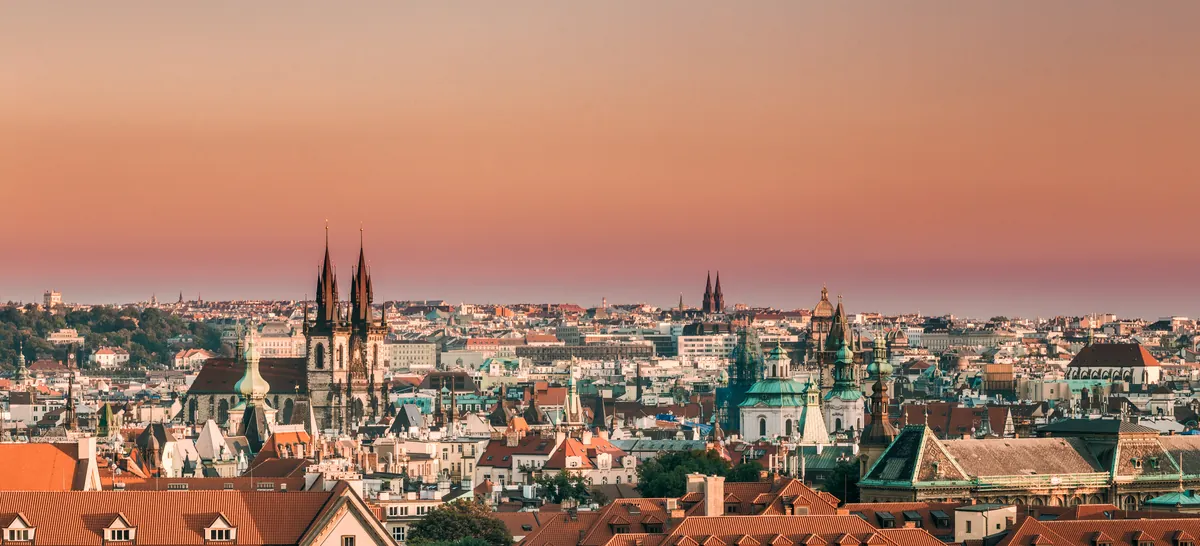
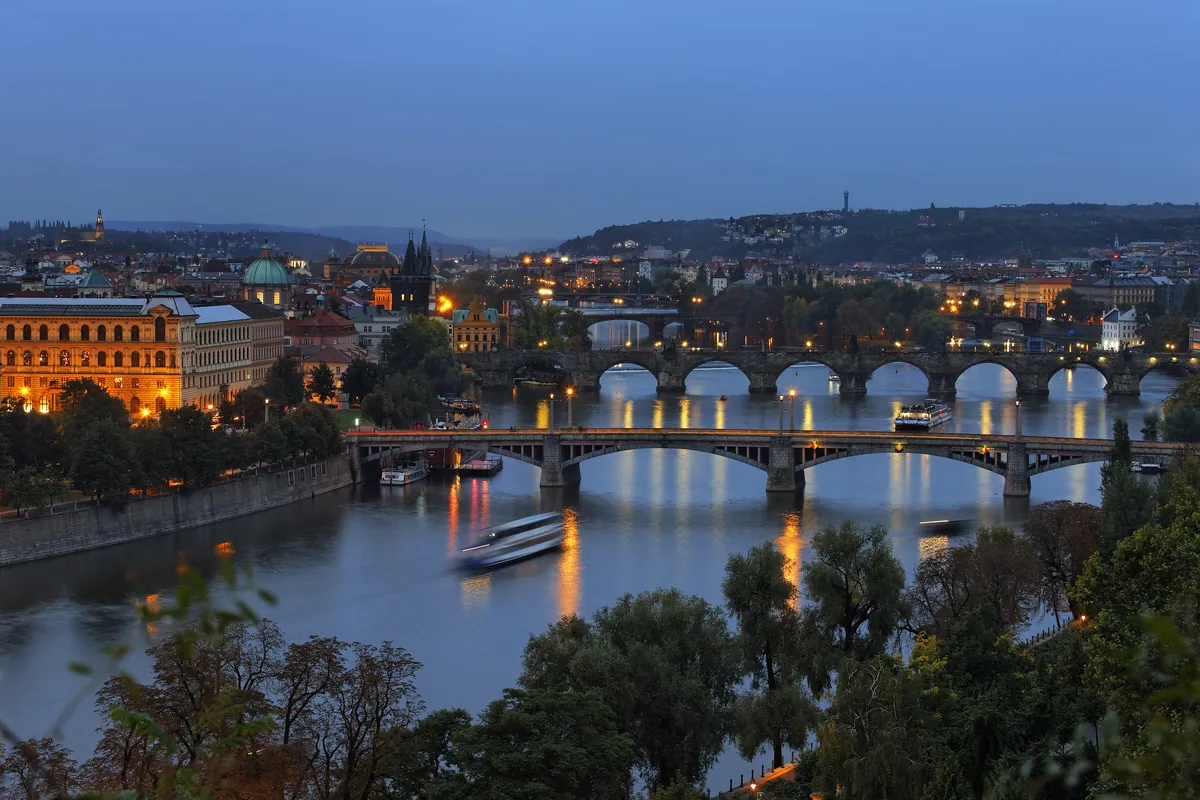
Prague is a city of towers. From the bridges over the Vltava, spires rise in every direction, Gothic, baroque and gilded, while the castle stretches along its hill above the river. Three days give you the Old Town and Charles Bridge at first light, the castle and its gardens, the quiet heights of Vyšehrad and an evening of good beer above the water.
Old Town, Lesser Town and the castle above
The historic centre of Prague, listed as a UNESCO World Heritage Site in 1992, spreads across both banks of the Vltava. On the right bank lie the Old Town, including Josefov, and the New Town. On the left bank, , the Lesser Town, climbs towards the castle district of Hradčany.
Much of what you see dates from the reign of Charles IV, the 14th-century king and emperor who founded the New Town and laid the cornerstone of the stone bridge that now bears his name in 1357. Later centuries added a rich layer of baroque, with green copper domes, statues of saints and painted facades.
Josefov, the historic Jewish Quarter, lies within the Old Town. Its synagogues, among them the Old-New Synagogue, and the Old Jewish Cemetery are places for a quiet, attentive visit. Several sites are cared for by the Jewish Museum in Prague, which closes on Saturdays and Jewish holidays, so plan your visit for another day.
Getting there, getting around and where to stay
The Airport Express bus runs from Václav Havel Airport to the main station, Praha hlavní nádraží, in about 40 minutes; it has its own tickets, sold by the driver or at the airport. Alternatively, trolleybus 59 links the airport with Nádraží Veleslavín, where you change to metro line A for the centre.
In the city, trams do much of the work, and three metro lines cover longer distances. Tickets are valid for a set time across the metro, trams and buses, and passes for 24 or 72 hours suit a short stay. Validate a paper ticket the first time you board.
Stay in the Old Town to be close to everything, in Malá Strana for quiet evenings below the castle, or in Vinohrady, a leafy residential district of handsome apartment buildings and squares, easily reached by tram and metro.
Three days, hour by hour
Day one The bridge and the Old Town
- Morning
Charles Bridge at dawn
Begin at first light on Charles Bridge, when the Vltava is calm and the statues of saints stand dark against a pale sky. The cornerstone was laid in 1357 under Charles IV, and the bridge was completed in 1402. Walk it slowly in both directions, with the castle above you on one side and the Old Town towers on the other.
- Afternoon
Josefov and Old Town Square
Spend the early afternoon in Josefov, among its synagogues and the Old Jewish Cemetery. Then walk to the Old Town Square and wait beneath the Astronomical Clock, the orloj, first recorded in 1410, for the hour, when small figures of the apostles appear in its windows above the dials.
- Evening
Malá Strana
Cross back over the river as the lamps come on and wander Malá Strana, a district of baroque palaces, gardens and steep lanes beneath the castle. Look up at the great green dome of the Church of St Nicholas, then settle into a traditional pub nearby for a first glass of Czech beer.
Day two Castle, monastery and gardens
- Morning
Prague Castle and St Vitus Cathedral
Arrive early at Prague Castle, which tram 22 reaches at the Pražský hrad stop. Begin with St Vitus Cathedral, begun in 1344 and completed only in 1929, and find the stained glass window designed by Alfons Mucha. Then walk through the courtyards to Golden Lane, a row of small painted houses built against the castle walls.
- Afternoon
Strahov Monastery
Walk uphill through Hradčany to the Strahov Monastery, founded in the 12th century. Its two historic library halls, one from the 17th century and one from the 18th, are lined with painted ceilings and old volumes. From the slopes beside the monastery, the view over the red roofs of Malá Strana to the spires of the Old Town is among the finest in Prague.
- Evening
Petřín gardens
Walk down through the Petřín gardens, a hill of orchards, paths and lawns, as the evening light warms the city below. The paths bring you back to Malá Strana in time for dinner; order svíčková, beef in a creamy vegetable sauce with bread dumplings, cranberries and a spoonful of whipped cream.
Day three The river, Vyšehrad and Letná
- Morning
Náplavka embankment
Head for Náplavka, the embankment on the right bank south of the centre. On Saturday mornings a farmers market sets up here, with bread, cheese, fruit, flowers and hot food; check current times. On other days the riverside makes a lovely walk past moored boats and the elegant facades of the New Town.
- Afternoon
Vyšehrad
Follow the river south to Vyšehrad, an old fortress on a rock above the Vltava. Walk the ramparts for long views up and down the river, then visit the Basilica of St Peter and St Paul and the cemetery beside it, where Antonín Dvořák and Bedřich Smetana rest among hundreds of figures from Czech culture.
- Evening
Letná Park
Cross the city to Letná Park, on its bluff above the Vltava, and find a seat in the large open-air beer garden among the trees. Stay as the sun goes down over the river and its bridges, one after another, catch the last of the light. It is a fitting farewell to Prague.
Beer, pubs and Czech cooking
Beer is part of everyday life in Prague. The golden lager first brewed in the city of Plzeň in 1842 gave the world the name pilsner, and Czech brewing remains proud and varied, from pale lagers to dark beers served in heavy glass mugs.
The , the neighbourhood pub, is a social institution where friends and strangers share long wooden tables. In many traditional pubs a fresh glass arrives as soon as the last one is nearly empty, and the waiter keeps a tally on a slip of paper; place a beer mat on top of your glass when you have had enough.
Czech cooking is hearty and comforting. is the classic Sunday dish: marinated beef sirloin in a creamy sauce of root vegetables, served with , sliced bread dumplings, plus cranberries and whipped cream. Goulash, roast pork with sauerkraut and fried cheese are pub favourites.
Prague is a city of towers.
When to go
Spring and early autumn are the best seasons for walking, with mild days, blossom on Petřín in April and May and soft light on the river. The Prague Spring music festival traditionally opens on 12 May with Smetana’s Má vlast. The busiest weeks fall in high summer, so June or September often feel more relaxed.
In December, Christmas markets fill the Old Town Square and Wenceslas Square with lights, wooden stalls and mulled wine. On a crisp winter day, with frost or a dusting of snow on the castle roofs and the spires of the Old Town, the city is quietly beautiful.
Words in this article
- Malá Strana
- The Lesser Town, the baroque district on the left bank of the Vltava below Prague Castle.
- Orloj
- The Czech word for an astronomical clock, above all the one on the Old Town Square.
- Hospoda
- A traditional Czech pub, where locals meet over beer at long shared tables.
- Svíčková
- Marinated beef sirloin in a creamy root vegetable sauce, served with dumplings, cranberries and cream.
- Knedlíky
- Czech dumplings; the bread version is sliced and served with sauces such as svíčková.
Questions readers ask
How do you get from Prague airport to the city centre?
The Airport Express bus runs to the main station, Praha hlavní nádraží, in about 40 minutes and has its own tickets, sold by the driver or at the airport. Alternatively, take trolleybus 59 to Nádraží Veleslavín and change to metro line A, which runs straight into the centre. From the main station, the metro and trams take you on to your neighbourhood.
When is the best time to walk across Charles Bridge?
Early morning is the most peaceful time. At first light the river is calm, the statues of saints stand out against the sky and you share the bridge with only a few other walkers. The bridge is open to pedestrians at all hours, so a second crossing late in the evening, with the castle lit above the river, is just as rewarding.
What should you know about Czech pubs?
The hospoda is a social institution with long shared tables, where it is normal to join others. In many traditional pubs the waiter brings a fresh beer as your glass empties and keeps a tally on a slip of paper. Place a beer mat on top of your glass when you have had enough, and pay at the table at the end.