3 days in Barcelona: Gaudí, the Gothic Quarter and the sea
Roman columns in a medieval courtyard, Gaudí’s basilica and houses, the squares of Gràcia and a sunset on the beach: three unhurried days in Catalonia’s capital by the sea.
Barcelona is best read in layers: Roman columns in a medieval courtyard, Gothic lanes around the cathedral, the extravagant houses of the Modernista years along wide avenues, and a long sandy shore at the end of it all. Three days give you time for Gaudí’s great works, the old quarters and a sunset by the sea, with long lunches and late dinners in between.
From Roman Barcino to Gaudí’s city
The Romans founded the colony of Barcino here, and fragments of it survive in the Gothic Quarter: four tall columns of the Temple of Augustus in a courtyard on Carrer del Paradís, and streets, workshops and stretches of wall beneath the Plaça del Rei. The medieval city grew on top of them, and its lanes still twist around the cathedral.
In the nineteenth century Barcelona spread beyond its old walls into the Eixample, a grid of broad streets where architects of , Catalonia’s own take on Art Nouveau, built houses for wealthy families. The most famous of them was Antoni Gaudí. Seven of his works in and around the city are listed by UNESCO as World Heritage: three since 1984, the others added in 2005.
Getting there, getting around and where to stay
From Barcelona-El Prat airport, the Aerobús runs from both terminals to the Plaça de Catalunya, the hinge between the old town and the Eixample. Metro line L9 Sud also serves both terminals, but you need to change to reach the centre, and the airport stations require their own ticket. In town, the metro, buses and your own feet cover everything in this itinerary.
The Eixample puts you between the Passeig de Gràcia and the Sagrada Família, with wide pavements and easy metro links. Gràcia, a separate town until Barcelona absorbed it in 1897, still feels like a village of small squares. The Born, beside the Gothic Quarter, suits travellers who want medieval lanes, the Picasso Museum and the sea within walking distance.
Three days, hour by hour
Day one The Gothic Quarter and the Born
- Morning
La Boqueria and the cathedral
Start early at La Boqueria on La Rambla, while the stalls of fruit, fish and cured ham are being set out and the aisles are calm. Have breakfast at a counter, then walk into the Gothic Quarter to the cathedral of the Holy Cross and Saint Eulalia, begun in 1298. In its cloister, thirteen white geese recall the age of Saint Eulalia at her martyrdom.
- Afternoon
Plaça del Rei and Roman Barcino
A few steps away, the Plaça del Rei is framed by the old royal palace. Beneath it, the city history museum lets you walk through some 4,000 square metres of Roman Barcino, past streets, a laundry and workshops. Afterwards, find the columns of the Temple of Augustus in the courtyard at Carrer del Paradís 10.
- Evening
Picasso Museum and Santa Maria del Mar
Cross the Via Laietana into the Born. On Carrer de Montcada, the Picasso Museum has occupied medieval palaces since 1963 and is especially rich in the artist’s early work. Then step into Santa Maria del Mar, begun in 1329 and finished in little more than fifty years, whose slender columns give the wide nave an airy calm.
Day two Gaudí’s basilica, his houses and Gràcia
- Morning
Sagrada Família
Arrive for an early timed entry, booked well ahead. Construction began in 1882, and Gaudí took charge soon afterwards and worked on the basilica until his death in 1926. In 2026, the centenary of his death, the cross was raised on the central Tower of Jesus Christ. Inside, columns branch like trees and stained glass washes the nave with colour.
- Afternoon
Passeig de Gràcia: Casa Batlló and La Pedrera
Walk or take the metro to the Passeig de Gràcia, the grand avenue of the Eixample. Casa Batlló, which Gaudí remodelled between 1904 and 1906, has a rippling façade of coloured glass and a roof like a dragon’s back. A few blocks north stands Casa Milà, completed in 1912 and nicknamed La Pedrera, the stone quarry.
- Evening
The squares of Gràcia
Continue uphill into Gràcia. Its evening life happens in small squares such as the Plaça del Sol and the Plaça de la Virreina, where neighbours, families and friends gather on the terraces. Wander from one to the next, stop for a glass of vermut or cava, and eat late in one of the side streets.
Day three Park Güell, Montjuïc and the sea
- Morning
Park Güell
Book a timed entry to the Monumental Zone of Park Güell, laid out by Gaudí between 1900 and 1914 on Carmel hill and opened as a public park in 1926. Look for the mosaic dragon on the entrance stairs, covered in trencadís, pieces of broken tile, then follow the wooded paths for wide views over the city to the sea.
- Afternoon
Montjuïc
Cross the city to Montjuïc, the green hill above the port, for gardens, viewpoints and the Palau Nacional, built for the International Exhibition of 1929 and now home to the National Art Museum of Catalonia. Below its steps lies the Magic Fountain, back in action since 2025 with light and music shows on certain evenings; check current times.
- Evening
Barceloneta and the seafront
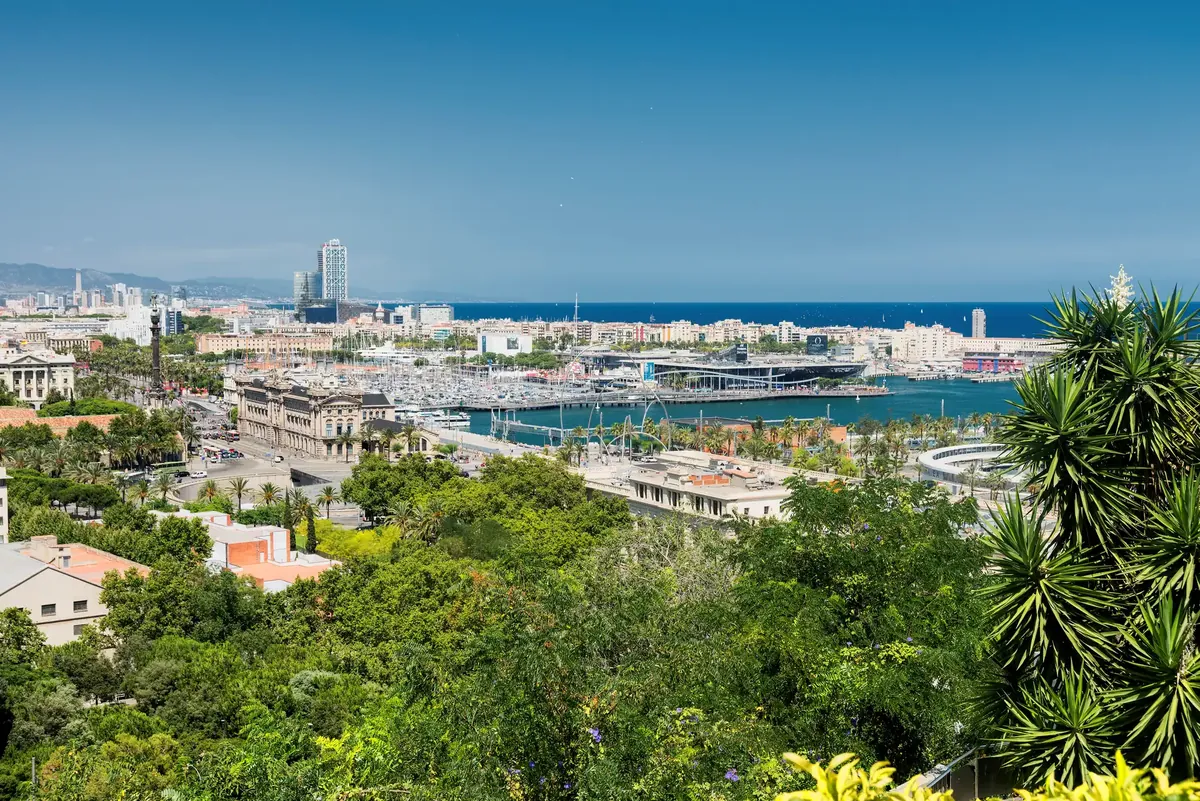
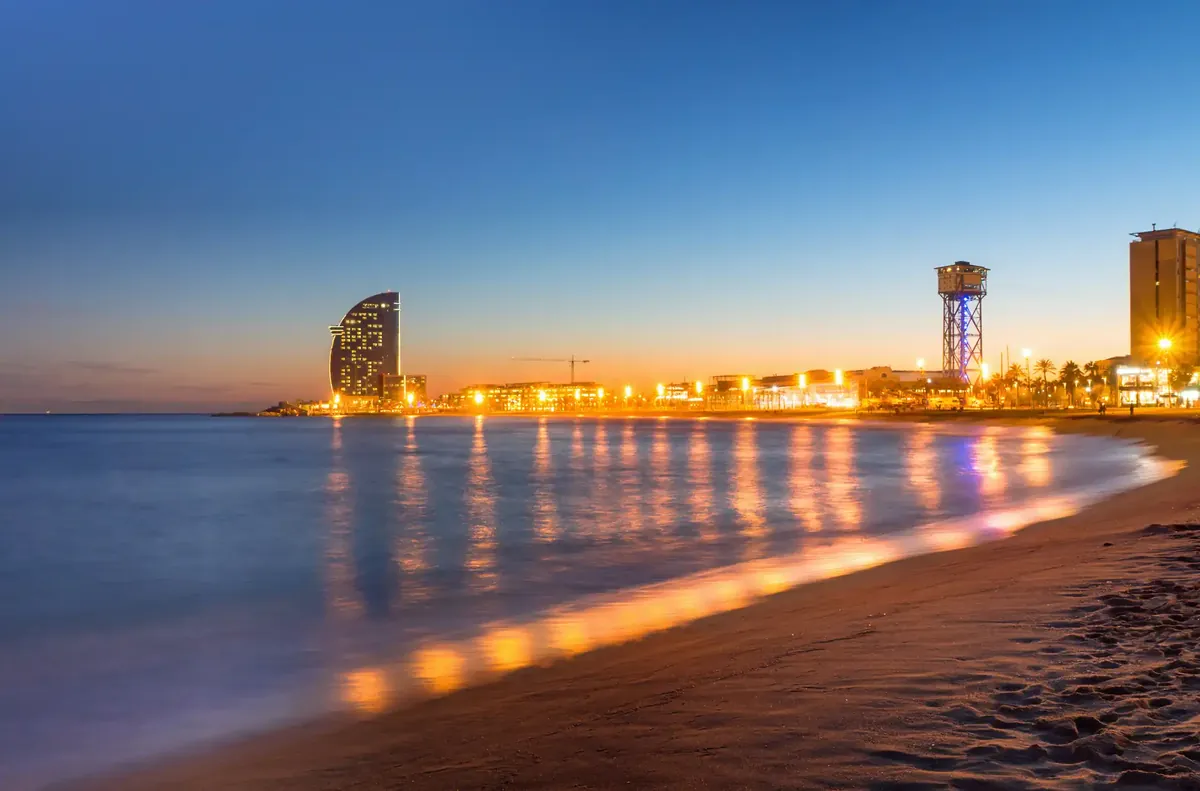
End by the sea. Walk through Barceloneta, the old seafaring quarter of narrow straight streets, and out onto its beach as the light softens. The promenade runs on along the shore past the city beaches. Finish with a seafood rice, ideally shared, and a last look at the water before the walk home.
If your visit falls on a show evening of the Magic Fountain, consider swapping the order of day three: Barceloneta in the afternoon, then Montjuïc as the light fades, with the fountain as the final scene.
Eating the Barcelona way
Barcelona keeps Spanish hours. Lunch is the main meal and usually begins around two, and many restaurants serve a set menú del día on weekdays. Dinner starts around nine, so an early evening vermut with olives or a few small plates bridges the gap nicely.
Catalan cooking has its own staples. , bread rubbed with ripe tomato and dressed with olive oil and salt, comes with almost everything. By the sea, rice dishes and seafood fill the menus, and crema catalana, a custard under a crust of burnt sugar, is the classic way to finish.
When to go
Late spring and early autumn are ideal, warm enough for the beach yet comfortable for long walks. July and August are hot and humid and the city is at its fullest, so plan the beach for early morning or evening and the museums for the middle of the day. Winter is mild and often sunny, a pleasant season for the old quarters and the galleries.
Around 24 September, Barcelona celebrates La Mercè, the festival of its patron saint, with concerts, parades of giants and , the human towers of Catalonia. It is a lively time to visit, and the city fills up, so book your stay early.
Three days give you time for Gaudí’s great works, the old quarters and a sunset by the sea, with long lunches and late dinners in between.
Words in this article
- Modernisme
- The Catalan form of Art Nouveau around 1900, whose best known architect was Antoni Gaudí.
- Trencadís
- A mosaic of broken tile and china pieces, used by Gaudí on the dragon at the entrance to Park Güell.
- La Pedrera
- “The stone quarry”, the popular name for Casa Milà, Gaudí’s apartment building on the Passeig de Gràcia.
- Pa amb tomàquet
- Catalan bread rubbed with ripe tomato and dressed with olive oil and salt.
- Castells
- Catalonia’s human towers, built by teams standing on one another’s shoulders at festivals such as La Mercè.
Questions readers ask
Do you need to book the Sagrada Família and Park Güell in advance?
Yes, it is wise. Both the Sagrada Família and the Monumental Zone of Park Güell use timed entry, and popular slots sell out, especially in spring, summer and around holidays. Book online before you travel and choose an early time, when the light is soft and the crowds are smaller. Check current booking conditions on the official channels.
How do you get from Barcelona airport to the city centre?
The Aerobús runs from both terminals to the Plaça de Catalunya, in the heart of the city. Metro line L9 Sud also serves both terminals, but you need to change lines to reach the centre, and the airport stations require a special ticket. Taxis wait outside both terminals. Check current timetables before you travel, especially for late arrivals.
Which neighbourhood is best for a first stay in Barcelona?
The Eixample is the most practical base, with good metro links and Gaudí’s houses on the Passeig de Gràcia close by. Gràcia is quieter and more village-like, with small squares and a lively evening scene. The Born places you among medieval lanes, close to the Picasso Museum, Santa Maria del Mar and the seafront at Barceloneta.