
3 days in Bucharest: grand boulevards and garden cafés
Three days in Romania’s capital, from carved church porches and Belle Époque façades to lakeside parks, an open-air village museum and long evenings on garden terraces.
Bucharest rewards the unhurried visitor. Between its long boulevards lie quiet monastery courtyards, Belle Époque mansions and parks laid out around lakes, and from late spring the city moves outdoors onto shaded garden terraces. Three days give you the Old Town, the grand avenue of Calea Victoriei, an open-air museum of village life and plenty of time to eat well.
A city of boulevards, churches and gardens
The historic core lies around Lipscani, a street named after the merchants who brought goods from Leipzig, known in old Romanian as Lipsca. For centuries this was the city’s main trading quarter, and neighbouring lanes still carry the names of old crafts, such as Blănari for the furriers. Today much of the Old Town is pedestrian, a lively grid of restored façades, small churches and terraces beside the ruins of , the Old Princely Court.
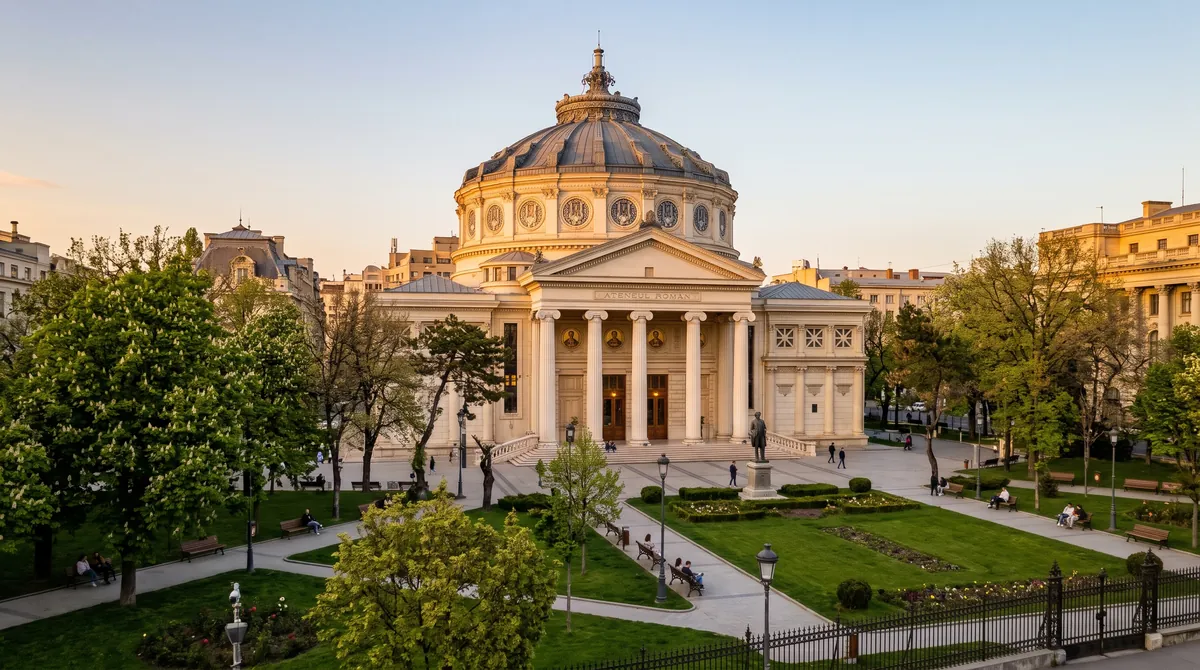
In the late 19th and early 20th centuries Bucharest looked to Paris for inspiration, and the city was often called Little Paris. That spirit is clearest along Calea Victoriei, first paved with timber in 1692 and given its present name in 1878. Here grand banks, palaces and a domed concert hall line the way, with quieter villa streets leading off to the north.
Many of the city’s finest older churches are built in the , named after Prince Constantin Brâncoveanu. It blends Byzantine, Ottoman, late Renaissance and Baroque elements, and you will recognise it by its slender stone columns, carved porches and richly painted interiors.
Romanian cooking is generous and seasonal. Look for , cabbage leaves rolled around minced meat and rice, served with polenta and sour cream; , small grilled rolls of minced meat seasoned with garlic; and , warm doughnuts topped with sour cream and jam. From May to September many restaurants move their tables into courtyard gardens under the trees.
Getting there, getting around and where to stay
Henri Coandă Airport lies north of the city. A train runs from the airport to Gara de Nord, the main railway station, in roughly 20 to 25 minutes, and express bus 100 runs around the clock to the city centre. Check current timetables and stops before you travel.
The metro is the quickest way to cover longer distances. Line M2 runs north to south beneath the main boulevards, linking Aviatorilor, beside Herăstrău Park, with Piața Victoriei, Piața Romană, Universitate and Piața Unirii. Buses and trams fill the gaps, and the central sights are close enough to walk between.
Stay around Piața Romană or near Calea Victoriei to walk almost everywhere, in the Old Town if you like evenings out on your doorstep, or in the leafy streets of Dorobanți and Aviatorilor for quieter nights close to the big parks.
Three days, hour by hour
Day one Old Town and Calea Victoriei
- Morning
Stavropoleos church
Begin in the Old Town at Stavropoleos, a small church completed in 1724 and one of the city’s loveliest examples of the Brâncovenesc style. Take your time over the carved stone and wood of the porch and doors, then sit for a while in the quiet arcaded courtyard before the lanes fill up.
- Afternoon
Lipscani and Curtea Veche
Wander through the lanes around Lipscani, once the street of merchants trading in goods from Leipzig. Pause at the ruins of Curtea Veche, the Old Princely Court, then find a terrace for a late lunch of sarmale with polenta and sour cream, or a plate of mici fresh from the grill.
- Evening
Calea Victoriei and the Romanian Athenaeum
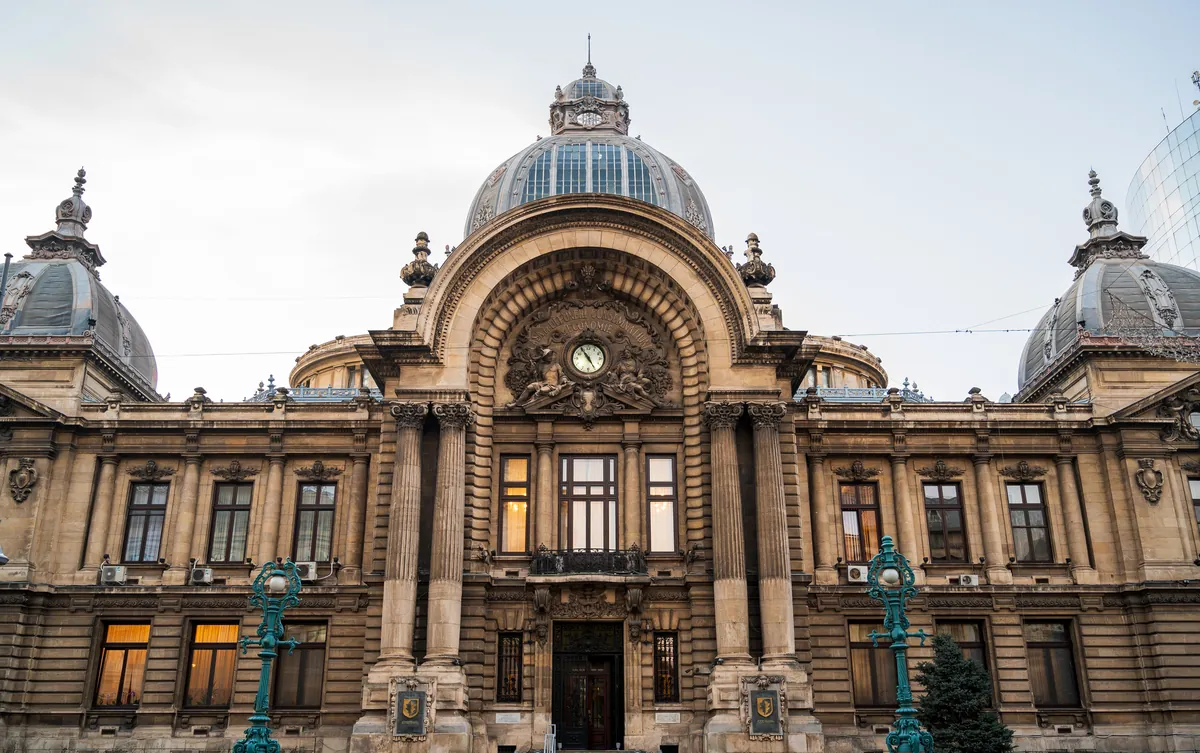
Walk north along Calea Victoriei, past the CEC Palace and the former Royal Palace, now the National Museum of Art. End at the Romanian Athenaeum, the domed concert hall inaugurated in 1888 and home of the George Enescu Philharmonic. A concert beneath its long painted fresco of Romanian history is a fine way to close the day.
Day two Palace, gardens and the arch
- Morning
Palace of the Parliament
Join a guided tour of the Palace of the Parliament, begun in 1984 and among the largest administrative buildings in the world. Book ahead and bring your passport or national identity card. Marble halls, vast chandeliers and seemingly endless corridors give a real sense of its scale, and the building also houses the National Museum of Contemporary Art.
- Afternoon
Cișmigiu Gardens
Walk to Cișmigiu Gardens, laid out in the middle of the 19th century around a lake and the oldest and largest park in the city’s centre. Follow the Writers’ Rotunda, a circle of stone busts of Romanian poets and novelists, then rest on a bench beneath the old trees and watch the light on the water.
- Evening
Arcul de Triumf and Șoseaua Kiseleff
Head north to the Arcul de Triumf, the 27 metre granite arch inaugurated in 1936 on the broad, tree-lined Șoseaua Kiseleff. Stroll along the avenue as the evening cools, then settle into a garden restaurant nearby for papanași and a glass of Romanian wine.
Day three Lakes, villages and villas
- Morning
Dimitrie Gusti National Village Museum
Spend the morning at the Village Museum, founded in 1936 by the sociologist Dimitrie Gusti. Farmhouses, wooden churches, mills and workshops from Maramureș, Transylvania, Moldavia, Banat, Oltenia, Dobrogea and Muntenia stand among trees in the park beside Lake Herăstrău. Check current opening times before you go.
- Afternoon
Herăstrău Park
Walk on into Herăstrău Park, renamed in 2017 in honour of King Michael but still widely known by its old name. The park covers about 187 hectares, the lake included, with lawns, woods and lakeside paths around the water. Look for the Japanese Garden, watch the small boats on the lake and pause for a lemonade in the shade.
- Evening
Dorobanți and Aviatorilor
Wander back through the villa streets around Dorobanți and Aviatorilor, where elegant early 20th century houses sit behind gardens on quiet, tree-lined avenues. Finish with a long dinner on a garden terrace, starting with a sour ciorbă soup and ending, if there is room, with one more plate of papanași.
A morning at Mogoșoaia Palace
If you have a spare half day, Mogoșoaia Palace lies about 10 kilometres north-west of the city. Prince Constantin Brâncoveanu built it between 1698 and 1702, and it remains one of the finest examples of the Brâncovenesc style, with carved stone balustrades, open loggias and calm gardens. Inside, a museum is devoted to Brâncovenesc art.
The palace also explains a piece of city history. Before 1878, Calea Victoriei was known as Podul Mogoșoaiei, the timber-paved road that led from the centre of Bucharest out to the prince’s palace. Walking the avenue on your first evening and visiting the palace on your last neatly ties the two together.
From late spring the city moves outdoors onto shaded garden terraces.
When to go
Late April to early June and September to October are the most pleasant times for walking, with parks in flower in spring and mild, golden days in autumn. July and August are hot, often above 30°C, which is when the shaded gardens, the lakes and the evening terraces come into their own.
Winter is quieter and well suited to museums, churches and concerts at the Athenaeum. Whatever the season, keep one evening free for music: hearing an orchestra in that circular, gilded hall is one of the great pleasures of a weekend in Bucharest.
Words in this article
- Curtea Veche
- The Old Princely Court, the ruins of the former princely residence in Bucharest’s Old Town.
- Brâncovenesc style
- An architectural style named after Prince Constantin Brâncoveanu, blending Byzantine, Ottoman, Renaissance and Baroque elements.
- Sarmale
- Cabbage leaves rolled around minced meat and rice, usually served with polenta and sour cream.
- Mici
- Small grilled rolls of minced meat seasoned with garlic, a favourite at garden restaurants.
- Papanași
- Warm Romanian doughnuts topped with sour cream and jam.
Questions readers ask
How do you get from Bucharest airport to the city centre?
A train links Henri Coandă Airport with Gara de Nord, the main railway station, in roughly 20 to 25 minutes, and from there the metro takes you onwards. Express bus 100 runs around the clock between the airport and the city centre. Check current timetables and the departure stop at the airport before you travel.
Do you need to book a tour of the Palace of the Parliament?
Yes, visits are by guided tour, and it is best to book a day or two in advance. Bring your original passport or national identity card, as all visitors pass through security at the entrance. Allow time for the tour itself and for the walk around the building, which gives a good sense of its scale.
What should you eat in Bucharest?
Try sarmale, cabbage rolls filled with minced meat and rice and served with polenta and sour cream, and mici, small grilled rolls of minced meat with garlic. A sour ciorbă soup makes a good start to a meal, and papanași, warm doughnuts with sour cream and jam, are the classic way to finish.