
3 days in Warsaw: a rebuilt old town and Chopin’s parks
Three days in the Polish capital, from the carefully rebuilt Old Town and the Royal Route to Chopin in Łazienki Park, the Vistula boulevards and Praga across the river.
Warsaw is a city of long views and generous green spaces. Its Old Town, rebuilt with great care after the Second World War, stands on a high bank above the Vistula, while a chain of palaces and parks runs south along the old Royal Route. Three days give you the historic centre, Chopin’s music among the trees of Łazienki, the river and the neighbourhood of Praga on the far bank.
Old streets, royal palaces and the river
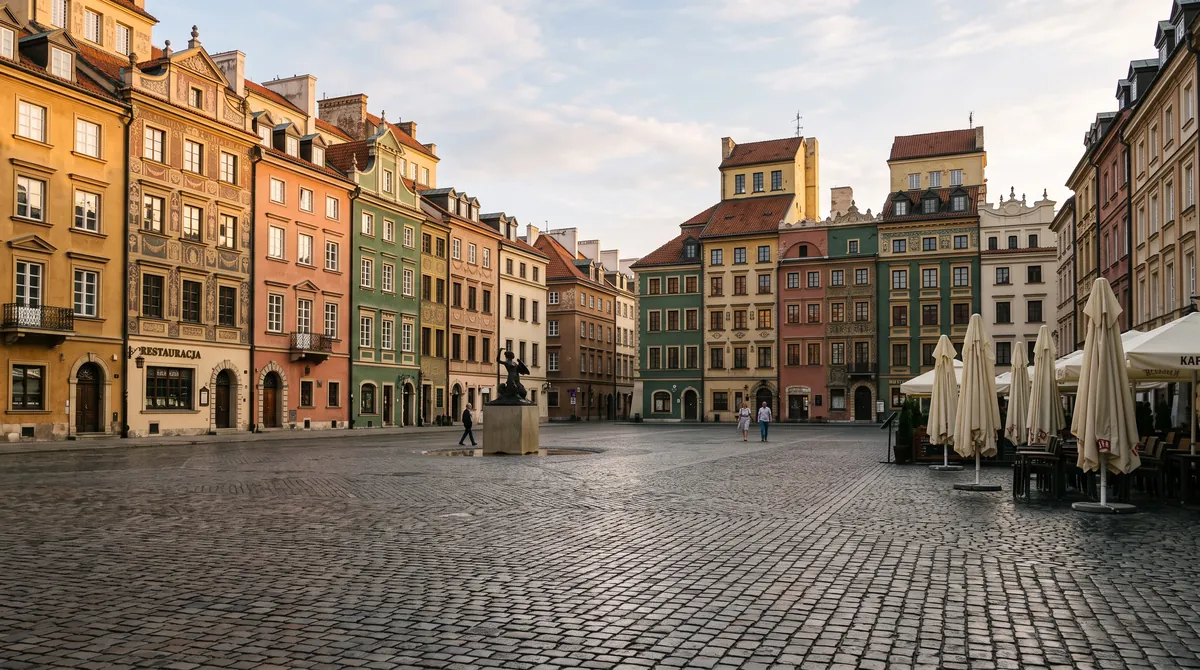
The historic centre was largely destroyed in 1944 and rebuilt from the late 1940s into the 1960s, with paintings, drawings and photographs used as guides. In 1980 it was inscribed on the UNESCO World Heritage List, recognised for the thoroughness of its reconstruction. Walking its lanes today, you see townhouses, churches and city walls restored to their old outlines and colours.
From Castle Square, the Royal Route, in Polish the , runs south along Krakowskie Przedmieście and Nowy Świat, past churches, palaces and the main university campus, then on towards Łazienki Park and finally Wilanów. It makes a natural spine for a short stay, and much of it is pleasant on foot.
Fryderyk Chopin grew up in Warsaw, and the city keeps his memory close. His heart rests in an urn set into a pillar of the Holy Cross Church on Krakowskie Przedmieście, where it was placed in 1879, and his monument in Łazienki Park is the setting for open-air recitals in summer.
Start with , dumplings filled with potato and cheese, meat, cabbage and mushrooms or summer fruit. , a sour rye soup often served with sausage and egg, is a warming start to a meal. For everyday Warsaw, look for a , or milk bar, a simple canteen serving home-style dishes, a tradition that goes back to the late 19th century.
Getting there, getting around and where to stay
Trains run from Warsaw Chopin Airport into the city centre in about 20 to 25 minutes, and city transport tickets are valid on the SKM suburban lines. Check current timetables before you travel.
Two metro lines cross the city: M1 runs north to south, and M2 runs east to west, passing beneath the Vistula to Praga. Trams cover much of the rest, and buses 116 and 180 link the centre with Wilanów. Time-based tickets and passes make it easy to hop on and off.
Stay in Śródmieście, the city centre, for the best transport links; along the Royal Route or in Powiśle, between the centre and the river, to walk to the Old Town and the boulevards; or in Praga for a more local feel among old tenement houses.
Three days, hour by hour
Day one Old Town and the Royal Route
- Morning
Castle Square and the Royal Castle
Start on Castle Square beneath Sigismund’s Column, erected in 1644 and one of the city’s oldest monuments. Then visit the Royal Castle, rebuilt between 1971 and 1984, whose state rooms and royal apartments have been furnished again with great care. Arrive early to enjoy the square in soft morning light.
- Afternoon
Old Town Market Square
Walk into the Old Town Market Square, framed by tall, colourful townhouses. At its centre stands the Warsaw Mermaid, or Syrenka, the city’s symbol; today’s statue is a copy, and the 1855 original is kept in the nearby Museum of Warsaw. Continue to the Barbican and the restored city walls.
- Evening
Krakowskie Przedmieście and Nowy Świat
Stroll south along Krakowskie Przedmieście, past the university gates and the Holy Cross Church, where Chopin’s heart rests in a pillar. The street continues as Nowy Świat, lined with cafés and restaurants. Settle in for a dinner of żurek followed by a plate of pierogi.
Day two Chopin’s park and a royal residence
- Morning
Łazienki Park and the Chopin Monument
Enter Łazienki Park and find the Chopin Monument, designed by Wacław Szymanowski and erected in 1926, the composer seated beneath a windswept willow. On summer Sundays free piano recitals are traditionally held here at noon and 4 pm, so this is a good day to plan for a Sunday. Check the current season’s dates.
- Afternoon
Wilanów Palace and gardens
Take bus 116 or 180 south to Wilanów, the Baroque residence built for King John III Sobieski between 1677 and 1696. One of Poland’s first public museums opened here in 1805. After the interiors, wander through the Baroque garden and the later English-style park beyond it.
- Evening
Palace of Culture and Science
Back in the centre, ride the lift to the viewing terrace of the Palace of Culture and Science, completed in 1955. From the 30th floor, 114 metres up, the Old Town, the river and the glass towers of the centre spread out below as the lights come on. Check current opening times.
Day three The river and Praga
- Morning
Vistula boulevards
Walk down to the Vistula boulevards, the riverside promenade whose first rebuilt section opened in 2015. Follow the water past wide steps, lawns and benches, with views across to the green far bank. On a fine morning this is where Warsaw comes to run, cycle and drink its first coffee outdoors.
- Afternoon
Copernicus Science Centre
Spend a few hours at the Copernicus Science Centre, opened on the riverbank in 2010. Its hands-on exhibitions invite visitors of every age to experiment, build and test ideas for themselves, which makes it as rewarding for curious adults as for families. Check current opening times and book ahead at weekends.
- Evening
Praga and Ząbkowska Street
Cross the river on metro line M2 to Dworzec Wileński and explore Praga, where many older tenement houses with deep courtyards still stand. Walk along Ząbkowska Street, admire the twin spires of St Florian’s Cathedral as the light fades, then find a relaxed spot for dinner in the neighbourhood.
Palaces and pavilions in Łazienki
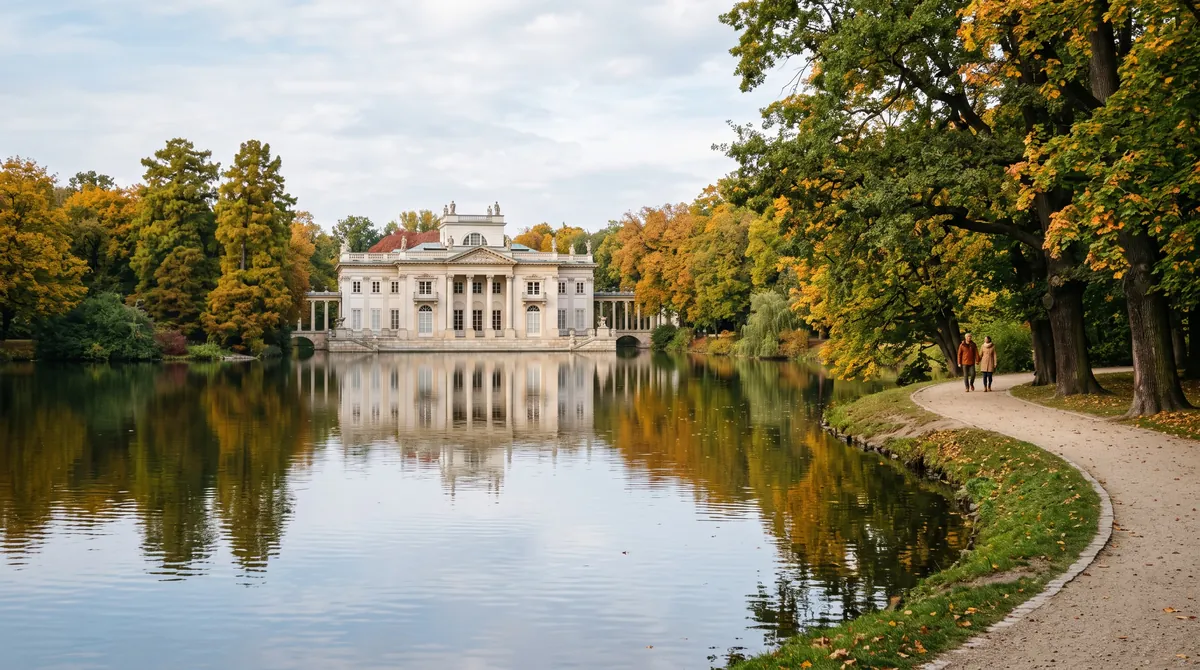
Łazienki is the largest park in Warsaw, and it rewards a slow walk. The Palace on the Isle began as a Baroque bath house around 1680 and was remodelled in the classical style from 1772 for King Stanisław August. Nearby, the Amphitheatre on the Isle, built from 1790 to 1793, has its stage on a small island, and performances are still held there.
Look out too for the Old Orangery, whose court theatre keeps an authentic 18th century interior. Peacocks wander the lawns and red squirrels dart between the trees, and you can easily spend half a day here simply walking from one pavilion to the next.
Łazienki is the largest park in Warsaw, and it rewards a slow walk.
When to go
Late spring to early autumn is the best time for a first visit. The parks are at their greenest, the boulevards fill with people in the evenings and the summer Sundays bring music to Łazienki. In autumn the park turns gold and copper, and the light on the Old Town facades is especially soft.
Winter is cold but rewarding, with festive lights in the centre in December and plenty of museums, concerts and cosy milk bars to retreat to. Whatever the season, the Praga Museum of Warsaw on Targowa Street and the Museum of Warsaw on the Market Square add depth to a walk through the city.
Words in this article
- Trakt Królewski
- The Royal Route, the historic street sequence linking the Royal Castle with Łazienki Park and Wilanów.
- Syrenka
- The Warsaw Mermaid, the city’s symbol, shown as a statue in the Old Town Market Square.
- Pierogi
- Polish dumplings with savoury or sweet fillings such as potato and cheese, meat, cabbage or fruit.
- Żurek
- A sour rye soup, often served with sausage and egg.
- Bar mleczny
- A milk bar, a simple Polish canteen serving home-style dishes, with roots in the late 19th century.
Questions readers ask
How do you get from Warsaw Chopin Airport to the city centre?
Trains run from the airport station into the centre in about 20 to 25 minutes, and city transport tickets are valid on the SKM suburban lines. From the central stations you can change to the metro, trams or buses. Check current timetables and ticket options before you travel, especially late in the evening.
When are the Chopin concerts in Łazienki Park?
Free open-air piano recitals of Chopin’s music are traditionally held beside the Chopin Monument on summer Sundays, usually at noon and 4 pm. The season normally runs from late spring to late summer, but dates can vary from year to year, so check the current programme before planning your visit around it.
What is a milk bar in Warsaw?
A bar mleczny, or milk bar, is a simple Polish canteen serving home-style dishes such as pierogi and hearty soups. The tradition goes back to the late 19th century, and milk bars remain a much loved part of everyday city life. They are an easy, informal way to try classic Polish cooking.