
3 days in Budapest: the Danube, thermal baths and coffee houses
Three days on both banks of the Danube, from Buda Castle and the Chain Bridge to the Parliament, the Millennium Underground, a thermal afternoon and an evening on the river.
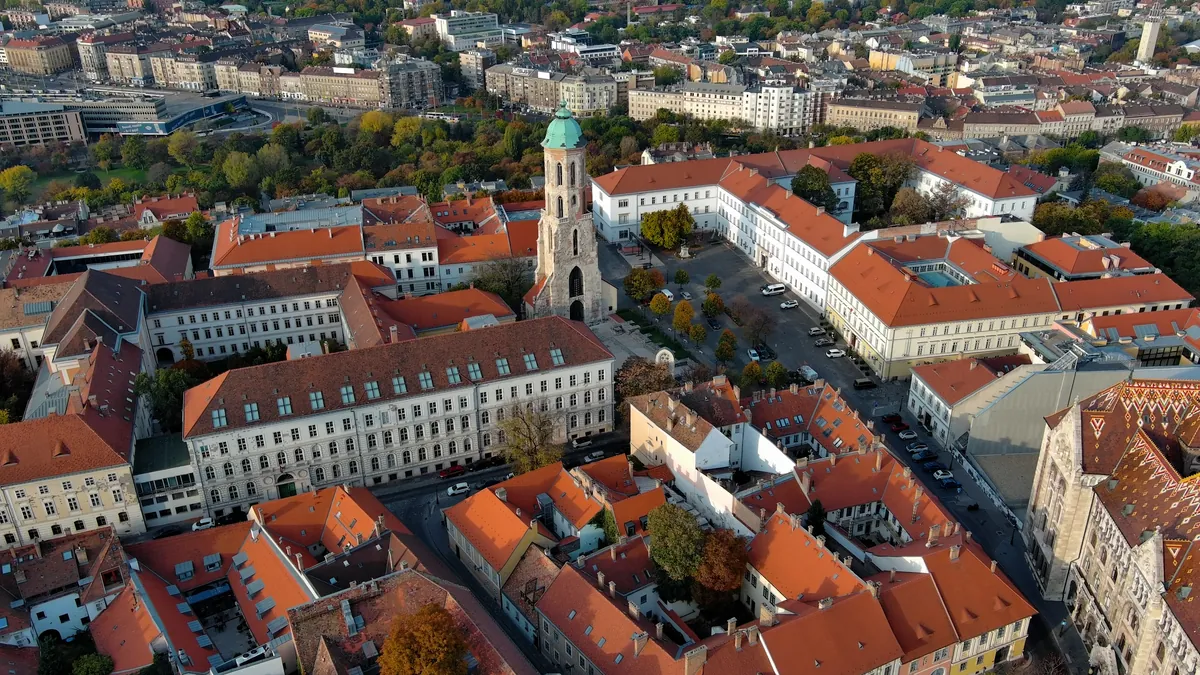
Budapest is two cities facing each other across the Danube. On the west bank, Buda rises in green hills crowned by a palace and a Gothic church; on the east bank, flat and grand, Pest spreads out in boulevards, domes and coffee houses. Between them run the bridges, and beneath them lie warm springs. Three days give you both banks, an afternoon in thermal water and an evening on the river.
Two cities and a river
Buda, Óbuda and Pest were united as a single city in 1873, and the two halves still keep their own characters. Buda is quieter and hillier, with villas, woods and the walled Castle District. Pest is where most of daily life happens: the Parliament, the great avenues, the market halls and the long evenings.
The river ties it all together. UNESCO inscribed the Banks of the Danube and the Buda Castle Quarter on the World Heritage List in 1987, and in 2002 extended the listing to Andrássy Avenue and the that runs beneath it. It is a rare World Heritage site that you can ride with an ordinary public transport ticket.
The Széchenyi Chain Bridge, opened in 1849 as the first permanent bridge between Buda and Pest, reopened in 2023 after a two-year restoration. Its stone lions and iron chains are lit at night, and crossing it on foot at dusk is one of the city’s simple pleasures.
Getting there, getting around and where to stay
Ferenc Liszt International Airport lies on the south-eastern edge of the city. The 100E airport express bus runs to Deák Ferenc tér, where three metro lines meet, stopping at Kálvin tér and Astoria on the way. The journey takes about 40 minutes and needs its own airport shuttle ticket. Direct trains also link Budapest with Vienna.
BKK, the city transport authority, runs the metro, trams and buses on one ticket system. Travelcards for 24 or 72 hours cover unlimited trips within the city and can be bought in advance; bought as mobile tickets in the app, they are tied to the photo ID you give when buying, so carry it with you. Trams 4 and 6 circle the Grand Boulevard, and tram 2 follows the Pest embankment with views across to the castle.
For a first visit, stay in Pest. District V, around the Parliament and St Stephen’s Basilica, puts most sights within walking distance. District VII, the old Jewish Quarter, has small streets of cafés and courtyards that fill up in the evening, while the side streets off Andrássy Avenue in District VI feel more residential. If you prefer calm and views, the Castle District and the leafy streets of Buda make a peaceful base.
Three days, hour by hour
Day one Buda Castle and the Chain Bridge
- Morning
Matthias Church and Fisherman’s Bastion
Ride the funicular, first opened in 1870, from the Buda end of the Chain Bridge, or walk up through the gardens. Start at Matthias Church, with its diamond-patterned roof of Zsolnay tiles, where Franz Joseph and Elisabeth were crowned in 1867. Next door, the seven white towers of Fisherman’s Bastion stand for the seven Magyar tribes.
- Afternoon
Castle District and the palace terraces
Wander the quiet lanes of the Castle District, lined with pastel houses, then walk south to the terraces of the royal palace. The view takes in the whole sweep of the river, with the Parliament on the far bank. Afterwards, follow the paths down through the castle gardens towards the river.
- Evening
Chain Bridge and the Pest embankment
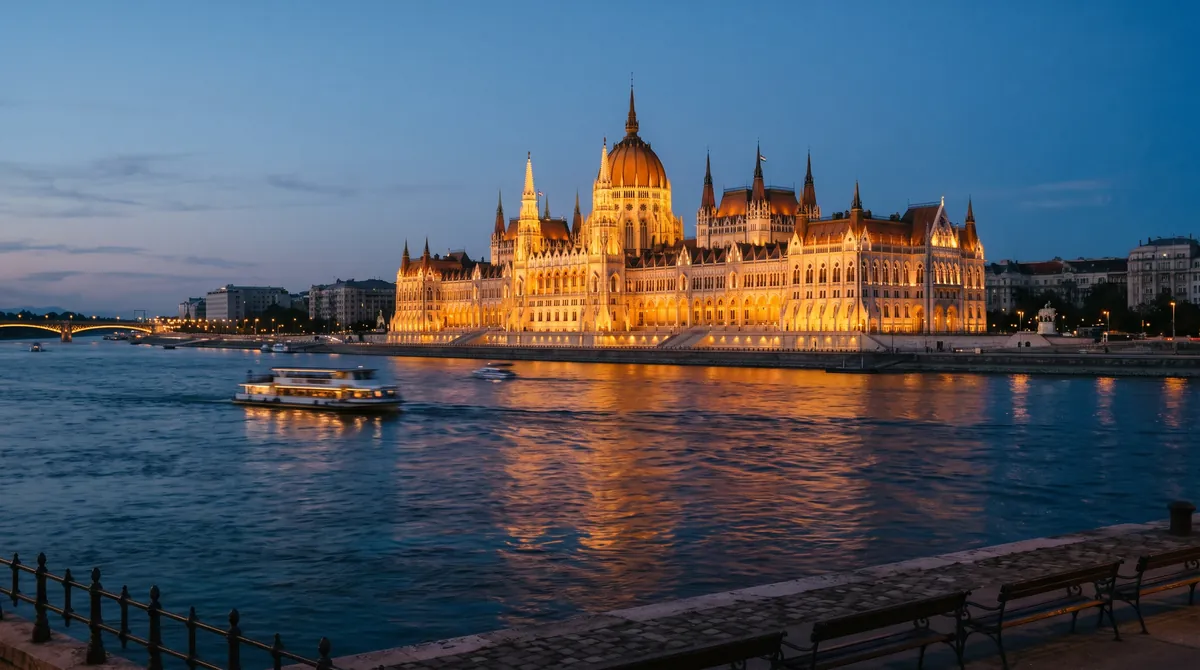
Cross the Chain Bridge on foot as the light fades and turn north along the Pest embankment towards the Parliament. When the floodlights come on, the palace, the bridge and Matthias Church glow gold above the dark water. Finish with dinner in one of the small restaurants in the streets behind the river.
Day two Parliament, Andrássy Avenue and the baths
- Morning
Parliament and St Stephen’s Basilica
Book a guided tour of the Parliament, completed in 1904 to designs by Imre Steindl, where the Holy Crown of Hungary is on display. Then walk to St Stephen’s Basilica, completed in 1905. Its dome rises to 96 metres, the same height as the Parliament, and a terrace around it looks out over the rooftops of Pest.
- Afternoon
Millennium Underground and the Széchenyi Baths
Ride the little yellow trains of line M1, opened in 1896 beneath Andrássy Avenue, to Heroes’ Square with its tall column and statues of the Magyar chieftains. Cross into City Park to the Széchenyi Baths, opened in 1913, and spend the rest of the afternoon moving slowly between the warm outdoor and indoor pools.
- Evening
Andrássy Avenue and the Opera House
Walk back down Andrássy Avenue, lined with grand apartment houses, to the Opera House, built by Miklós Ybl in 1884 and reopened in 2022 after a long renovation. Catch a performance if you can, or settle into a grand café nearby for coffee and a slice of cake.
Day three Market, hilltop and island
- Morning
Great Market Hall and Gellért Hill
Start at the Great Market Hall, opened in 1897 under a roof of coloured Zsolnay tiles, with paprika and salami on the ground floor and lángos stalls upstairs. Then cross Liberty Bridge and climb Gellért Hill to the Citadella, reopened in spring 2026 after a long restoration, for the widest view over both banks.
- Afternoon
Margaret Island
Take tram 4 or 6 to the stop on Margaret Bridge and walk onto Margaret Island, a long park in the middle of the Danube that is largely free of traffic. Stroll past the musical fountain, the Art Nouveau water tower from 1911 and the small Japanese garden, or hire a bike and circle the island at leisure.
- Evening
A boat on the Danube
End the trip on the water. Evening sightseeing boats leave from the Pest embankment and glide past the floodlit Parliament, the palace and the bridges. In the warmer months, public boat lines also run along the river, so check the current timetable if you prefer a simpler ride.
Coffee houses and warm water
Around 1900 Budapest had hundreds of coffee houses, and writers and editors treated their favourite tables as offices, spending much of the day there. Several of the grand cafés, the in Hungarian, have since been restored to their full splendour, with chandeliers, painted ceilings and marble tables.
Order a coffee with a slice of Dobos torte, thin layers of sponge and chocolate buttercream under a glossy caramel top, and take your time. A grand café is at its best in the late afternoon, when the light softens and nobody is in a hurry to leave.
The other ritual is bathing. The city stands above a great many warm springs, and the Hungarian word to look for is , bath. A thermal afternoon works best without a plan: bring swimwear, flip-flops and a towel, start outdoors, then drift between the indoor halls and the steam rooms. Few things in Budapest feel as unhurried as an afternoon in warm water under an open sky.
Few things in Budapest feel as unhurried as an afternoon in warm water under an open sky.
When to go
Spring and early autumn are the most comfortable seasons for walking, with mild days and soft light on the river. Summer is warm and long, perfect for evenings on the embankments and Margaret Island, while the hottest hours of the day are well spent indoors or in the water.
Winter has its own pleasures. Advent markets fill squares in Pest, including the one in front of St Stephen’s Basilica, the coffee houses feel at their cosiest, and an outdoor thermal pool on a frosty afternoon, wrapped in its own steam, shows Budapest at its most memorable.
Words in this article
- Kávéház
- Hungarian for coffee house, especially the grand cafés where writers once spent their days.
- Fürdő
- Hungarian for bath, used in the names of the city’s thermal baths.
- Lángos
- A deep-fried flatbread, often topped with sour cream and grated cheese.
- Millennium Underground
- Budapest’s metro line M1, opened in 1896 beneath Andrássy Avenue and part of the World Heritage site.
Questions readers ask
How do you get from Budapest airport to the city centre?
The 100E airport express bus runs from Ferenc Liszt International Airport to Deák Ferenc tér in the centre, stopping at Kálvin tér and Astoria, and takes about 40 minutes. It needs its own airport shuttle ticket, which you can buy from machines or pay for on board by bank card. At Deák Ferenc tér three metro lines meet, so onward travel is easy.
Should you stay in Buda or Pest?
For a first visit, Pest is the more practical base, because the Parliament, St Stephen’s Basilica, the coffee houses and most restaurants are within walking distance. District V is central and District VII is lively in the evening. Buda, especially the Castle District, suits travellers who want quiet streets, views over the river and an early night.
What should you bring to a thermal bath in Budapest?
Pack swimwear, flip-flops and a towel, and a swimming cap if you plan to swim lengths, since lap pools often ask for one. Plan at least two to three hours, move between the pools slowly and drink water as you go. If you have any doubts about heat or warm water, talk to your own doctor before the trip.