3 days in Cologne: cathedral, Rhine and Kölsch
Three days in Cologne, from the cathedral tower and the Hohenzollern Bridge to Roman remains, Romanesque churches, Kölsch in a brewery house and street art in Ehrenfeld.
Cologne greets you with its cathedral. Step out of the main station and the twin spires rise directly in front of you, the start of a city that has been building on the Rhine for almost two thousand years. Three days give you Gothic and Romanesque churches, Roman foundations, glasses of carried by the trayful and long evenings on the riverbanks.
Two thousand years on the Rhine
Cologne was raised to the status of a Roman colony around AD 50 under Emperor Claudius and named after his wife Agrippina, who was born here. Traces of the Roman city surface all over the centre: a rebuilt arch of the old north gate stands on the cathedral square, and a tower of the Roman wall, decorated with patterned stone, still stands at the north-west corner of the ancient city.
The Middle Ages left an even richer legacy. Between about 1000 and 1250 the city built twelve great Romanesque churches, among them Great St Martin, whose crossing tower rises above the old town, and St Gereon with its ten-sided dome. All twelve were restored after the war, and together they form a remarkable group.
Cologne’s everyday ritual is Kölsch, a pale, top-fermented beer that by agreement may only be brewed in the Cologne area. It is served in slim glasses called Stangen by waiters known as , who carry them on a round tray and replace each empty glass without being asked. Lay your beer mat on top of the glass when you have had enough.
Getting there, getting around and where to stay
Cologne Bonn Airport has its own railway station, with S-Bahn and regional trains to Köln Hauptbahnhof in about 15 minutes. The Hauptbahnhof sits right beside the cathedral, so you step off the train straight into the city’s most famous view.
The centre is compact and best explored on foot. The KVB, the city’s transport company, runs trams, light rail and buses on one ticket system, handy for crossing the river to Deutz or reaching Ehrenfeld and the zoo.
Stay in the Altstadt for the cathedral and the river, in the Belgian Quarter for independent shops and a lively evening scene, around the Rheinauhafen for contemporary architecture by the water, or in Deutz across the Rhine for the classic skyline view on your doorstep.
Three days, hour by hour
Day one Cathedral, bridge and old town
- Morning
Cologne Cathedral
Start early at the cathedral, begun in 1248 and completed only in 1880. Inside, find the golden Shrine of the Three Kings behind the high altar, then climb the 533 steps of the south tower to a platform about 100 metres up. Since July 2026 sightseeing visits are ticketed, so check current arrangements.
- Afternoon
Roman Cologne and the Altstadt
Look for the rebuilt Roman gate arch on the cathedral square. The Roman-Germanic Museum’s main building beside the cathedral is being renovated, and part of its collection is on show in an interim home near the Neumarkt. Afterwards, wander the old town lanes between the Alter Markt, the Heumarkt and Great St Martin.
- Evening
Hohenzollern Bridge and Deutz
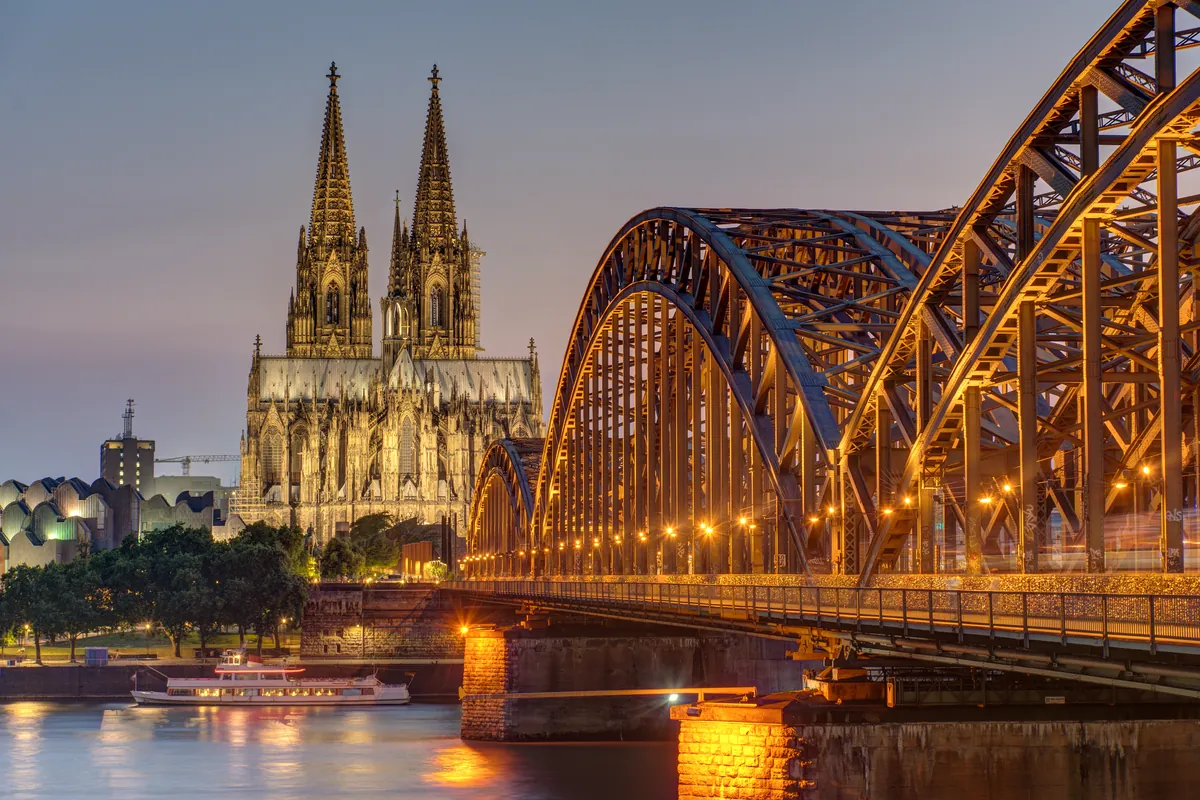
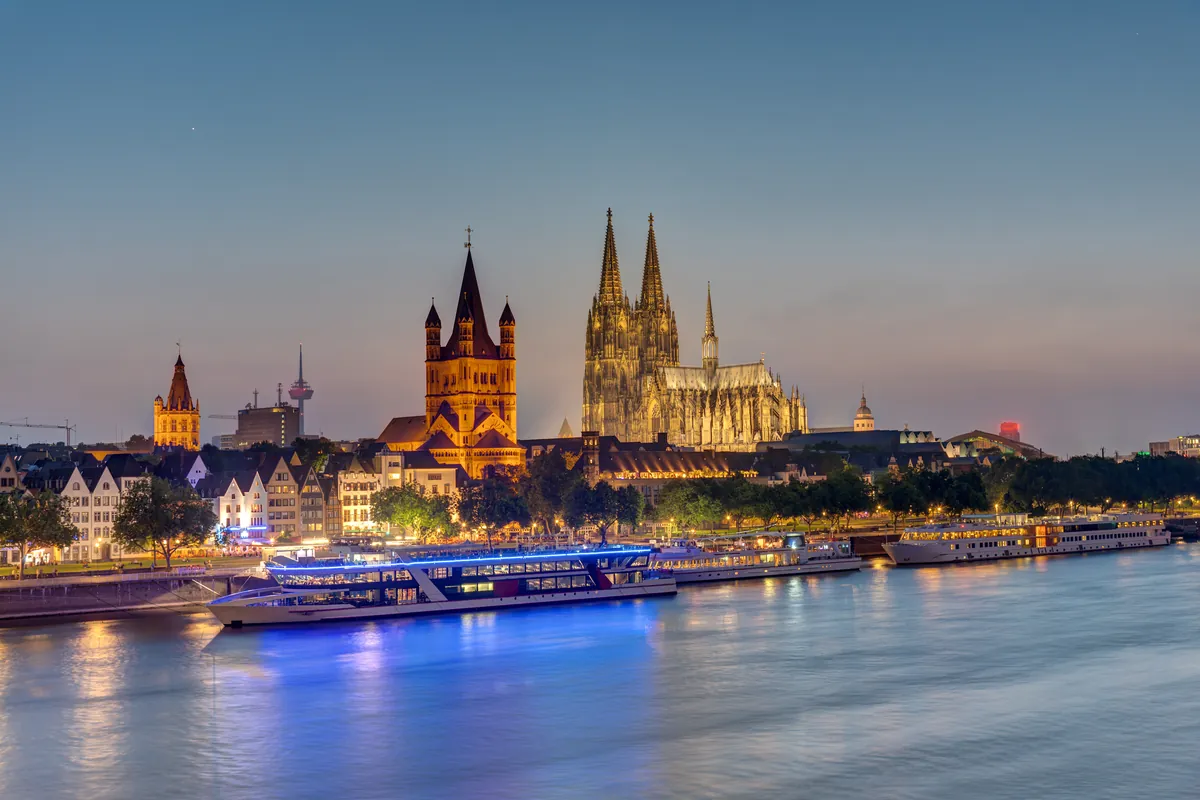
Walk across the Hohenzollern Bridge, its railings hung with thousands of padlocks left by couples, to the Rhine embankment in Deutz. At dusk the view back over the river to the cathedral and Great St Martin is the classic Cologne panorama. Then return to the old town for a Kölsch in a brewery house.
Day two Harbour, churches and the Belgian Quarter
- Morning
Rheinauhafen
Follow the river south to the Rheinauhafen, the old harbour reborn as a quarter of offices, flats and promenades. Its three Kranhäuser, 17-storey buildings shaped like an upside-down letter L, echo the cranes that once loaded ships here. On the harbour peninsula, a museum is devoted entirely to chocolate.
- Afternoon
The Romanesque churches
Spend the afternoon with the Romanesque churches. Begin at St Maria im Kapitol near the Heumarkt or at Great St Martin by the river, then head west to St Gereon, whose ten-sided dome rises above a late Roman core. Step inside quietly, as these are living parish churches.
- Evening
Belgian Quarter
In the evening, head to the Belgian Quarter, whose streets carry the names of Belgian towns and provinces. Around the Brüsseler Platz and its church, small restaurants, wine bars and independent shops line the streets, and on warm nights the neighbourhood moves outdoors.
Day three Art, the river and Ehrenfeld
- Morning
Museum Ludwig or Wallraf-Richartz-Museum
Choose between two great collections close to the cathedral. The Museum Ludwig shows 20th-century and contemporary art, with Pop Art and a large Picasso collection, while the Wallraf-Richartz-Museum leads you from medieval Cologne painting to the Impressionists.
- Afternoon
A Rhine boat trip or the cable car
Then take to the water or the air. Boats leave from the old town riverbank for round trips past the skyline, while in the warmer months the Rhine cable car glides across the river between the zoo and the Rheinpark, a crossing of around 930 metres with wide views up and down the Rhine.
- Evening
Ehrenfeld
Arrive in Ehrenfeld before dusk to see its large murals, many of them painted during the CityLeaks street art festival on the walls of this former industrial district. Venloer Strasse and its side streets are lined with small cafés, bakeries and restaurants serving food from around the world.
Brewery houses and carnival
A brewery house visit has its own etiquette. Sit at a long wooden table, and the Köbes will set down a of Kölsch without being asked, marking each one on your beer mat. Order a , which is not half a chicken but a rye roll with a thick slice of mature Gouda, mustard and onion.
Carnival shapes the Cologne year more than any other tradition. The season opens on 11 November at 11:11, when costumed crowds gather in the old town around the Heumarkt and the Alter Markt, and it reaches its height in the days before Ash Wednesday, from Weiberfastnacht on the Thursday to the great Rosenmontag parade on the Monday.
Step out of the main station and the twin spires rise directly in front of you.
When to go
Spring and summer bring long evenings on the riverbanks, terraces on the old town squares and picnics in the Rheinpark across the river. Autumn is mild and quieter, a fine time for museums and churches, and 11 November marks the opening of the carnival season.
From late November, Christmas markets light up the city, with a large one at the foot of the cathedral and others on old town squares, filled with wooden stalls, mulled wine and the scent of roasted almonds. Winter is also the cosiest season for an afternoon in a brewery house with a Stange in hand.
Words in this article
- Kölsch
- A pale, top-fermented beer that by agreement may only be brewed in the Cologne area.
- Stange
- The slim, straight glass in which Kölsch is served.
- Köbes
- The traditional waiter in a Cologne brewery house, who replaces empty glasses without being asked.
- Halve Hahn
- A rye roll with a thick slice of mature Gouda, mustard and onion; literally “half a chicken”.
- Kranhäuser
- Three 17-storey buildings in the Rheinauhafen whose shape recalls harbour cranes.
Questions readers ask
How do you get from Cologne Bonn Airport to the centre?
The airport has its own railway station, and S-Bahn and regional trains run to Köln Hauptbahnhof in about 15 minutes. The Hauptbahnhof stands right beside the cathedral, so you arrive in the heart of the city. From there, trams and light rail run by the KVB reach Deutz, the Belgian Quarter and Ehrenfeld.
How does ordering Kölsch work?
In a traditional brewery house you rarely need to order a second glass. The Köbes, the waiter, brings Kölsch in slim Stangen and replaces each empty glass without being asked, marking every one on your beer mat. When you have had enough, lay the beer mat on top of your glass, and the bill is settled from the marks.
Can you visit Cologne Cathedral?
Yes. Since July 2026 sightseeing visits to the interior require a ticket, while services and prayer remain open to all. The climb up the south tower takes 533 steps to a viewing platform about 100 metres above the square, with views over the Rhine and the city. Check current opening times and arrangements before your visit.