3 days in Munich: beer gardens, art and the Isar
Three days in the Bavarian capital, from the Marienplatz and the Residenz to the Pinakotheken, the English Garden, Nymphenburg, the Isar riverbanks and the Olympic hill.
Munich mixes royal grandeur with an easy, outdoor way of life. In a single day you can move from palace courtyards and great art collections to a shaded beer garden or the gravel banks of the Isar. Three days cover the old town, the museum quarter, the English Garden and a palace park, with time left for long evenings outdoors.
Royal city, green city
For centuries Munich was the seat of the Wittelsbach dynasty, which ruled Bavaria as dukes, electors and kings, and their palaces and collections still shape the centre. The Residenz, their vast city palace, faces the Hofgarten, and many of the paintings they gathered now hang in the Alte Pinakothek.
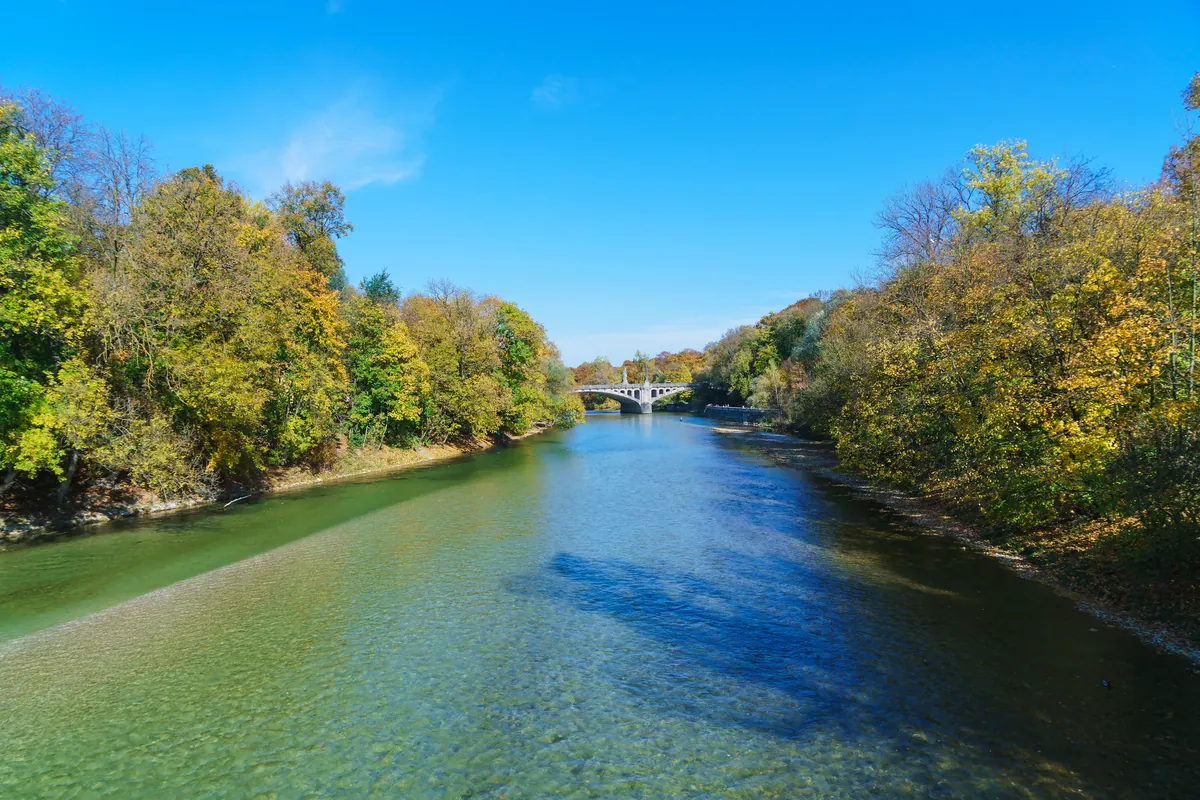
Yet the city is just as proud of its green spaces. The English Garden stretches north from the edge of the old town and is larger than New York’s Central Park, while the Isar, a fast, clear river that rises in the Alps, runs through the city between gravel banks and meadows.
The beer garden is Munich’s great social institution. In traditional beer gardens you may bring your own food and buy only your drinks, a custom that goes back to the early 19th century. Locals arrive with a , a picnic of bread, cheese, radishes and cold meats, and share the long benches with whoever happens to sit down beside them.
Getting there, getting around and where to stay
Munich Airport lies north-east of the city. S-Bahn lines S1 and S8 run to the centre in about 40 minutes, the S8 being slightly faster, and both stop at Marienplatz. The airport lies in fare zone 5, outside zone M, which covers the city, so the Airport-City-Day-Ticket, valid across zones M to 5 until 6 am the following morning, is a simple choice for arrival day.
MVV, the local transport network, links S-Bahn, U-Bahn, trams and buses on a single ticket system. Most of what you want to see lies in zone M, and the old town itself is best explored on foot.
Stay in the Altstadt to walk almost everywhere, in Maxvorstadt for the museums and its university streets, in Haidhausen across the Isar for quiet squares and old inns, or in the Glockenbachviertel for small shops, relaxed restaurants and easy access to the river.
Three days, hour by hour
Day one Old town and royal Munich
- Morning
Marienplatz and the Viktualienmarkt
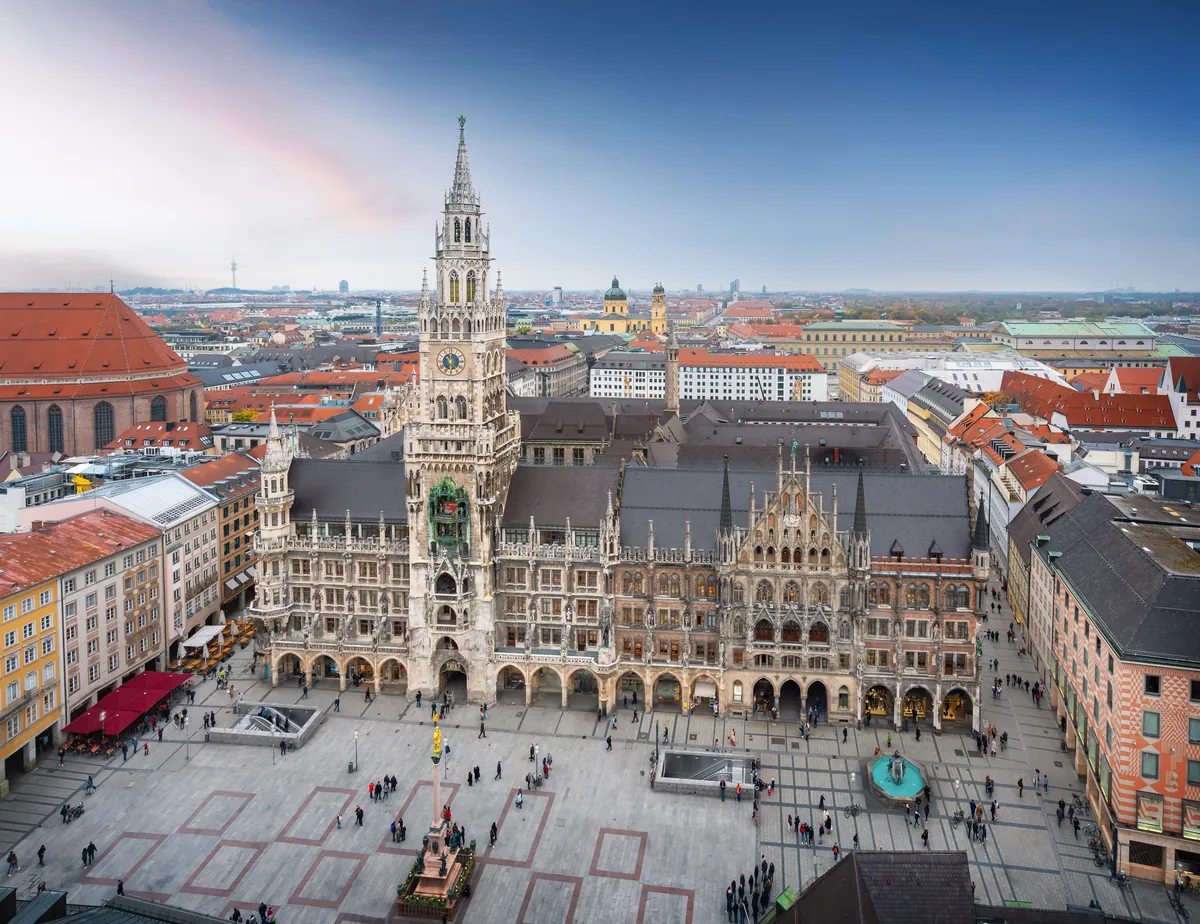
Begin on the Marienplatz beneath the neo-Gothic New Town Hall. The Glockenspiel in its tower usually plays at 11 am and noon, and also at 5 pm from March to October, with figures re-enacting a tournament and the coopers’ dance; check current times. Then browse the Viktualienmarkt, open Monday to Saturday.
- Afternoon
Frauenkirche and the Residenz
Walk to the Frauenkirche, consecrated in 1494, whose two towers with their onion-shaped domes have become the emblem of the city. Continue to the Residenz, the former palace of the Wittelsbach rulers, where courtyards, state rooms and the treasury could easily fill the rest of the afternoon.
- Evening
Hofgarten and the Odeonsplatz
Step out into the Hofgarten, the formal garden beside the Residenz, with a pavilion dedicated to the goddess Diana at its centre. As the light softens, cross the Odeonsplatz in front of the ochre facade of the Theatine Church before dinner in one of the old town’s traditional inns.
Day two Art, the English Garden and Schwabing
- Morning
Kunstareal
Head to the Kunstareal in Maxvorstadt. The Alte Pinakothek holds old masters from Dürer to Rubens, while the Pinakothek der Moderne gathers modern art, design and architecture under one roof. The Neue Pinakothek is closed for renovation, with selected 19th-century works on show elsewhere in the meantime.
- Afternoon
English Garden and the Chinese Tower
Enter the English Garden near the Haus der Kunst, where the Eisbach rushes out beneath Prinzregentenstrasse; its standing wave made Munich famous among river surfers, and whether boards are out depends on current rules. Follow the paths north to the Chinese Tower, whose beer garden has room for around 7,000 people.
- Evening
Schwabing
Continue north into Schwabing, once the bohemian quarter of painters and writers, where Art Nouveau facades line the quieter side streets. Around Leopoldstrasse and the streets west of it, relaxed restaurants and wine bars invite a long dinner and an unhurried walk home.
Day three Palace, river and the Olympic hill
- Morning
Nymphenburg Palace and park
Take the tram to Nymphenburg, the Wittelsbach summer residence begun in 1664. After the state rooms, follow the long central canal into the park, opened to the public in 1792, where small pavilions such as the Amalienburg hide among the trees.
- Afternoon
The Isar and the Flaucher
Head to the Isar and walk south along the river towards the Flaucher, where wide gravel banks, shallow channels and meadows invite you to linger. On warm days many locals spend the whole afternoon here, picnicking, paddling and barbecuing in the areas set aside for it.
- Evening
Olympiapark
End at the Olympiapark, built for the 1972 Summer Olympics, with its sweeping tent-like roofs. Climb the Olympiaberg, a grassy hill raised from post-war rubble, for a wide view across the city and, on clear days, to the Alps, and stay until the lights come on.
Beer gardens and the Wiesn
Oktoberfest, known locally as the after the Theresienwiese meadow where it is held, began in 1810 as the celebration of a royal wedding. It opens on a Saturday in mid to late September and ends on the first Sunday in October, or on 3 October if that falls later. Book your accommodation well ahead if you want to go.
Beyond the Wiesn, the beer gardens open whenever the weather allows, mostly from spring into autumn. Beer comes by the litre, the , and the classic accompaniments are pretzels, white radish sliced into thin spirals and , a spiced cheese spread.
The most central of them all sits in the middle of the Viktualienmarkt, beneath a tall maypole painted in Bavarian blue and white. Its taps serve beer from Munich’s six large breweries in rotation, and on a sunny lunchtime office workers, market traders and visitors sit side by side at the same wooden tables.
In a single day you can move from palace courtyards and great art collections to a shaded beer garden or the gravel banks of the Isar.
When to go
Late spring and summer are beer garden season, when the Isar banks fill up and the English Garden is at its greenest. September brings the Oktoberfest and golden autumn days, and when the warm föhn wind clears the air, the Alps seem close enough to touch from the city’s viewpoints.
From late November, Christmas markets open across the city, with the largest on the Marienplatz and smaller ones in squares and courtyards from Schwabing to the Residenz. Winter is also the season for museums, concerts and long afternoons in warm old town inns.
Words in this article
- Brotzeit
- A Bavarian snack or picnic of bread, cheese, cold meats and radishes.
- Wiesn
- The local name for the Oktoberfest, after the Theresienwiese meadow where it is held.
- Mass
- A one-litre glass of beer, the standard measure in Munich beer gardens.
- Obatzda
- A Bavarian spread of soft cheese, butter, paprika and onion, served with pretzels.
- Glockenspiel
- A set of bells that plays tunes, here with moving figures in the tower of the New Town Hall.
Questions readers ask
Can you bring your own food to a Munich beer garden?
Yes, in traditional beer gardens you may bring your own food and buy only your drinks, a custom that goes back to the early 19th century. Locals arrive with a Brotzeit of bread, cheese, radishes and cold meats and share the long benches with other guests. Drinks, however, are always bought on site.
When does the Oktoberfest take place?
The Oktoberfest opens on a Saturday in mid to late September and ends on the first Sunday in October, or on 3 October if that falls later, so it usually lasts a little over two weeks. It is held on the Theresienwiese, which is why locals call it the Wiesn. Book accommodation well ahead if you plan to visit during the festival.
How do you get from Munich Airport to the city centre?
S-Bahn lines S1 and S8 run from the airport to the centre in about 40 minutes, and both stop at Marienplatz. The airport lies in fare zone 5, outside zone M, which covers the city. The Airport-City-Day-Ticket covers zones M to 5 and is valid until 6 am the following morning, so it suits arrival day well.