
3 days in Madrid: art, plazas and the Retiro
Kilómetro Cero, Velázquez and Goya, a rowing boat on the Retiro lake and a Sunday morning at El Rastro: three unhurried days in Spain’s capital of squares and late dinners.
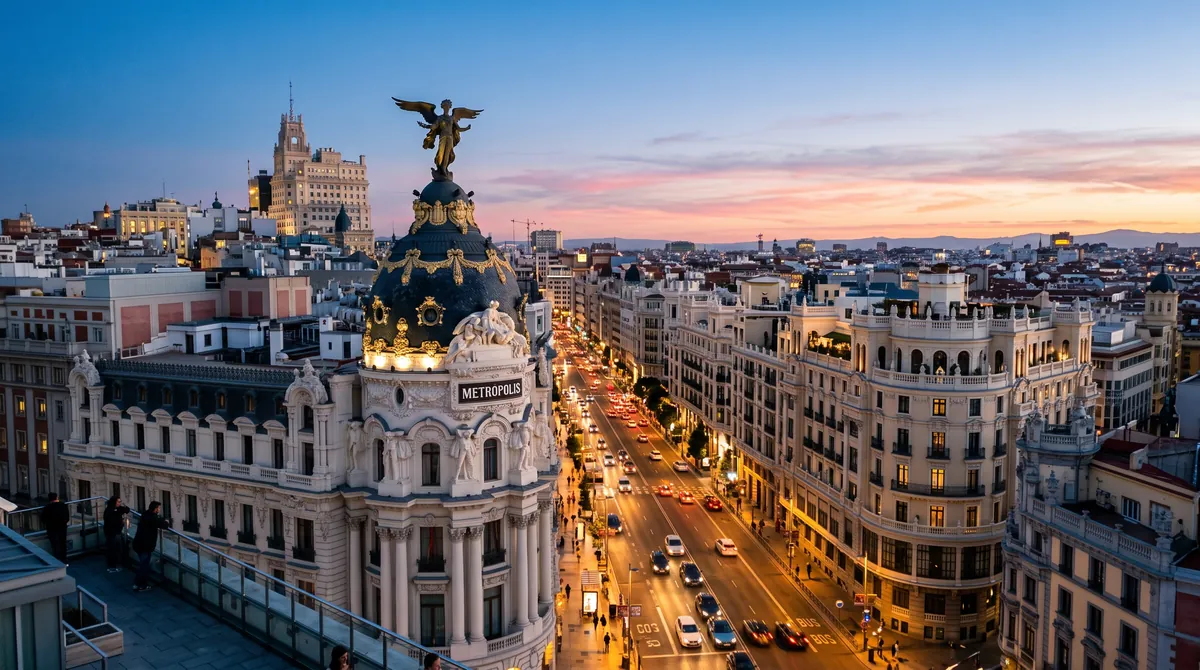
Madrid is a city best taken at its own pace: a morning with Velázquez and Goya, a long lunch that starts at two, an evening that warms up only after dark. In three days you can stand on the spot from which Spain measures its roads, walk the avenue of museums that UNESCO listed in 2021, row a boat on the Retiro lake and spend a Sunday morning in the old streets of La Latina. The centre is compact, the metro is easy, and many of the best moments happen in its squares.
A capital of squares, palaces and paintings
Madrid grew up around the royal court, and its old centre still shows it. Between the Royal Palace in the west and the Retiro in the east lies a walkable grid of squares and lanes, from the Puerta del Sol, where the city meets, to the arcaded Plaza Mayor, completed in 1619. Most of what a first visit needs lies within half an hour on foot of Sol.
In July 2021 UNESCO added the del Prado and the Buen Retiro to its World Heritage List as a landscape of arts and sciences, the first World Heritage Site in the capital itself. In Spanish the project is known as the Paisaje de la Luz, the Landscape of Light. Along this tree-lined boulevard stand the Prado, the Thyssen-Bornemisza and the Reina Sofía, three great museums within an easy walk of one another.
Getting there, getting around and where to stay
From Madrid-Barajas airport, Metro line 8 runs from the terminals to Nuevos Ministerios, where you can change to the rest of the network. From Terminal 4, Cercanías suburban trains on lines C1 and C10 run to Chamartín and Atocha. Once in the centre, the metro and your own feet will take you everywhere in this itinerary.
For a first visit, stay around Sol, the Plaza Mayor or the Barrio de las Letras, the old literary quarter between Sol and the Prado. La Latina suits travellers who want old streets and tapas at the door. Malasaña and Chueca, north of the Gran Vía, are livelier at night and full of small shops and terraces.
Three days, hour by hour
Day one Squares, a palace and a temple at sunset
- Morning
Puerta del Sol and Plaza Mayor
Begin at the Puerta del Sol, where a plaque in the pavement in front of the old Royal Post Office marks Kilómetro Cero, the point from which distances on Spain’s national roads are measured. The clock above it chimes in the New Year on national television. Then walk a few minutes to the Plaza Mayor, completed in 1619, with a bronze statue of Philip III at its centre.
- Afternoon
Mercado de San Miguel, Royal Palace and Almudena Cathedral
Stop at the Mercado de San Miguel, an iron and glass market hall opened in 1916 and reborn in 2009 as a hall of tasting counters. Continue west to the Royal Palace, built after fire destroyed the old Alcázar in 1734 and still the King’s official residence, used today for state ceremonies. Opposite stands the Almudena Cathedral, consecrated in 1993.
- Evening
Temple of Debod
Walk north past the Plaza de Oriente to the Temple of Debod, an Egyptian temple from the second century BC. Egypt gave it to Spain in 1968 in thanks for help in saving the monuments of Nubia, and it opened here in 1972. The park around it is a favourite place to watch the sun go down over the Casa de Campo.
Day two The Landscape of Light
- Morning
Museo del Prado
Be at the Prado when it opens. The museum first welcomed visitors in 1819, and its rooms of Velázquez, Goya and El Greco reward a slow visit, so choose a few galleries rather than trying to see everything. Las Meninas and Goya’s late Black Paintings make good anchors for a first visit.
- Afternoon
Thyssen-Bornemisza or Reina Sofía
After lunch, choose between the Thyssen-Bornemisza, opened in 1992 in the Palacio de Villahermosa with a broad survey of European painting, and the Reina Sofía near Atocha, home to Picasso’s Guernica. The Paseo del Prado links them, with the Neptune fountain between the Prado and the Thyssen and the Cibeles fountain a little further north.
- Evening
Retiro Park
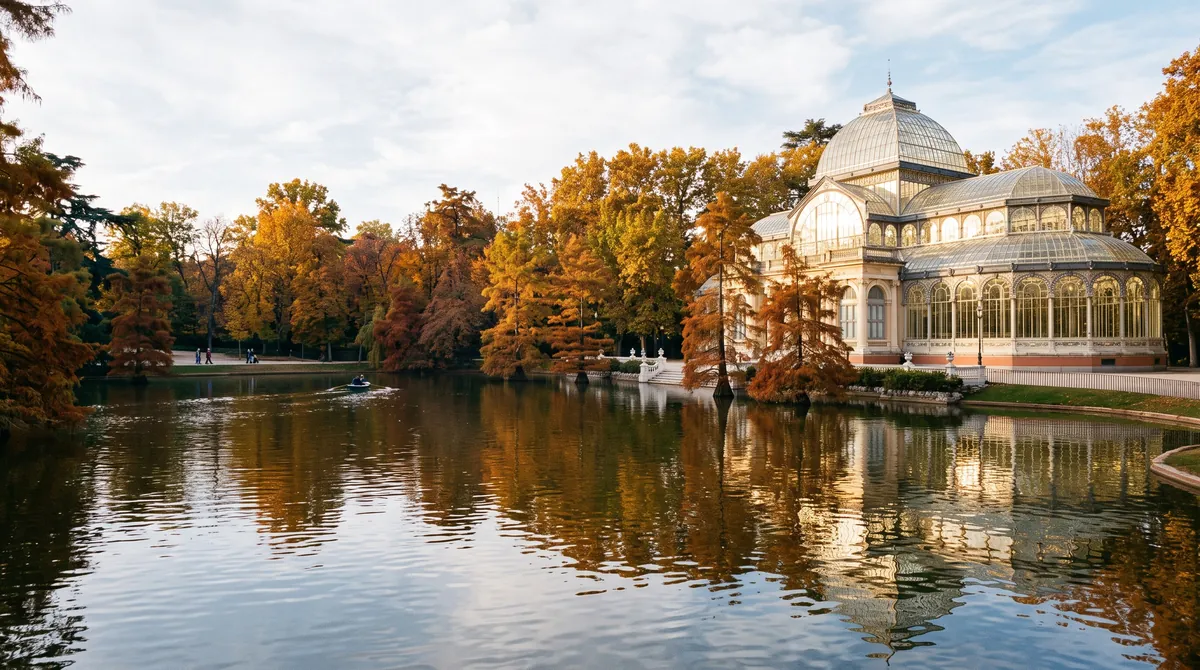
In the late afternoon, enter the Retiro, once a royal retreat and now the city’s favourite park. Hire a rowing boat on the Estanque Grande below the colonnade of the Alfonso XII monument, then walk to the Crystal Palace, the glass and iron pavilion built in 1887 for an exhibition on the Philippines. It is closed for restoration, so check whether it has reopened.
Day three El Rastro, La Latina and two neighbourhoods
- Morning
El Rastro
On Sunday and public holiday mornings, El Rastro fills Ribera de Curtidores and the streets around the Plaza de Cascorro with stalls of antiques, old records, clothes and curiosities. Arrive early, when browsing is easiest. If your third day is not a Sunday, spend the morning in the Royal Botanical Garden beside the Prado instead.
- Afternoon
La Latina and the Cava Baja
Drift into La Latina for vermut, a glass of vermouth before lunch, a favourite Sunday habit in these streets. Then move on to tapas along the Cava Baja, a curving lane that follows the line of the old medieval wall. Order a few small plates at the counter, share them, and try the next bar.
- Evening
Malasaña and Chueca
Spend the evening north of the Gran Vía. In Malasaña, the Plaza del Dos de Mayo remembers the uprising against Napoleon’s troops on 2 May 1808, with an arch from the old Monteleón barracks at its centre. Next door, Chueca has small squares, independent shops and terraces that stay lively until late.
The order of the days is flexible. If you arrive on a Saturday, simply swap day two and day three so that falls on Sunday morning, and keep the museums for a weekday when the galleries are calmer.
Eating on Madrid time
Madrid runs on a late clock. Lunch, the main meal of the day, usually starts around two, and dinner rarely before nine. Between the two comes the evening paseo, the stroll through the squares and along the main streets that fills the city as the heat goes out of the day.
Tapas are a way of moving through a neighbourhood rather than a meal in one place. Ask for a , a small glass of draught beer, and order croquetas or patatas bravas, potatoes with a spicy sauce. Around the Plaza Mayor, the classic snack is a bocadillo de calamares, a crusty roll filled with fried squid rings.
When to go
Spring and autumn are the most pleasant seasons, with mild days for walking and evenings warm enough to sit outside. Summer is hot and dry, so plan sightseeing for the morning and evening and spend the middle of the day in a museum or in the shade of the Retiro. In August many residents leave for the coast, and the city feels noticeably quieter.
Winter days are often clear and crisp, a good time for museums, long lunches and walks in low sunshine. On New Year’s Eve crowds gather in the Puerta del Sol to eat twelve grapes, one for each stroke of the clock at midnight, a tradition followed in homes across Spain.
Madrid is a city best taken at its own pace: a morning with Velázquez and Goya, a long lunch that starts at two, an evening that warms up only after dark.
Words in this article
- Kilómetro Cero
- The plaque in the Puerta del Sol marking the point from which distances on Spain’s national roads are measured.
- El Rastro
- Madrid’s open-air flea market, held on Sunday and public holiday mornings around Ribera de Curtidores and the Plaza de Cascorro.
- Vermut
- Vermouth, traditionally sipped before lunch, a favourite Sunday habit in the bars of La Latina.
- Caña
- A small glass of draught beer, the standard order at a Madrid bar counter.
- Paseo
- The early evening stroll through squares and along main streets, a social ritual in Spanish cities.
Questions readers ask
Is three days enough for Madrid?
Three days cover the essentials comfortably: the Puerta del Sol and the Plaza Mayor, the Royal Palace, the Prado and one other great museum, the Retiro, El Rastro and an evening in Malasaña or Chueca. The centre is compact, so you lose little time getting around. A fourth day could add whichever of the Thyssen and the Reina Sofía you skipped on day two, or a slow morning in the Royal Botanical Garden.
How do you get from Madrid airport to the city centre?
Metro line 8 runs from the airport terminals to Nuevos Ministerios, where you can change to other metro lines for the centre. From Terminal 4, Cercanías suburban trains on lines C1 and C10 run to Chamartín and Atocha. Timetables and services can change, so check current details before you travel, especially if you arrive late in the evening.
What if your stay does not include a Sunday?
You will miss the full El Rastro, which is held on Sunday and public holiday mornings, but the rest of the plan works on any day. Use the morning of day three for the Royal Botanical Garden or a second museum on the Paseo del Prado, then continue with tapas on the Cava Baja and an evening in Malasaña and Chueca.