3 days in Paris: bridges, markets and quiet squares
Three unhurried days in Paris, from Notre-Dame and the Sainte-Chapelle to the Seine at dusk, the lanes of Montmartre, the Canal Saint-Martin and the arcades of the Place des Vosges.
Paris rewards the slow traveller. The great sights stand close together along the Seine, the bridges invite you to cross and cross again, and between them lie squares where the loudest sound is a fountain or the scrape of a café chair. Three days give you the islands, one great museum, Montmartre at its quietest and the arcades of the Marais.
A city made for walking
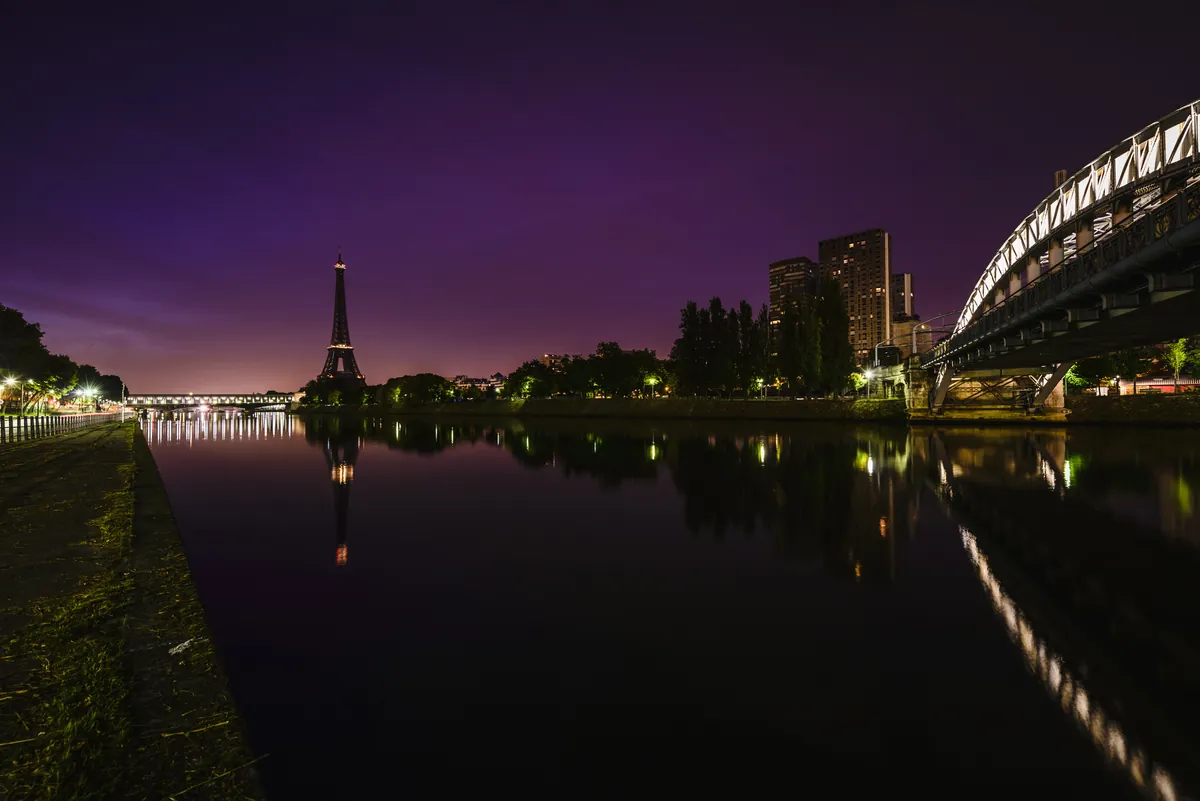
The heart of Paris is its river. The banks of the Seine between the Pont de Sully and the bridge at the foot of the Eiffel Tower, together with the Île de la Cité and the Île Saint-Louis, were listed as a UNESCO World Heritage Site in 1991. Many of the city’s best known monuments stand within sight of the water: Notre-Dame, the Louvre, the Musée d’Orsay and the Eiffel Tower.
The city is divided into twenty arrondissements, districts numbered in a spiral that begins at the centre around the Louvre, and Parisians often describe where they live by number alone. Distances are smaller than they look on a map: from Notre-Dame to the Louvre is about 20 minutes on foot along the river.
Along the quays, the green boxes of the , the riverside booksellers, open onto the Seine with old prints, postcards and second-hand books. Browsing them is one of the simplest pleasures of a walk between bridges.

Getting there, getting around and where to stay
From Charles de Gaulle airport, the RER B train reaches Gare du Nord in about 30 to 35 minutes and continues to Châtelet in the centre. The Roissybus runs to Opéra in around an hour, depending on traffic. The airport journey has its own ticket, so buy it separately from your city tickets.
The metro is dense and frequent, and few addresses are far from a station. Paper tickets have been phased out, so load your tickets onto a rechargeable Navigo Easy card or buy them on your phone. Buses are slower but show you the city, and walking between neighbouring districts is often quicker than changing lines.
Stay in the Marais for old lanes and grand townhouses, in Saint-Germain on the Left Bank for bookshops, galleries and the Luxembourg Garden, or near the Canal Saint-Martin for a more local feel, with iron footbridges and tree-lined quays.
Three days, hour by hour
Day one The islands and the Left Bank
- Morning
Notre-Dame and the Sainte-Chapelle
Arrive early at Notre-Dame, which reopened on 7 December 2024 after more than five years of restoration, and see its freshly cleaned stone in the soft morning light. Then walk a few minutes to the Sainte-Chapelle, built for King Louis IX and consecrated in 1248, where fifteen tall windows tell more than a thousand scenes in coloured glass.
- Afternoon
Latin Quarter and the Luxembourg Garden
Cross to the Left Bank and wander the Latin Quarter, the old student district around the Sorbonne, with its bookshops and narrow streets. Continue to the Luxembourg Garden, laid out from 1612 for Marie de’ Medici. Pull up one of the green metal chairs beside the octagonal pond and watch the toy sailing boats drift past.
- Evening
Île Saint-Louis
As the light softens, cross to the Île Saint-Louis, a small island of quiet streets and elegant houses built in the 17th century. Walk its quays to see the apse of Notre-Dame across the water, have dinner on the island or on the Left Bank, and stroll back along the river once the lamps come on.
Day two Art, gardens and the Seine at dusk
- Morning
The Louvre or the Musée d’Orsay
Choose one great museum and book a time slot in advance. The Louvre, a former royal palace, is best approached with a plan: pick a wing or two rather than trying to see everything. The Musée d’Orsay, in a former railway station built for the World’s Fair of 1900, holds a superb Impressionist collection beneath its great station clock.
- Afternoon
Tuileries and the Seine
Walk through the Tuileries Garden, between the Louvre and the Place de la Concorde, then follow the Seine downstream. The quays and bridges here are part of the UNESCO listing, and the views open with every bend, from the ornate Pont Alexandre III to the gilded dome of Les Invalides.
- Evening
Trocadéro and the Eiffel Tower
Reach the Trocadéro as dusk falls for the classic view across the river to the Eiffel Tower. Once its golden lighting is on, the tower sparkles for five minutes at the start of every hour after dark. Stay for one or two of these moments, then walk down through the gardens to the river.
Day three Montmartre, the canal and the Marais
- Morning
Montmartre
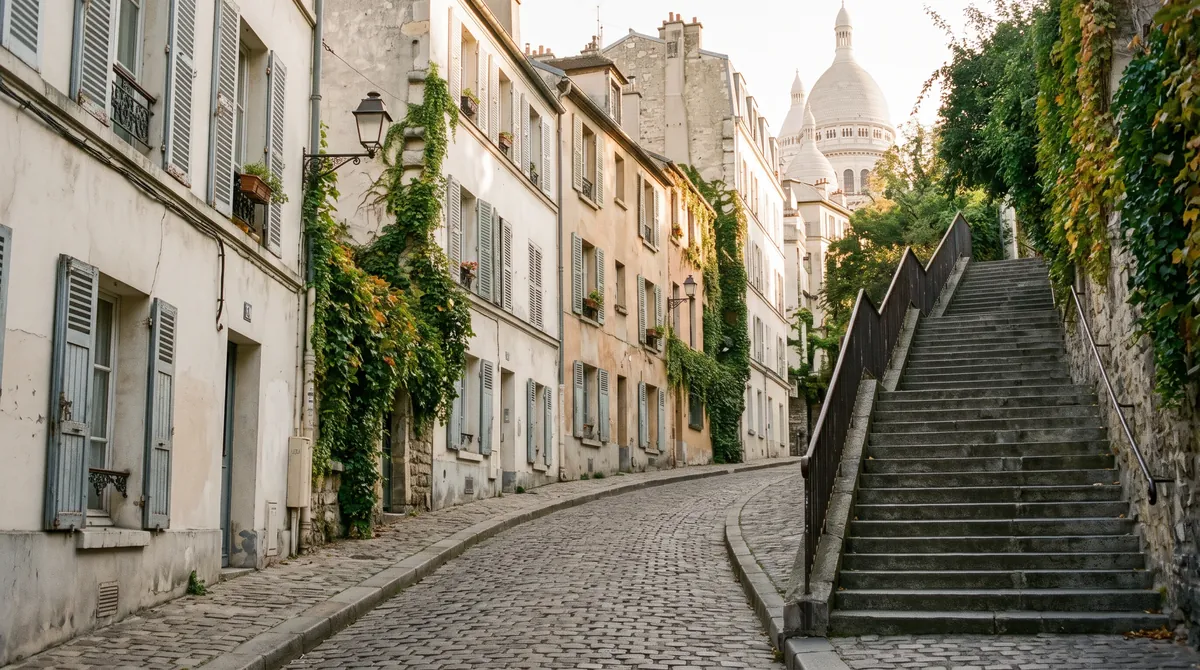
Climb Montmartre early, before the day gets busy, to the white domes of the Sacré-Cœur, completed in 1914 and consecrated in 1919, with the city spread out below. Then cross the Place du Tertre as the painters set up their easels and wander the quieter lanes beyond, past a small vineyard and old village houses.
- Afternoon
Canal Saint-Martin
Head east to the Canal Saint-Martin, opened in 1825, and walk its tree-lined quays past locks and arched iron footbridges. With a little patience you may see a boat rise or fall through one of the nine locks, a slow and absorbing sight. Pick up a picnic and join the people sitting along the water’s edge.
- Evening
Le Marais and the Place des Vosges
Finish in Le Marais at the Place des Vosges, built between 1605 and 1612 and the oldest planned square in Paris. Its red brick facades and vaulted arcades frame a garden with fountains. Walk beneath the arcades as the lamps come on, then let the lanes around the square lead you to dinner.
Bakery, market and terrace
Parisian days follow a gentle rhythm that is easy to adopt. Mornings begin at the , the bakery, with a still-warm baguette or a croissant eaten on the way. Order a café and you receive a small, strong black coffee; a comes with steamed milk and is a breakfast favourite.
An open-air market makes a fine first stop of the day. The Marché Bastille, along the Boulevard Richard-Lenoir, sets up on Thursday and Sunday mornings, while the Marché d’Aligre trades every day except Monday. Expect cheeses, cherries in season, oysters, bread and flowers; check current times before you go.
Later in the day, the café terrace is where Paris watches itself go by. Chairs face the street rather than each other, a single coffee buys you a long sit, and there is no better place to rest between one walk and the next.
The bridges invite you to cross and cross again, and between them lie squares where the loudest sound is a fountain or the scrape of a café chair.
When to go
Spring, from April to June, and early autumn, in September and October, are lovely for walking, with mild days and the gardens at their best. Summer brings long evenings and picnics along the quays, and in August many Parisians leave for their holidays, giving some districts a gentle, sleepy feel.
Winter is quieter, with crisp light on the pale stone and museums at their most peaceful. Before Christmas, lights appear along the great avenues and in the shop windows, and a warm café on a cold afternoon feels like the most Parisian place of all.
Words in this article
- Arrondissement
- One of the twenty numbered districts of Paris, arranged in a spiral from the centre.
- Bouquinistes
- The riverside booksellers whose green boxes line the quays of the Seine.
- Boulangerie
- A bakery, where Parisians buy their daily baguettes, croissants and pastries.
- Café crème
- Coffee with steamed milk, a classic Paris breakfast order.
Questions readers ask
How do you get from Charles de Gaulle airport to central Paris?
The RER B train is usually the quickest choice, reaching Gare du Nord in about 30 to 35 minutes and continuing to Châtelet in the centre. The Roissybus runs to Opéra in around an hour, depending on traffic. The airport journey needs its own ticket, which you buy separately from your tickets for travel within the city.
Do you need to book the Louvre and the Musée d’Orsay?
It is wise to book both in advance. The museums work with timed entry slots, and reserving yours before you travel lets you plan the rest of the day around it. Choose one museum per day and focus on a few rooms or a single wing, which leaves time for the gardens and the river afterwards.
Which neighbourhood is best for a three-day stay?
The Marais suits a first visit, with old lanes, grand townhouses and the Place des Vosges close by. Saint-Germain on the Left Bank is ideal for bookshops, galleries and the Luxembourg Garden. The area around the Canal Saint-Martin feels more local, with tree-lined quays, iron footbridges and easy metro links to the centre.