72 hours in Vienna: coffee houses, palaces and wine taverns
Three days in the Austrian capital, from St Stephen’s Cathedral and the Ring trams to Schönbrunn, the Riesenrad and a long evening at a Heuriger among the vines.
Vienna moves at the pace of a coffee house: unhurried, attentive and quietly grand. Inside the , Gothic spires and imperial palaces stand within a short walk of each other, while the outer districts climb into vineyards where wine taverns pour their own wine. Three days give you the old town, Schönbrunn, the Prater and a long evening among the vines.
The city inside the Ring and beyond
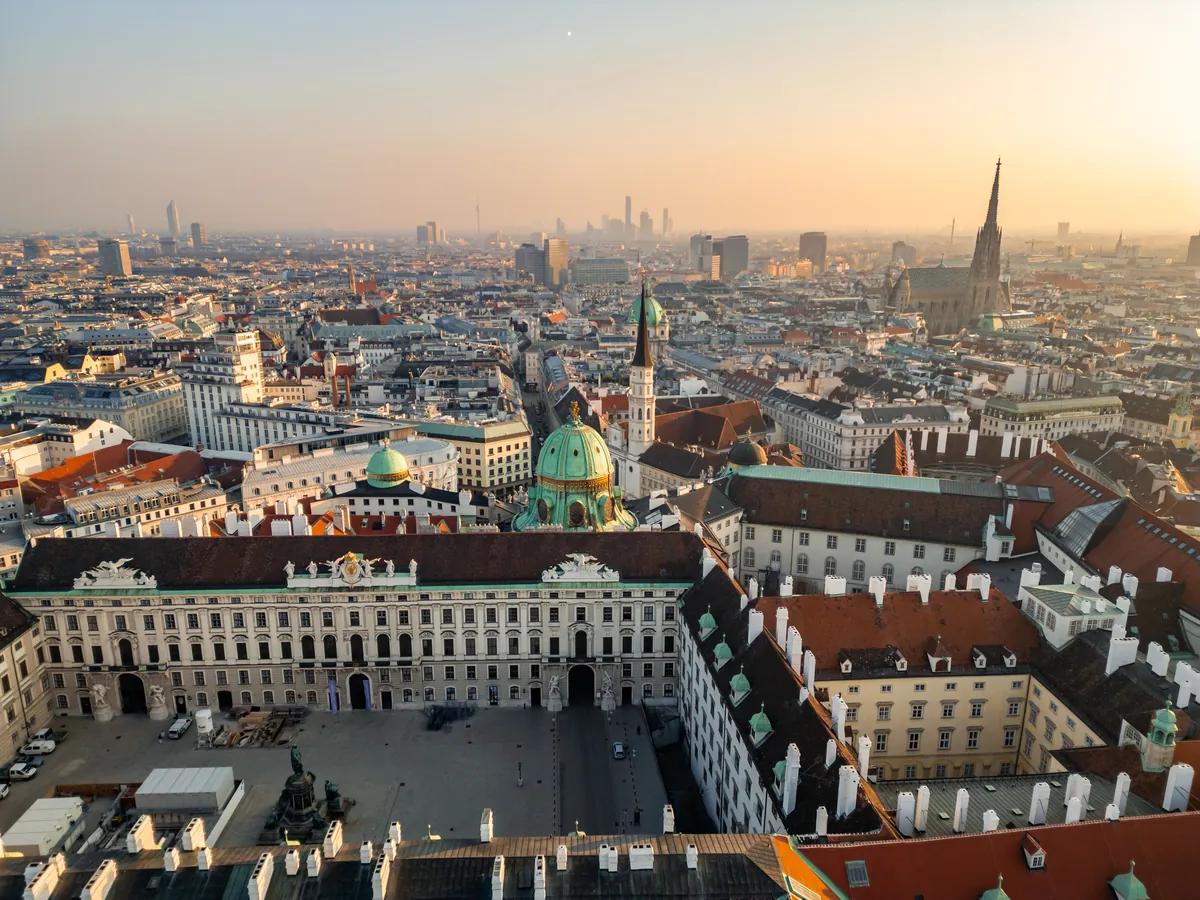
The Ringstrasse, the grand boulevard laid out where the city walls once stood, encircles the Innere Stadt, Vienna’s first district. Inside it lie St Stephen’s Cathedral, the elegant Graben and the Hofburg, the former imperial palace of the Habsburgs. Beyond the Ring, the city opens into neighbourhoods with their own markets, parks and coffee houses.
The coffee house is the place to understand the city. In 2011 Viennese coffee house culture was entered in Austria’s national inventory of intangible cultural heritage, kept under the UNESCO convention. The customs are gentle: coffee arrives on a small tray with a glass of water, newspapers wait to be read, and nobody will hurry you along. Marble-topped tables and bentwood chairs complete the scene.
Order a , coffee with steamed milk and a cap of foam, or an , strong coffee served in a glass beneath a crown of whipped cream. Locals also ask for a Kleiner Brauner, a small black coffee with a splash of milk or cream, or a Verlängerter, a coffee lengthened with hot water.
Getting there, getting around and where to stay
The City Airport Train runs non-stop from the airport to Wien Mitte in 16 minutes, every half hour. The S-Bahn covers the same route more slowly and at a lower fare. Wien Mitte connects directly with the U3 and U4 metro lines, trams and other S-Bahn services.
Wiener Linien runs the metro, trams and buses on a single ticket system, and passes valid for several days are good value for a short stay. The network is dense and frequent, so a pass also makes it easy to hop on a tram simply for the view.
Stay in the Innere Stadt to walk almost everywhere, in Neubau around the lanes of Spittelberg for small streets and design shops, in Wieden close to the Naschmarkt, or in Leopoldstadt across the Danube Canal, close to the Prater.
Three days, hour by hour
Day one Cathedral, palace and the Ring
- Morning
St Stephen’s Cathedral and the Graben
Start beneath the patterned tile roof of St Stephen’s Cathedral, the Gothic heart of the city, before the day gets busy. Then stroll along the Graben, a broad pedestrian street of grand facades centred on the Baroque Plague Column, and continue towards the Hofburg.
- Afternoon
Hofburg and a coffee house
Spend the early afternoon in the courtyards and museums of the Hofburg, the sprawling former winter residence of the Habsburgs. Then find a traditional coffee house nearby, take a marble table and settle in with a Melange and a slice of apple strudel. Staying an hour or two is perfectly normal.
- Evening
Trams 1 and 2 around the Ring
As the lights come on, ride the Ring by regular tram. Board tram 1 at Schwedenplatz and change to tram 2 near the Opera or the Parliament to complete the circuit in about half an hour, passing the State Opera, the Parliament, City Hall and the Burgtheater.
Day two Market, museums and Schönbrunn
- Morning
Naschmarkt and MuseumsQuartier
Begin at the Naschmarkt, where stalls of spices, cheeses, olives and pickles line the Wienzeile; the market stalls close on Sundays, and a flea market sets up nearby on Saturday mornings. Then walk on to the MuseumsQuartier, a cluster of museums in the former imperial stables with a sunny courtyard.
- Afternoon
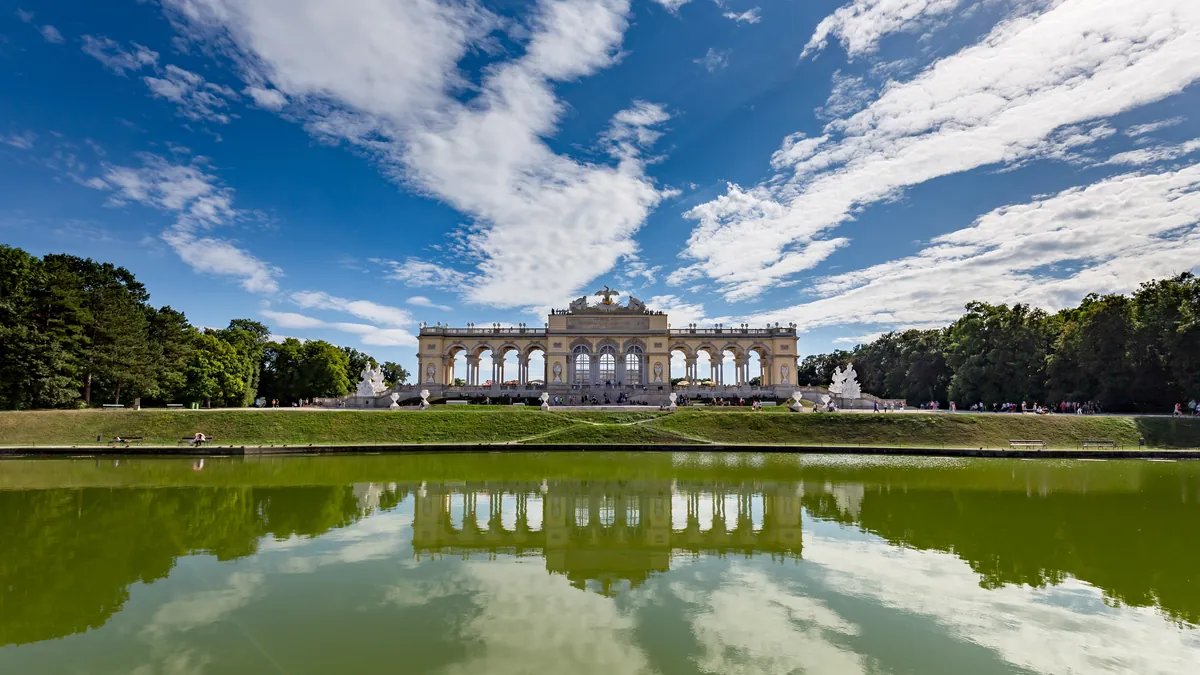
Schönbrunn Palace and the Gloriette
Take the U4 to Schönbrunn, the Habsburg summer palace, listed with its gardens as a UNESCO World Heritage Site in 1996. After the state rooms, climb through the formal park to the Gloriette, built in 1775, for a sweeping view back over the palace and the city.
- Evening
Spittelberg
Return to Spittelberg, the small grid of cobbled lanes just behind the MuseumsQuartier, where restored old houses hold relaxed restaurants and wine bars. In Advent, these narrow streets host one of the city’s most atmospheric Christmas markets, with crafts, lights and mulled wine.
Day three Prater, Danube and the vines
- Morning
Prater and the Riesenrad
Head to the Prater, a vast green park crossed by a long chestnut avenue, the Hauptallee. At its entrance turns the Riesenrad, the Giant Ferris Wheel built in 1897, whose red cabins rise slowly above the rooftops for a wide view across Vienna.
- Afternoon
The Danube
Continue to the Danube. The long Danube Island offers paths for walking and cycling, while the Alte Donau, a calm former arm of the river, draws swimmers, rowers and sailors in summer. On a warm day this is where much of Vienna spends its free time.
- Evening
A Heuriger in Grinzing
Take tram 38 from Schottentor to its last stop in Grinzing, or tram D to Nussdorf, and settle into a Heuriger, a wine tavern where winemakers serve their own wine. Order a glass of Gemischter Satz with a plate from the buffet and stay until the evening cools.
Wine taverns and vineyards in the city
Vienna is a rare capital with working vineyards inside its own limits, on the slopes towards the Vienna Woods and across the Danube. The gained its legal footing in 1784, when Emperor Joseph II allowed winemakers to sell their own wine on their premises, and in 2019 Viennese Heuriger culture joined Austria’s national inventory of intangible cultural heritage.
The house wine is often , a field blend in which several grape varieties grow side by side and are harvested and pressed together. The food is simple and generous: bread, cheeses, cold meats and spreads, chosen at a counter and carried to long wooden tables in a garden or a vaulted room. Grinzing is the best known wine village, and neighbouring Nussdorf feels a little quieter.
Vienna moves at the pace of a coffee house: unhurried, attentive and quietly grand.
When to go
Spring and early autumn are ideal for walking, with the gardens of Schönbrunn in bloom and the grape harvest in the vineyards towards the end of summer and into autumn. Summer days can be hot, which makes the Danube and the shaded Heuriger gardens especially welcome.
From around mid-November, Advent markets appear on squares across the city, from the large market in front of City Hall to the smaller ones in Spittelberg and at Schönbrunn. Winter is also the season of balls and concerts, and the coffee houses feel at their cosiest when it is cold outside.
Words in this article
- Melange
- A Viennese coffee with steamed milk and a cap of milk foam, often called the city’s signature coffee.
- Einspänner
- Strong coffee served in a glass under a thick layer of whipped cream, named after a one-horse carriage.
- Heuriger
- A Viennese wine tavern where winemakers serve their own wine with simple food from a buffet.
- Gemischter Satz
- A field blend of several grape varieties grown, harvested and pressed together, typical of Vienna.
- Ringstrasse
- The grand boulevard around Vienna’s old town, built where the city walls once stood.
Questions readers ask
What should you order in a Viennese coffee house?
A Melange, coffee with steamed milk and foam, is the classic choice. An Einspänner comes in a glass under whipped cream, a Kleiner Brauner is a small black coffee with a little milk, and a Verlängerter is lengthened with hot water. Your coffee usually arrives with a glass of water, and you are welcome to stay as long as you like.
How do you get from Vienna airport to the city centre?
The quickest option is the City Airport Train, which runs non-stop to Wien Mitte in 16 minutes, every half hour. The S-Bahn follows the same route more slowly and at a lower fare. At Wien Mitte you can change to the U3 and U4 metro lines, trams and other trains to reach your neighbourhood.
What is a Heuriger?
A Heuriger is a wine tavern where winemakers serve their own wine, usually with a simple buffet of bread, cheeses and cold meats. The tradition gained its legal basis in 1784 under Emperor Joseph II. Grinzing, reached by tram 38 from Schottentor, is the best known area, and Nussdorf, on tram D, is a quieter alternative.