Palma through the eyes of the people who live there
How residents use Mallorca’s capital: morning markets, a late lunch, the evening stroll along the bay and the quieter neighbourhoods beyond the cathedral.
Palma is a capital city that still keeps village habits. Mornings begin at a market counter, lunch arrives late and lasts, and as the heat fades the promenade along the bay fills with walkers, cyclists and families. To see the city as its residents do, follow that rhythm, step a few streets away from the cathedral and let the day unfold at a Mallorcan pace.
The rhythm of a Palma day
Daily life in Palma follows the Spanish clock. Breakfast is often a quick coffee and something small at a bar counter, lunch is usually taken around two or later, and dinner comes late, especially in summer. In between, many smaller shops close for a few hours after lunch and reopen in the late afternoon, while larger stores and the main shopping streets tend to stay open all day.
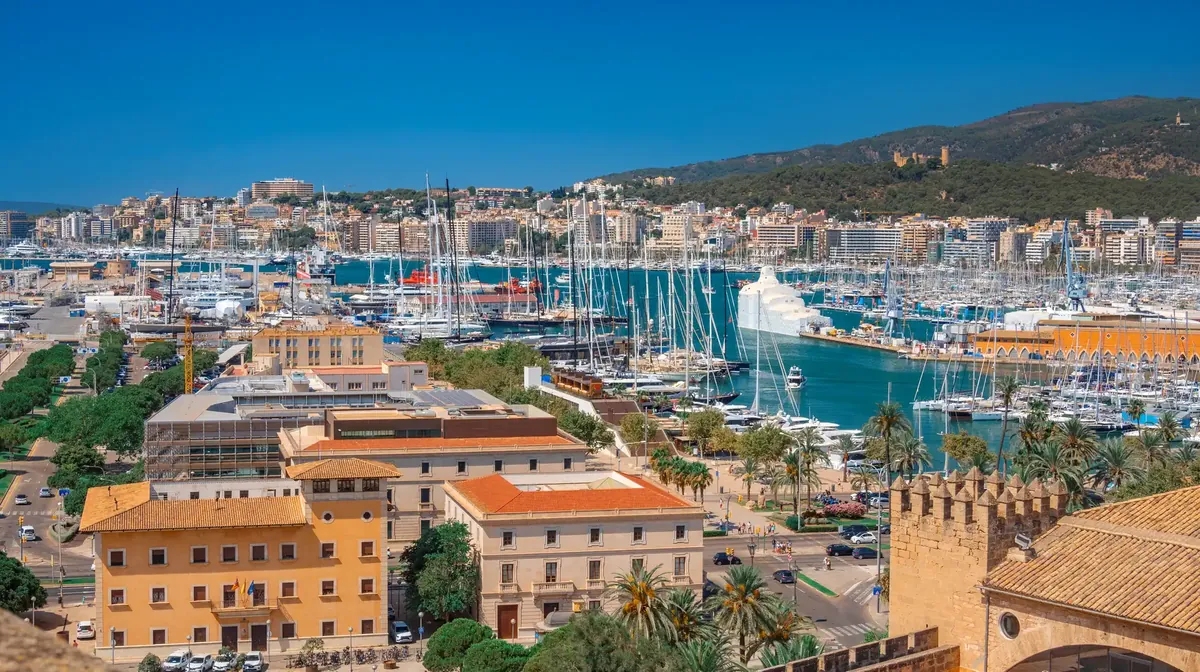
The early evening belongs to the stroll, the , when friends and families walk the Passeig Marítim or the tree-lined Passeig del Born before sitting down for a drink. It is the most sociable hour in the city, and the easiest one for a visitor to join.
Markets and a standing breakfast
Palma’s covered markets are where much of the daily shopping happens. The Mercat de l’Olivar, a short walk from Plaça d’Espanya, is the city’s main market, with halls of fish, meat, fruit and vegetables and small counters serving coffee, tapas and seafood at the bar. Come mid-morning on a weekday to watch the neighbourhood doing its rounds.
In Santa Catalina, the Mercat de Santa Catalina on Plaça de la Navegació is smaller and more neighbourly, with bars inside where you can eat standing up or perched on a stool. Both markets open from Monday to Saturday, close on Sundays and are at their liveliest in the morning, so check current times before you go.
Look out for the island’s classics. The is a light, coiled pastry dusted with icing sugar, eaten for breakfast or with an afternoon coffee. is a soft cured pork sausage coloured with paprika, spread on bread or warmed with a little honey. And , bread rubbed with tomato and drizzled with olive oil, is the everyday lunch, often served with cheese, ham or olives.
Neighbourhoods beyond the cathedral
West of the old town lies Santa Catalina, a grid of low houses, small restaurants and a relaxed evening scene around its market. Its seaward corner, Es Jonquet, was for generations home to fishermen, boat builders, rope makers and millers, and it still feels like a village within the city.
On the low cliff above the harbour, Es Jonquet keeps a row of old windmills that once ground grain for the bakeries of the neighbourhood and of Palma. One restored mill now houses a small museum about milling. The quiet lanes around them, with views over the marina, show a gentler face of the city.
East of the centre, the seafront promenade leads to Portixol, a small harbour of fishing boats, and on to Es Molinar, an old fishing quarter of low houses facing the sea. On weekend mornings this stretch is where many residents walk, run and cycle, stopping for a coffee by the water.
To see the city as its residents do, follow that rhythm, step a few streets away from the cathedral and let the day unfold at a Mallorcan pace.
Bellver, Parc de la Mar and the Passeig Marítim
Bellver Castle stands on a wooded hill about 3 km west of the centre. Built in the early 14th century for King James II of Majorca, it is one of the few circular Gothic castles in Europe, with a round courtyard and towers facing the points of the compass. Today it houses a city museum, and its roof gives a sweeping view over the bay, the cathedral and the mountains beyond. Walking up through the pine woods is part of the pleasure.
Below the cathedral, the Parc de la Mar opened in 1984 around a large saltwater lake that mirrors the great Gothic church. A ceramic mural based on a work by Joan Miró lines one side, and the paths make an easy evening walk between the old town and the sea.
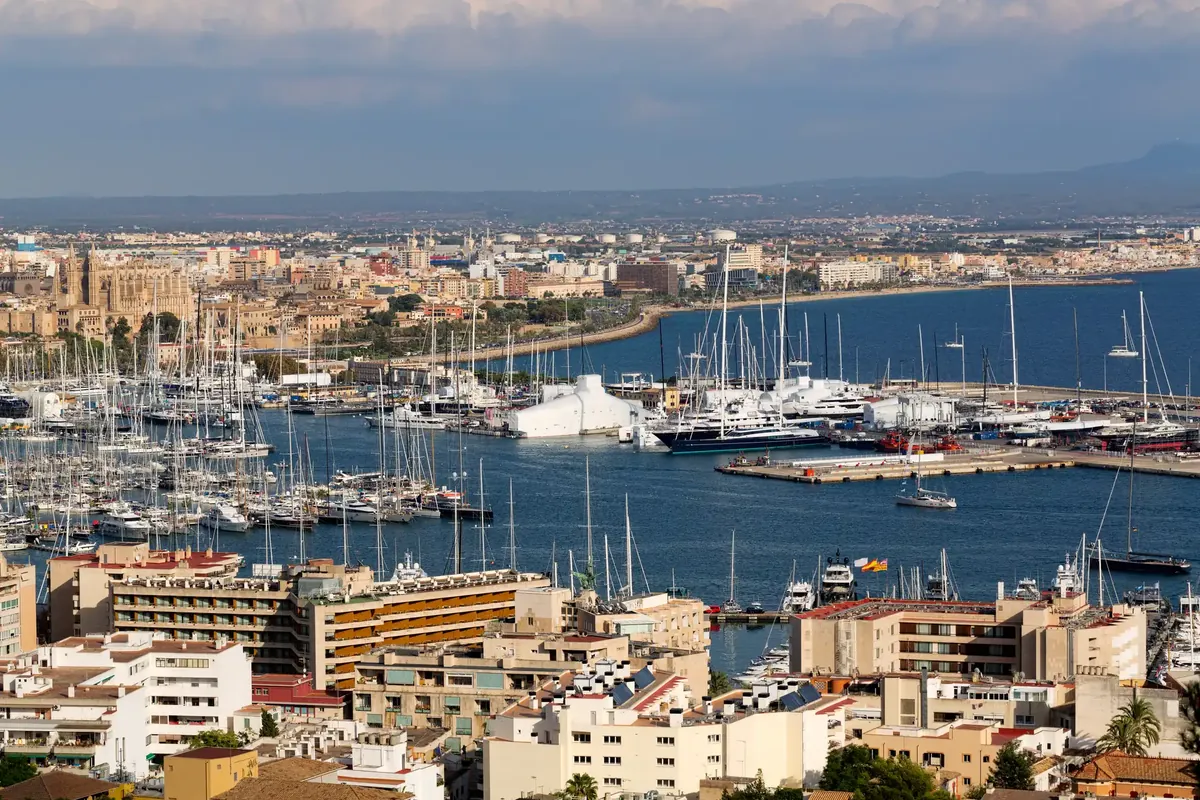
The Passeig Marítim runs for several kilometres along the harbour, lined with palms and moored yachts. A cycle path follows the waterfront east past Portixol and Es Molinar, and you can continue along the promenade towards Can Pastilla and Platja de Palma. It is flat and easy, and best enjoyed early in the morning or around sunset.
Sundays, summer and quieter hours
Sunday in Palma is a day for a long family lunch, a walk by the sea and, for many, a trip out to the coast or the hills. Most smaller shops stay closed and so do the markets, so plan your shopping for Saturday morning and keep Sunday for slow walks.
In high season, the area around the cathedral and the old-town lanes is busiest in the middle of the day. Many residents spend those hours in their own neighbourhoods and return to the centre early in the morning or later in the evening. Follow their lead: see the cathedral area at opening time or after dark, and spend midday in Santa Catalina, Es Molinar or the shade of a market bar.
- Shop at the market early in the day, when the stalls are at their fullest.
- Make lunch the main meal and let dinner be lighter and later.
- Join the evening paseo along the water before sitting down for a drink.
- Keep Sunday for the sea, a long lunch and an unhurried walk.
Words in this article
- Paseo
- The early evening stroll, a social ritual in Spanish cities, in Palma often along the seafront or the Passeig del Born.
- Ensaïmada
- Mallorca’s light, coiled pastry dusted with icing sugar, eaten for breakfast or with afternoon coffee.
- Sobrassada
- A soft cured pork sausage from Mallorca, coloured with paprika and spread on bread.
- Pa amb oli
- Bread rubbed with tomato and drizzled with olive oil, the island’s everyday lunch.
Questions readers ask
When do shops close in Palma?
Many smaller shops close for a few hours after lunch and reopen in the late afternoon, while larger stores and the main shopping streets usually stay open all day. On Sundays most smaller shops and the markets are closed. Opening times vary from shop to shop and by season, so check current times if you are planning a particular visit.
What is the best way to get around Palma?
The historic centre is compact and best explored on foot. EMT city buses cover the wider city and accept contactless bank cards on board. For the seafront, a bicycle works well: a flat path runs along the bay from the port past Portixol and Es Molinar, and the promenade continues towards Can Pastilla and Platja de Palma.
Where can you find a quieter Palma in summer?
Step away from the cathedral area in the middle of the day. Santa Catalina, the lanes of Es Jonquet and the seafront at Portixol and Es Molinar keep a more residential rhythm. Visit the cathedral and the old town early in the morning or after dark, and walk up to Bellver Castle for space, pine woods and a wide view.