
A slow weekend in the Black Forest: firs, waterfalls and quiet trails
Cirque lakes, a young national park, the falls at Triberg and farmhouses under deep roofs: how to spend a long Black Forest weekend at an unhurried pace.
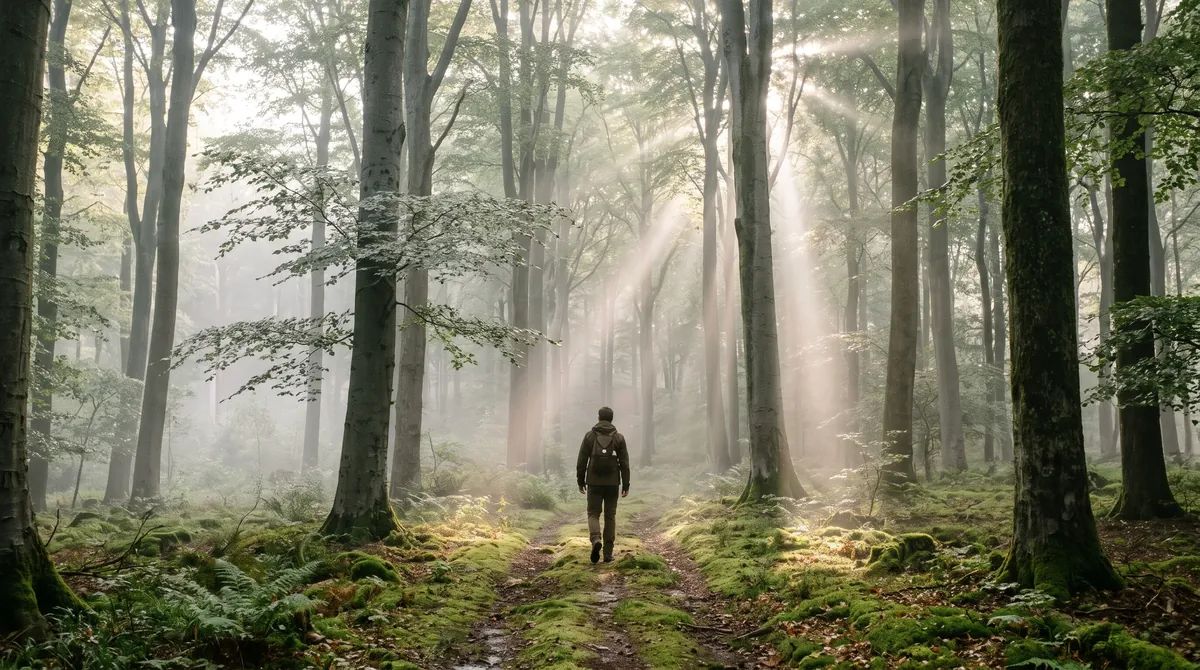
The Black Forest rewards a slower pace than most visitors give it. Its dark ridges of fir and spruce, its small cirque lakes and its farmhouses under deep roofs are best taken in small doses: one short walk in the morning, a long lunch, and an evening by the water or at a viewpoint as the light fades. Over a long weekend, that rhythm makes this great upland forest a place to breathe out.
A young national park on the northern ridges
The Black Forest National Park came into being on 1 January 2014 as the first national park in Baden-Württemberg. Its roughly 10,000 hectares are divided into two separate areas strung along the high ridges between Baden-Baden and Freudenstadt. Dense stands of spruce and fir cover the slopes, opening here and there onto heath-covered ridge tops known locally as , and large parts of the forest are now allowed to develop on their own.
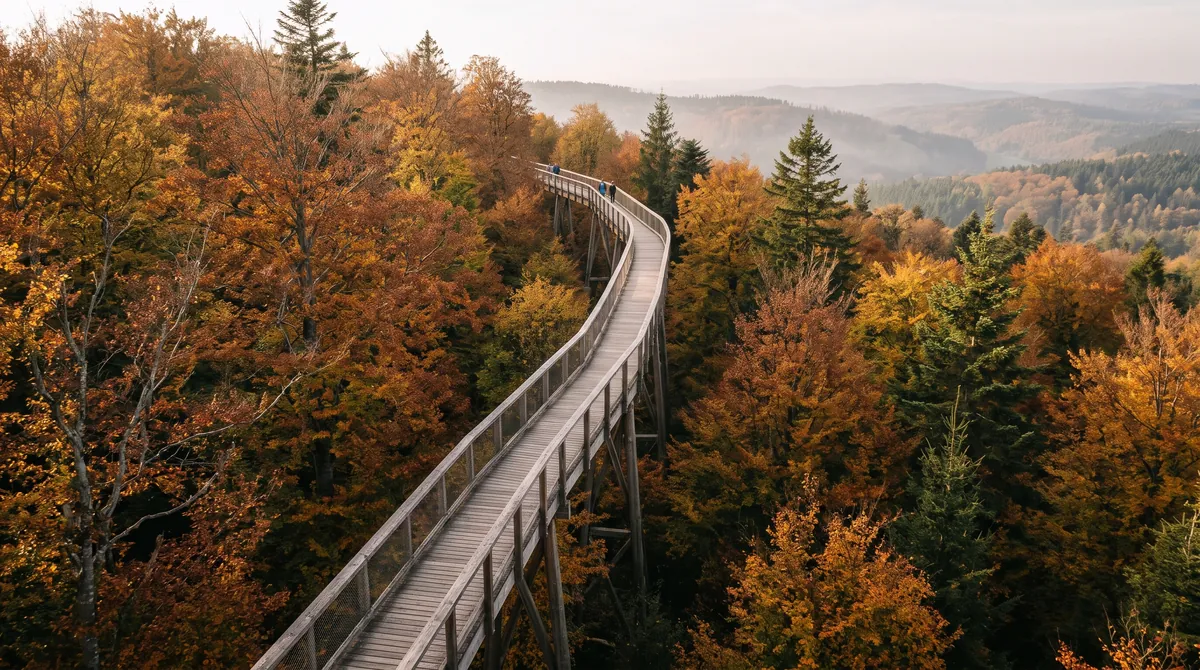
Near the Schliffkopf, the Lotharpfad tells the story of one winter storm. Lothar swept across this hillside in December 1999, and the fallen trees were simply left where they lay. Since 2003, a trail of about 800 metres has led over and under the trunks on wooden steps, ladders and footbridges, past a new generation of young trees growing up through the deadwood. A viewing platform looks west across the Rhine plain towards Strasbourg and the Vosges.
From the national park centre at Ruhestein, a woodland path drops to the Wildsee, a small cirque lake at around 910 metres beneath the Seekopf. The forest around it was declared a in 1911, making it the oldest such reserve in Baden-Württemberg, and it has been left without forestry ever since. Mossy boulders, standing deadwood and dark, still water give it a hushed, almost primeval feel.
The high road, the Mummelsee and the Hornisgrinde
The Schwarzwaldhochstraße, part of the B500, runs for about 60 kilometres from Baden-Baden to Freudenstadt and is one of the oldest scenic roads in Germany. For much of the way it stays between 800 and 1,000 metres, with wide views west over the Rhine valley.
At more than 1,000 metres, the Mummelsee is the largest cirque lake in the northern Black Forest. It lies directly below the Hornisgrinde, at 1,164 metres the highest summit of the northern Black Forest. Old legends fill its dark water with nymphs and a stern lake king. Come early or in the evening for the calmest hour, then walk up the Hornisgrinde for the view.
Waterfalls, a high summit and two lakes in the south
In Triberg, the Gutach river drops about 163 metres in seven main steps through a steep, wooded ravine, which makes these falls among the highest in Germany. Paths climb beside the cascades, close enough to feel the spray, and the falls are lit in the evening. The Black Forest Railway, famous for its many tunnels and loops, stops in the town on its way from Offenburg towards Lake Constance.
Further south, the Feldberg rises to 1,493 metres, the highest point of the Black Forest and of Germany outside the Alps. Its summit is broad and rounded rather than sharp, and on clear days the view reaches as far as the Alps. Below it lie two lakes with very different moods. The Titisee was shaped by an Ice Age glacier from the Feldberg, while the Schluchsee, a reservoir, is the largest lake in the Black Forest, with long and peaceful shores.
Farmhouses, red pompoms and cherry cake
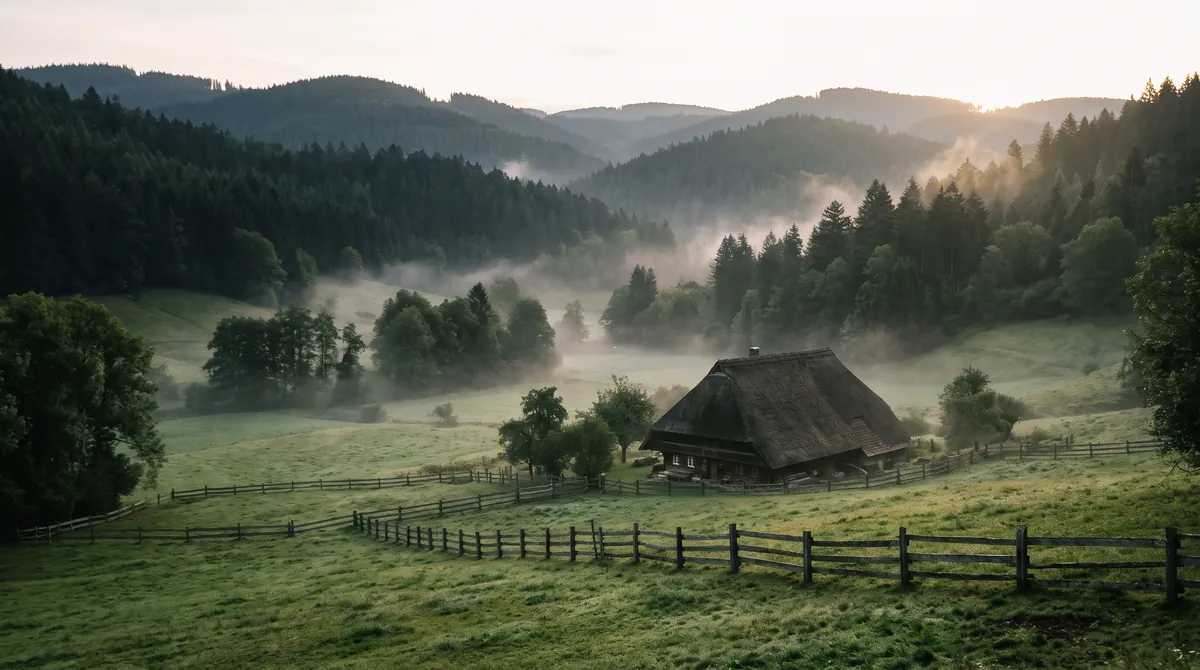
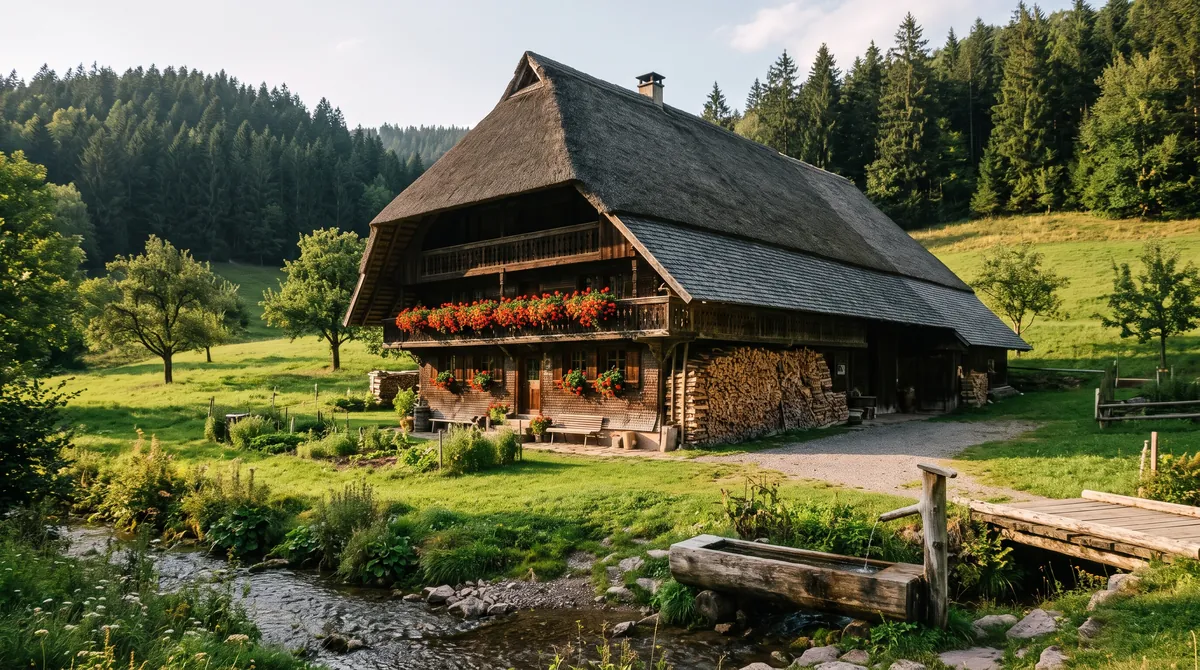
The classic Black Forest farmhouse sits low in the landscape under a vast hipped roof that sweeps far down over the walls, keeping people, animals and hay under one roof. The open-air museum at the Vogtsbauernhof in Gutach gathers historic farmhouses from across the region around a farm built in 1612, a lovely place to see how rural life was once arranged.
The Gutach valley is also home to the , the straw hat crowned with large wool pompoms that has become a symbol of the whole Black Forest. It belongs to the traditional dress of just three Protestant villages, Gutach, Kirnbach and Reichenbach, and its colours carry meaning: red pompoms for unmarried women, black for married ones.
Clockmaking has a long history in these hills, and carved cuckoo clocks still tick away in workshops across the region. Then there is the cake. A proper Black Forest gateau layers chocolate sponge, cream and sour cherries and is flavoured with , a clear spirit distilled from cherries.
Many villages also have a , a shallow pool of cold running water by a stream or in a park. The custom goes back to Sebastian Kneipp, a 19th century Bavarian priest, and it is simple: you wade slowly through the water, lifting each foot clear with every step like a stork. After a warm walk, many people simply enjoy the fresh, tingling feeling.
How to spend the days slowly
The secret of a restful Black Forest weekend is to do less than the map suggests. Choose one area, the national park ridges or the Feldberg and its lakes, and stay in one village for all three nights.
- Morning: a short walk of one to two hours, such as the Lotharpfad, the path to the Wildsee or a loop above your village.
- Midday: a long lunch at a country inn, with time for coffee and a slice of cake afterwards.
- Afternoon: a rest, a book on the balcony or a slow wade through a Kneipp basin.
- Evening: a lake or a viewpoint as the light softens, then an early night.
If one longer walk tempts you, the Westweg is the classic. Laid out in 1900 by the Schwarzwaldverein, the regional hiking association, it is one of the oldest long-distance trails in Germany and runs for about 285 kilometres from Pforzheim to Basel. You do not need to walk all of it: a single stage across the ridges near the Hornisgrinde makes a satisfying day.
The secret of a restful Black Forest weekend is to do less than the map suggests.
Getting there and when to go
Fast trains along the Rhine valley stop at Baden-Baden, Offenburg and Freiburg, the three natural gateways. Baden-Baden suits the national park, Offenburg is the start of the Black Forest Railway to Triberg, and from Freiburg the Höllentalbahn climbs through the narrow Höllental to the Titisee and the Schluchsee.
In around 150 holiday towns, overnight guests receive a guest card with the KONUS symbol. It covers buses and regional trains across most of the Black Forest for the length of your stay, although long-distance trains and mountain railways are not included.
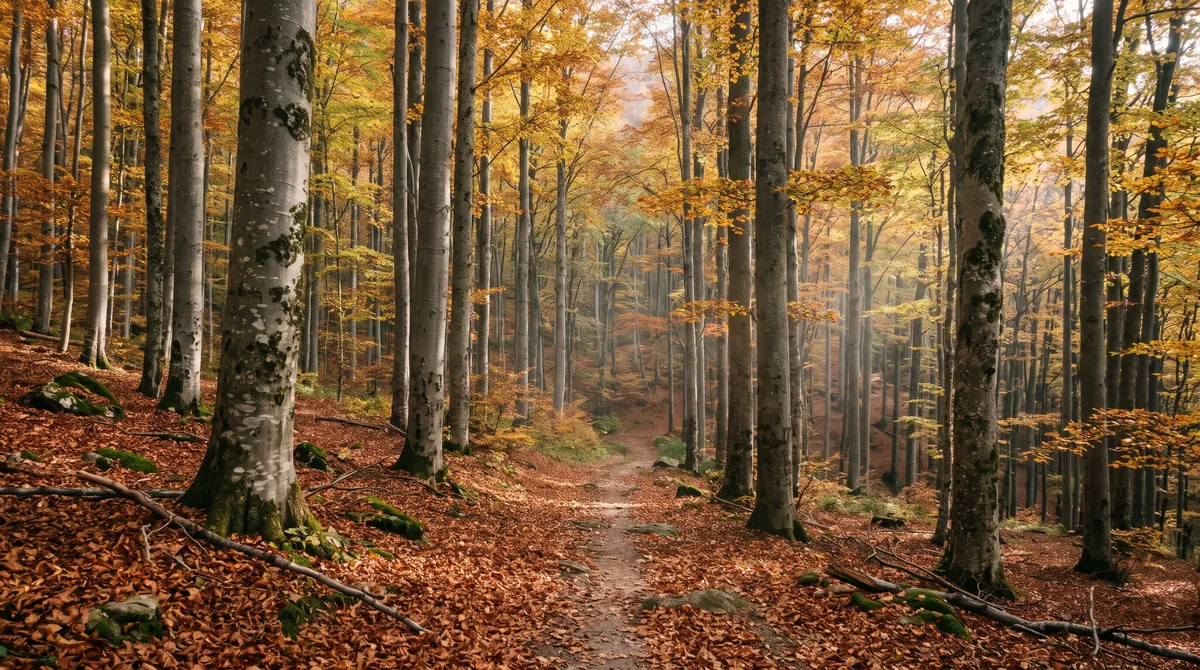
Spring brings fresh green to the beech woods on the lower slopes, summer offers cool air on the ridges, and autumn lights up beech and larch among the dark conifers. In winter, snow settles on the heights and the forest grows very still. Check current timetables, especially on Sundays.
Words in this article
- Grinden
- Open heathland on the high ridge tops of the northern Black Forest.
- Bannwald
- A forest reserve in Baden-Württemberg where nature is left to itself and no forestry takes place.
- Bollenhut
- The straw hat with large wool pompoms worn with traditional dress in Gutach, Kirnbach and Reichenbach.
- Kirschwasser
- A clear spirit distilled from cherries, used to flavour Black Forest gateau.
- Kneipp basin
- A shallow pool of cold running water for slow wading, a custom named after Sebastian Kneipp.
Questions readers ask
Can you explore the Black Forest without a car?
Yes, and it is often the more relaxing choice. Fast trains reach Baden-Baden, Offenburg and Freiburg, and regional lines such as the Black Forest Railway and the Höllentalbahn climb into the hills. In around 150 towns, the KONUS guest card includes buses and regional trains for your whole stay. Choose a village with a station or a good bus stop and check current timetables.
When is the best time for a slow Black Forest weekend?
Late spring, early summer and autumn are lovely for walking, with fresh beech leaves in May and warm colours among the firs in October. Summer is pleasantly cool on the ridges. Winter brings snow to the heights and a deep quiet to the forest, ideal for short walks and long evenings indoors. Check current opening times outside the main season.
What is a Kneipp basin?
A shallow pool of cold running water, often beside a stream or in a park, found in many Black Forest villages. The custom goes back to Sebastian Kneipp, a 19th century Bavarian priest. You wade slowly through the water, lifting each foot clear with every step. Many walkers enjoy it as a refreshing pause on a warm day.