
Into the Romanian Carpathians: old beech forests and mountain villages
Ancient beech woods, a limestone ridge, a high plateau reached by cable car and shepherds’ cheese: four days in the mountains around Brașov.
The Romanian Carpathians curve through the heart of the country in long, wooded ridges. Below the bare summits lie wide beech and fir forests, high pastures grazed by sheep in summer and villages where hay is still stacked by hand. With Brașov as your base, four days give you a limestone ridge, a high plateau, a walk in old woodland and time to sit on a hillside and simply look.
Romania’s ancient beech forests
In 2017 a group of Romanian forests joined the UNESCO World Heritage Site of the Ancient and Primeval Beech Forests of the Carpathians and Other Regions of Europe. The site was first inscribed in 2007 in the Carpathians of Slovakia and Ukraine and now reaches across 18 European countries, telling the story of how beech spread across the continent after the last ice age.
Romania’s parts of the site include Domogled-Valea Cernei in the south-west, Izvoarele Nerei in the Semenic Mountains, the Cozia massif and the old forests of Șinca and Slătioara. Domogled-Valea Cernei, a national park of more than 61,000 hectares along the Cerna valley, adds limestone cliffs, caves and an endemic black pine to its beech woods.
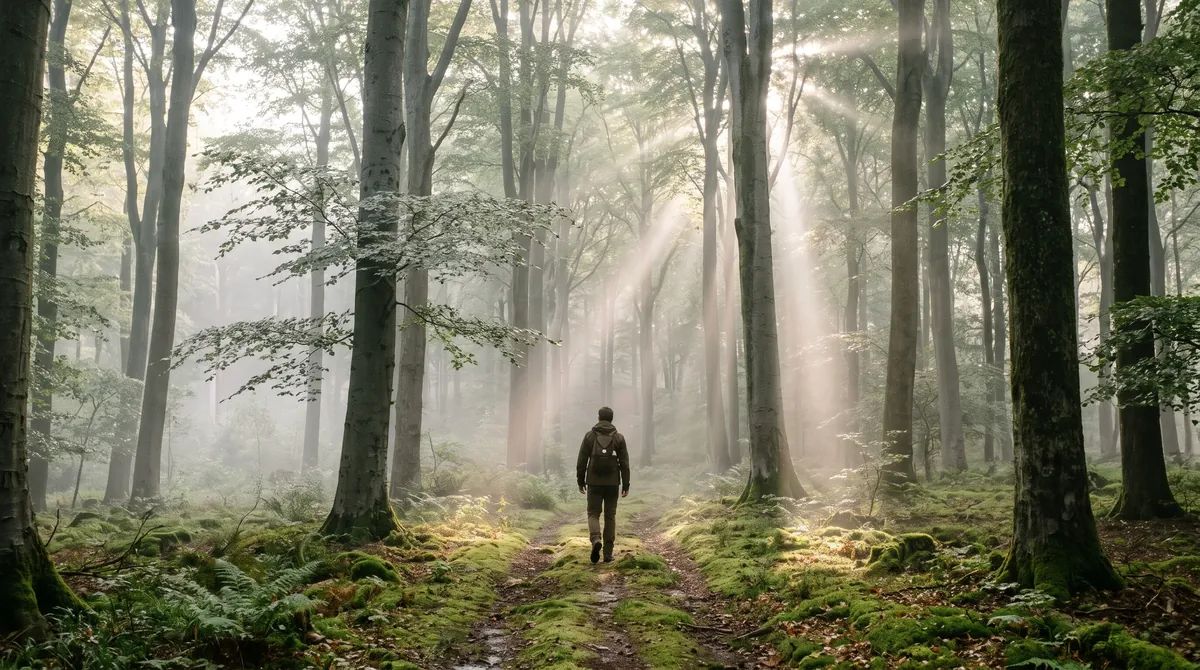
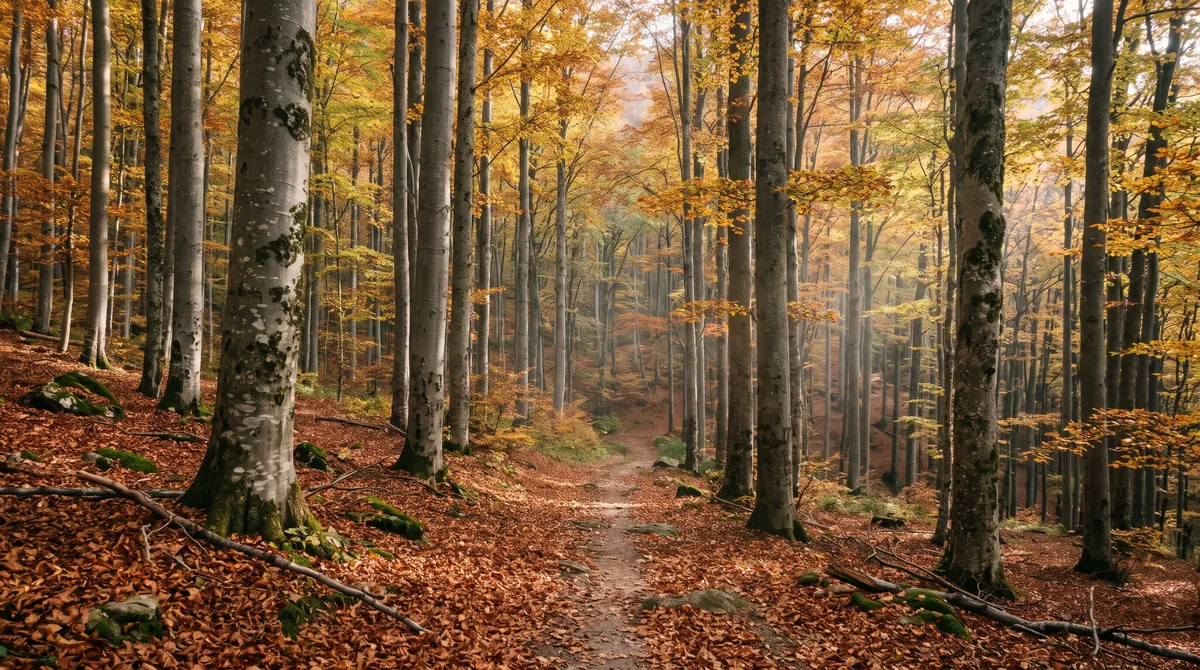
Walking in an old beech forest is a quiet experience. Grey trunks rise like columns, fallen giants are left where they lie, slowly returning to the soil, and the light under the canopy shifts from fresh green in May to copper and gold in October. Many people find an hour among such trees deeply restful.
Grey trunks rise like columns, and the light under the canopy shifts from fresh green in May to copper and gold in October.
Brașov, a base in the mountains
Brașov lies about 166 kilometres north of Bucharest, and trains between the two take roughly two and a half to three hours, climbing through the Prahova valley past Sinaia and Bușteni. The old town is compact and easy to explore on foot, with forested slopes rising directly behind the rooftops.
Council Square, Piața Sfatului, is the centre of town, overlooked by the old council house. A few steps away stands the Black Church, a great Gothic church named after the soot that darkened its walls in the fire of 1689. A cable car climbs Tâmpa, the mountain above the old town, for a wide view over the roofs, and Strada Sforii, often called the narrowest street in Romania, makes a playful detour.
Piatra Craiului and the village of Măgura
South-west of Brașov, Piatra Craiului rises as a single limestone ridge about 25 kilometres long, with a narrow, saw-toothed crest. It became a national park in 1990 and covers almost 15,000 hectares of cliffs, gorges, forests and meadows. A small pink carnation, , grows on its rocks and nowhere else.
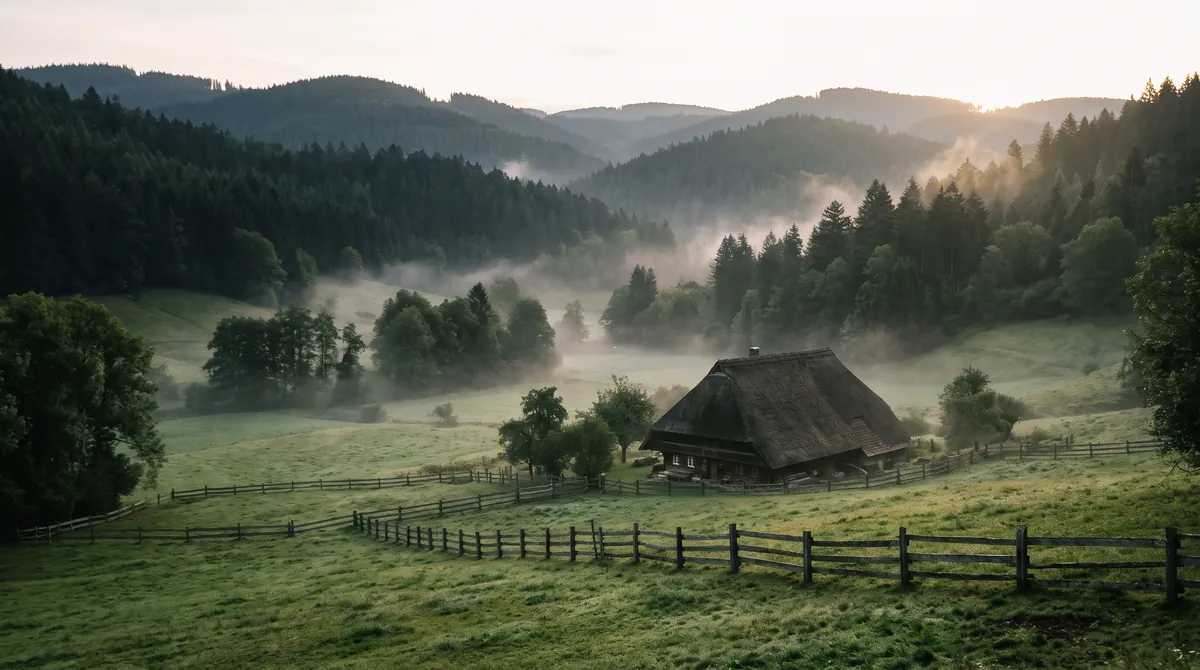
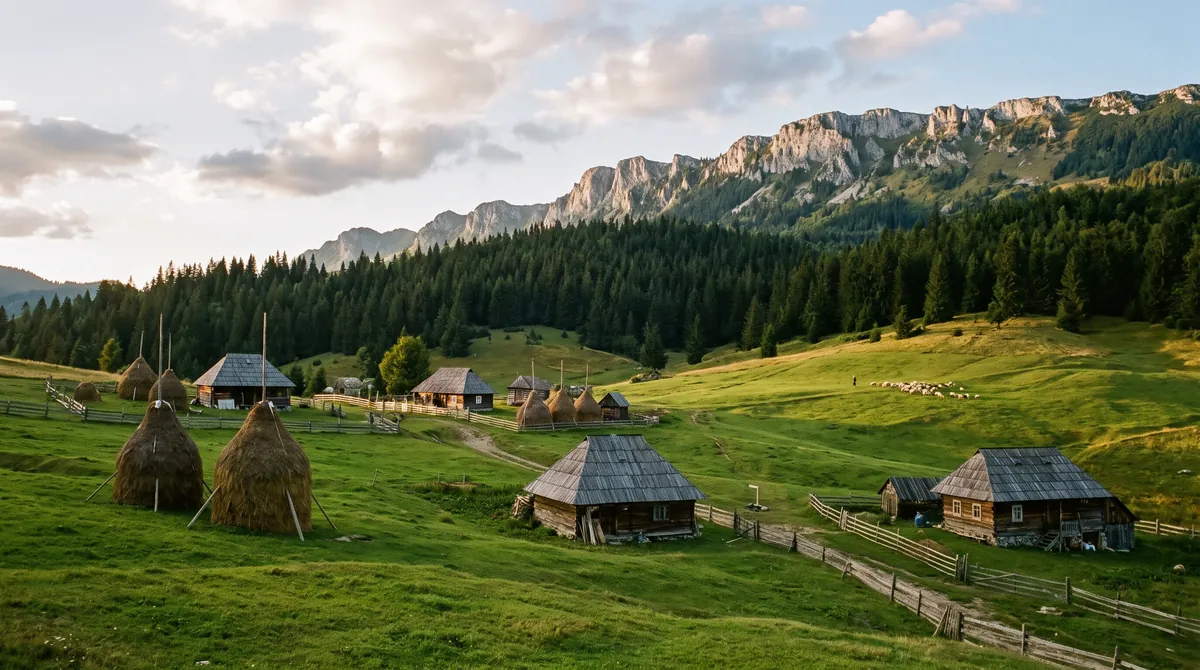
Zărnești, about 28 kilometres from Brașov by road, bus or rail, is the main gateway, and the Zărnești Gorges are a favourite starting point for walks into the park. On the eastern side, the villages of Măgura and Peștera spread across high, open slopes with views towards both Piatra Craiului and the Bucegi. A night or two in Măgura, among meadows, hay barns and scattered farmsteads, is one of the quiet pleasures of the region.
The Bucegi plateau above Sinaia and Bușteni
Across the Rucăr-Bran pass, the Bucegi mountains rise steeply above the Prahova valley. Bucegi Natural Park covers more than 32,000 hectares, over 60 per cent of it forest, and the range climbs to Omu Peak at 2,505 metres. On the high plateau, wind and rain have shaped the rocks into curious figures, among them the Sphinx and , “the old women”.
Cable cars make the plateau easy to reach. One climbs from Bușteni towards Babele, and from Sinaia another rises to Cota 1400 and Cota 2000. Above the trees, broad paths cross the open plateau between rock formations and mountain chalets. Check current operating times and the mountain forecast before you go up, and pack a warm layer even in summer.
Shepherds, cheese and wildlife
Summer is the season of the , the mountain sheepfold where shepherds spend the warm months with their flocks on high pastures. Two cheeses define the mountains: , a fresh, mild white cheese, and , a salty kneaded sheep’s cheese traditionally packed into tubes of fir bark, which gives it a resinous scent. The Rucăr-Bran area is one of its traditional homes.
The forests are also home to deer, wolves, lynx and brown bears. In several valleys around Brașov, local guides organise evening wildlife watching from purpose-built hides, a quiet and patient way to see animals going about their lives in their own surroundings.
Planning four days
Four days give you a good balance of town, village and forest:
- Day one, Brașov: the old town, the Black Church and the cable car up Tâmpa for a first view of the mountains.
- Day two, Măgura: move to a village guesthouse and walk the meadows below Piatra Craiului.
- Day three, a forest walk: spend the day in beech and fir woods with a local guide who can read tracks and point out the oldest trees.
- Day four, the Bucegi: ride a cable car up to the plateau before returning to Brașov or taking the train south.
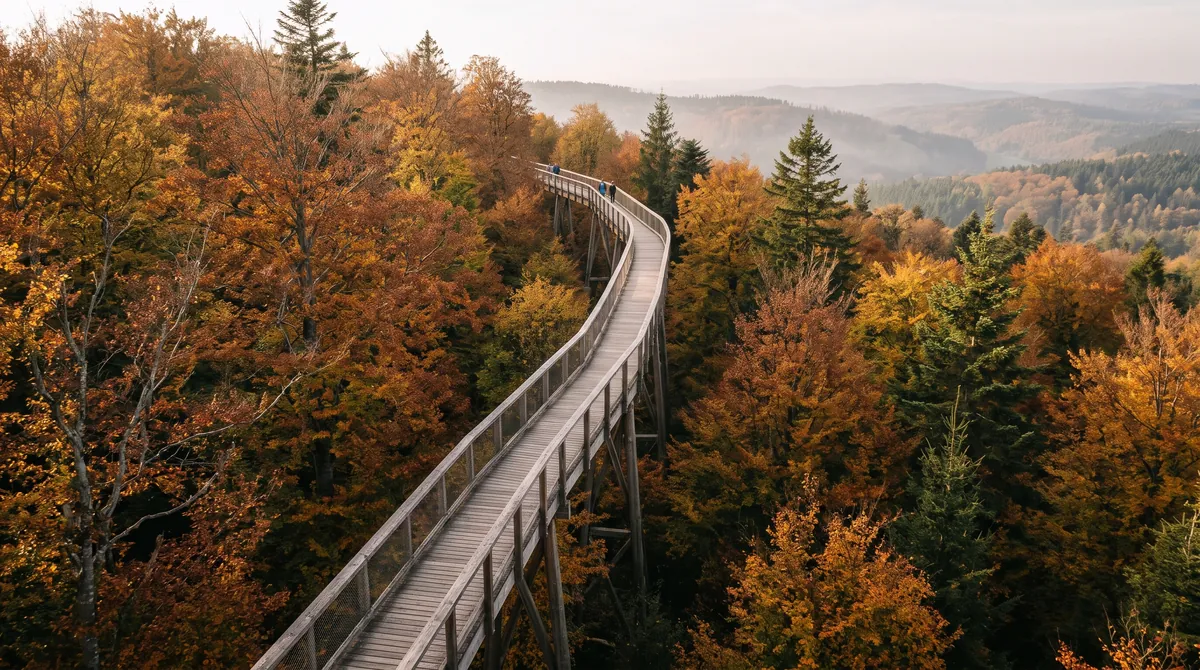
Romania’s mountain trails are waymarked with coloured symbols painted on trees and rocks, and local guides know which routes suit the season and your pace. Late spring to autumn is the time to go: in May and June the meadows flower and the beech leaves are at their freshest, summer belongs to the shepherds and the high plateau, and in October the beech forests turn copper and gold. Mountain weather can change quickly, so check the forecast each morning and carry a waterproof layer.
Words in this article
- Stână
- A Romanian mountain sheepfold where shepherds stay with their flocks in summer and make cheese.
- Caș
- A fresh, mild white cheese, usually made from sheep’s milk.
- Brânză de burduf
- A salty kneaded sheep’s cheese, traditionally packed into fir bark or a sheep’s skin.
- Babele
- Romanian for “the old women”, rock formations on the Bucegi plateau shaped by wind and rain.
- Dianthus callizonus
- A small pink carnation that grows only on the rocks of Piatra Craiului.
Questions readers ask
How do you get from Bucharest to Brașov?
Trains run from Bucharest to Brașov in roughly two and a half to three hours, climbing through the Prahova valley past Sinaia and Bușteni, both good stops for the Bucegi. Brașov is about 166 kilometres north of the capital. From Brașov, buses and trains continue to Zărnești, the main gateway to Piatra Craiului. Check current timetables before you travel.
When is the best time to see the beech forests?
Each season has its own character. Late spring brings fresh green leaves and flowering meadows, summer offers cool shade and the shepherds’ season on the high pastures, and October turns the beech forests copper and gold. Late spring to autumn is the best window for walking. Check the mountain forecast each morning, as conditions on the ridges can change quickly.
Is it worth walking with a local guide?
Yes, especially for a day in the old forests. A local guide knows which routes suit the season and your pace, can read animal tracks and point out the oldest trees, and can arrange evening wildlife watching from hides. Marked trails with coloured waymarks also make shorter walks easy to follow on your own.