
Restful Switzerland: lakes, slow trains and thermal villages
Paddle steamers, car-free villages, panoramic trains and warm pools below the cliffs of Leukerbad: how to plan a calm Swiss week with few changes and plenty of time.
Switzerland has drawn travellers in search of quiet for well over a century. Its lakes, its car-free mountain villages and its unhurried scenic trains still offer some of the calmest travel in Europe. The secret is to plan a week the Swiss way: few changes, good connections and plenty of time to look out of the window.
A long tradition of quiet travel
In the 19th century, travellers came to the Alps and the Swiss lakes for clear air, long walks and the views. In 1863 Thomas Cook led his first conducted tour of Switzerland, and grand hotels with lake terraces and mountain views rose in towns such as Lucerne and Interlaken.
The appeal has hardly changed. The lakes still mirror the mountains, steamers still cross them on summer timetables, and railways reach places that cars cannot. What has changed is how easy it all is: one pass for most journeys, punctual connections and the option of sending your luggage on ahead.
Lake towns: Lucerne, Thun and Brienz, and Lavaux
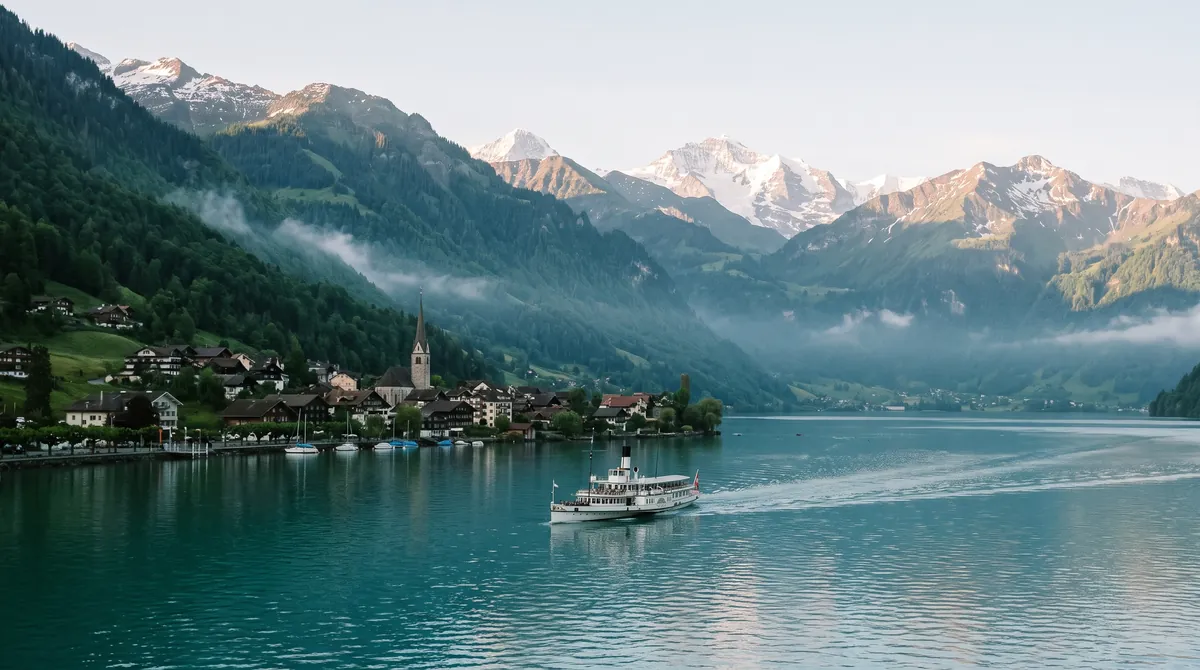
Lucerne sits where the Reuss leaves Lake Lucerne, and its covered wooden Chapel Bridge has long been a symbol of the city. The lake itself is the real draw. Historic paddle steamers sail its long arms between steep, wooded shores, and an hour on deck with the mountains sliding past is one of the most restful things you can do in the country.
In the Bernese Oberland, the lakes of Thun and Brienz lie on either side of Interlaken. Lake Thun is wide and open, with castles and villages along its shores, while Lake Brienz is narrower, turquoise and framed by steep slopes and waterfalls. Each has a historic in summer, and the boats connect neatly with the trains.
On Lake Geneva, east of Lausanne, the vineyard terraces of Lavaux climb steeply from the shore. Monasteries began terracing these slopes in the Middle Ages, and since 2007 Lavaux has been a UNESCO World Heritage Site. Footpaths link the wine villages above the water, and on clear days the view reaches across the lake to the mountains on the French side.
Car-free villages in the mountains
Some of the most peaceful nights in Switzerland are spent in villages without cars. Zermatt, at the foot of the Matterhorn, is reached by train and is car-free, with small electric vehicles carrying luggage through its lanes.
In the Lauterbrunnen valley, Wengen and Mürren look at each other across the valley floor. A climbs from Lauterbrunnen to Wengen, while Mürren, on a sunny terrace at about 1,640 metres, is reached by a combination of cable car and mountain railway from Lauterbrunnen or by cable car from Stechelberg. Both are car-free, and in the evening the only sounds are cowbells, waterfalls and the last train.
In the evening the only sounds are cowbells, waterfalls and the last train.
Slow trains across the Alps
The Glacier Express links Zermatt and St. Moritz in around eight hours, crossing 291 bridges, passing through 91 tunnels and climbing to 2,033 metres at the Oberalp Pass. Its panoramic carriages turn the journey into a day of rest: you sit, you look, and the Alps pass by at an unhurried pace.
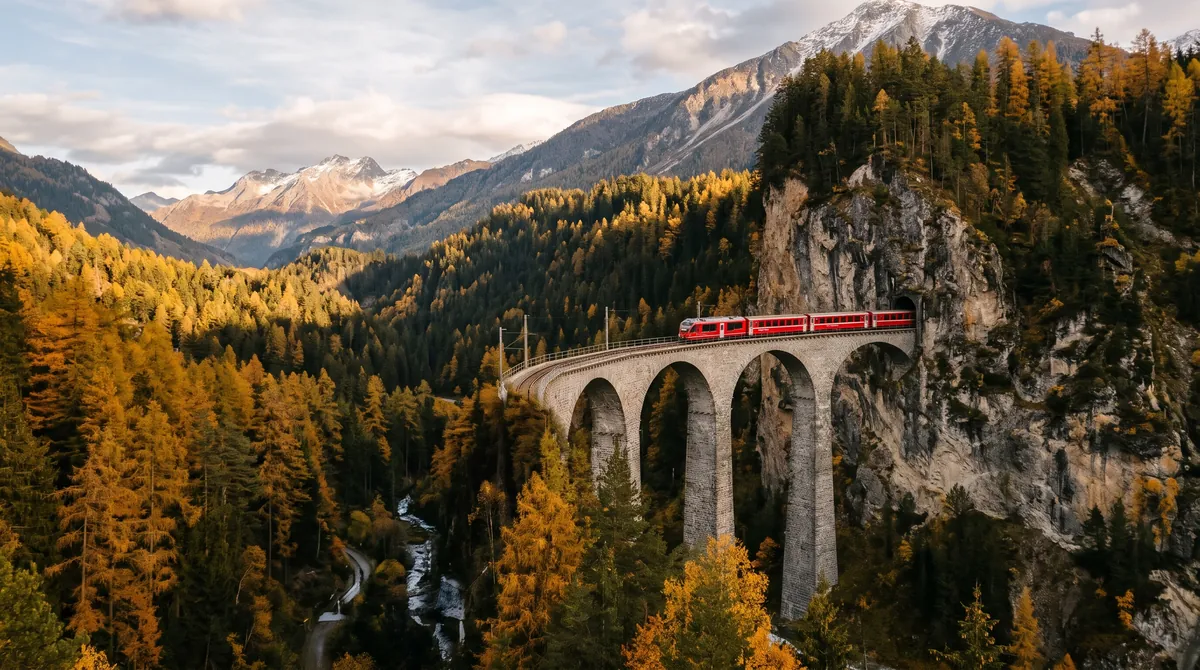
In Graubünden, the Rhaetian Railway on the Albula and Bernina lines has been a UNESCO World Heritage Site since 2008. The Albula line, opened in 1904, curls through spiral tunnels and over viaducts such as the Landwasser Viaduct, while the Bernina line crosses the high Bernina Pass and descends to Tirano in Italy. Seats on the panoramic trains are popular, so reserve ahead in summer, or simply ride the regular regional trains on the same tracks.
Leukerbad: warm water below the cliffs
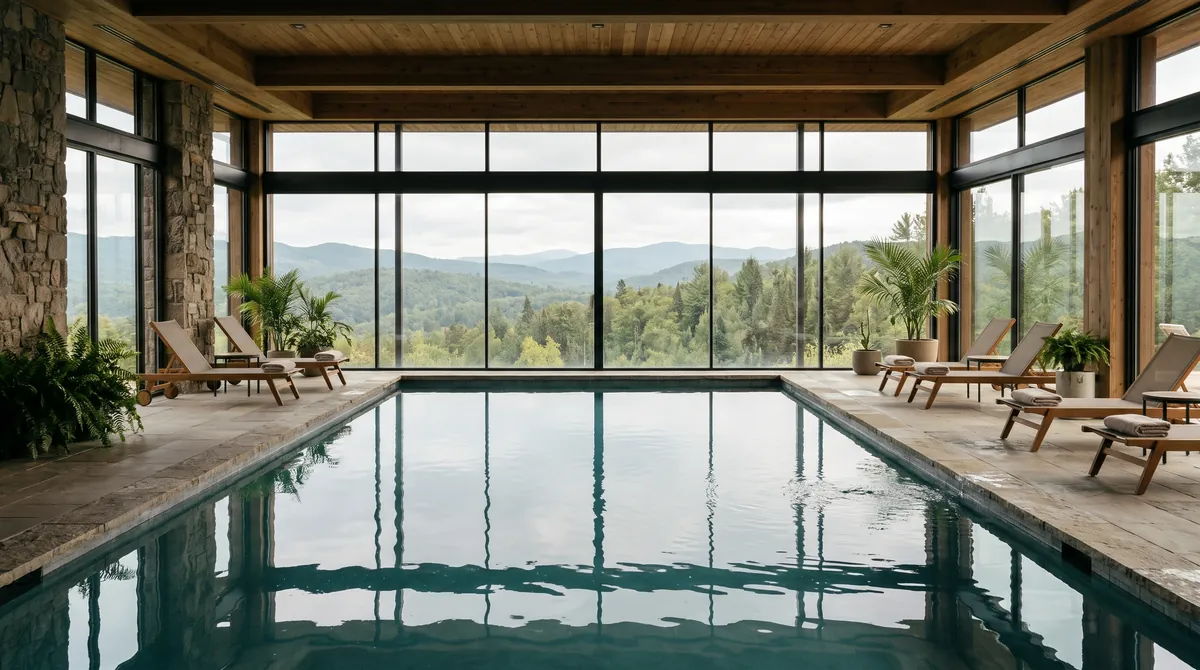
High in a side valley of the , at about 1,400 metres, Leukerbad has built its life around its hot springs. Around 3.9 million litres of thermal water flow from them each day, at up to 51 °C, and people have bathed here since Roman times. Mark Twain was among the village’s 19th century visitors.
The village’s public thermal baths have open-air pools where you float in warm water while the great rock walls of the Gemmi rise above the rooftops. A cable car climbs to the Gemmi Pass at more than 2,300 metres for a high walk before the evening bath. If a thermal programme includes medical elements, such as treatments or consultations, talk to your own doctor first. For most visitors, the pleasure lies simply in the warmth, the mountain air and the view.
Planning a restful week
The key to a restful Swiss week is to change hotels as rarely as possible. Choose one lake base and one mountain base, and let the travel day between them become part of the holiday rather than an interruption.
- Spend three nights by a lake, in Lucerne, by Lake Thun or on the Lavaux shore, with a boat trip and a gentle walk each day.
- Send your luggage ahead and travel on a scenic line to the mountains with only a day bag.
- Spend three or four nights in a car-free village or in Leukerbad, with short walks and long evenings.
- Return by a different route, perhaps along another lake, so the journey home brings something new.
For visitors who live outside Switzerland, the covers trains, buses and boats on most of the network, with reductions on many mountain railways. Swiss railways also offer between selected stations and from door to door, so your suitcase can travel separately while you enjoy the view.
Late spring and early autumn are especially calm, with fewer visitors and soft light on the lakes. Summer brings the full steamer timetables and open mountain paths, while winter turns the car-free villages and the warm pools of Leukerbad into snowy retreats. Some boats and high mountain lines run only in summer, so check current timetables.
Words in this article
- Rack railway
- A mountain railway with a toothed rail between the tracks that lets trains climb steep gradients.
- Paddle steamer
- A ship driven by steam-powered paddle wheels, still sailing on several Swiss lakes in summer.
- Valais
- The canton in south-west Switzerland that is home to Zermatt and Leukerbad.
- Swiss Travel Pass
- A pass for visitors living outside Switzerland that covers trains, buses and boats on most of the network.
- Luggage forwarding
- A rail service that sends your suitcase between stations or addresses separately from you.
Questions readers ask
Is the Glacier Express a good choice for a restful trip?
Many travellers love it precisely because it is slow. Over around eight hours between Zermatt and St. Moritz, you simply sit, eat and watch the mountains, bridges and gorges pass by. Reserve seats ahead in summer. If a full day on board feels long, ride one section and use regular regional trains for the rest of the route.
Do you need a car for a restful week in Switzerland?
No. Trains, buses, boats and cable cars reach almost every lake town and mountain village, and some of the most peaceful villages, such as Zermatt, Wengen and Mürren, are car-free. Luggage forwarding lets you travel light between your bases, and for visitors living outside Switzerland, the Swiss Travel Pass keeps planning simple.
Is Leukerbad a good place for a relaxing break?
Yes. The village’s public thermal baths have indoor and open-air pools fed by warm springs, with the cliffs of the Gemmi rising above. Many visitors combine a morning walk with an afternoon or evening bath. If a programme includes medical treatments, talk to your own doctor first, and check current opening times before you go.