
Slovenia on foot: lakes Bled and Bohinj and the Julian Alps
Two Alpine lakes, a gorge of wooden walkways, an emerald river and a green capital: four days of easy walking in north-west Slovenia, by train and bus.
North-west Slovenia is made for walking at an easy pace. Within a short distance you find two very different Alpine lakes, a gorge laced with wooden walkways, an emerald river and a small capital whose old centre belongs to pedestrians. Four days, two lake bases and daily walks of 8 to 15 kilometres are enough to enjoy it properly.
Triglav National Park and the Julian Alps
Triglav National Park is Slovenia’s only national park. Protection of the area began in 1924, and the park took its present form in 1981. Today it covers about 880 square kilometres, around four percent of the country, and takes its name from Triglav, at 2,864 metres the highest mountain of the and of Slovenia.
You do not need to climb Triglav to enjoy the park. Its valleys, lakes and forest paths offer some of the finest gentle walking in the Alps, and the pale limestone peaks are rarely out of view. The park takes in Lake Bohinj, the Triglav Lakes Valley and the headwaters of the Soča, so a few days here show it from several sides.
Lake Bohinj: the quiet one
Lake Bohinj, inside the national park, is the largest permanent lake in Slovenia, a little over 4 kilometres long and enclosed by steep, wooded mountain slopes. Paths follow much of its shoreline, so you can walk as far as you like, stop for a swim on a warm day and turn back whenever you choose.
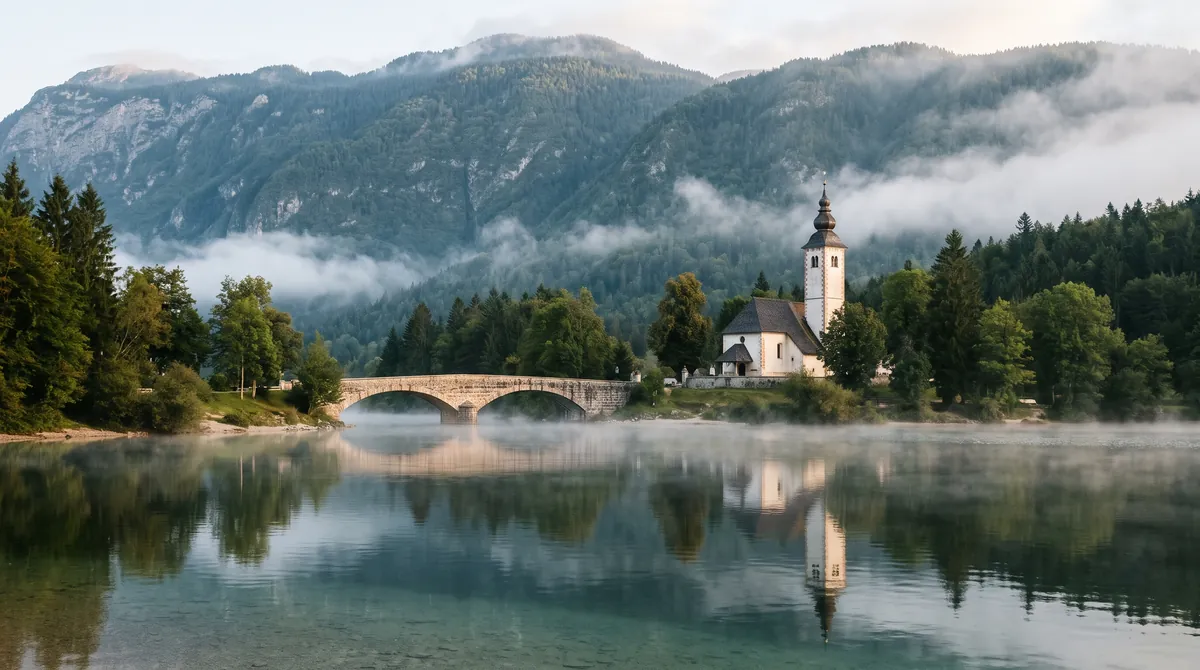
At the western end, a stepped path climbs for about 15 minutes to the Savica waterfall, which plunges 78 metres down a rock face. Its stream flows on into the lake. Bohinj has a slower rhythm than Bled, and in the evening the water turns still and silver under the mountains.
In the evening the water turns still and silver under the mountains.
Lake Bled: island, castle and cream cake
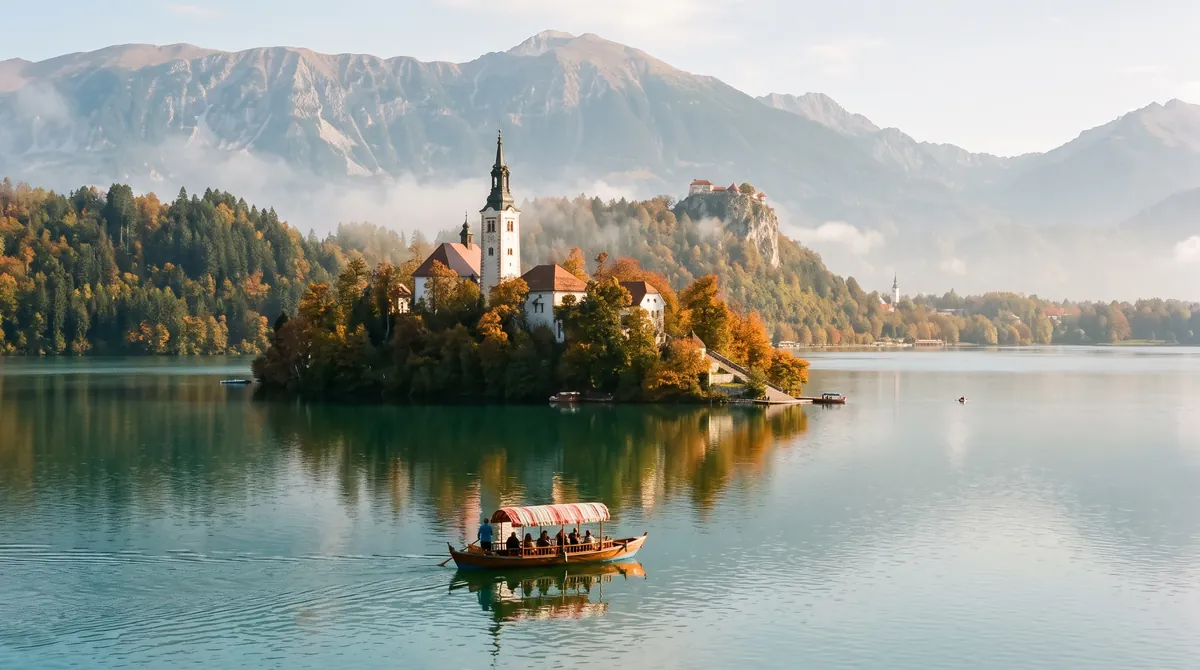
Lake Bled is smaller, about 2 kilometres long, and a level path follows its whole shore. At an easy pace the loop takes a little over an hour, longer if you stop at every bench. On the island in the middle stands the Church of the Assumption of Mary, reached by 99 stone steps from the landing stage.
The traditional way across is by , a flat-bottomed wooden boat with a colourful awning, rowed by a boatman standing at the stern. In the 18th century the right to ferry pilgrims to the island was granted to a group of local families, and many of today’s oarsmen descend from them. Above the north shore, Bled Castle crowns a cliff and was first mentioned more than a thousand years ago.
Bled’s famous sweet is the , a square of vanilla custard and cream between layers of pastry, made to a recipe from 1953. A slice by the water is a fine reward after the lakeside loop.
Vintgar Gorge and the Soča valley
About 4 kilometres from Bled, the Vintgar Gorge has welcomed visitors since 1893. Wooden walkways and bridges follow the Radovna river for 1.6 kilometres through a narrow ravine of rock walls, rapids and clear pools, ending at the 13 metre Šum waterfall. The path is one way, and the gorge is open from April to October. Book your entry online and check current times.
On the other side of the mountains, the Soča rises in the Trenta valley and flows past Bovec and Kobarid towards Italy, famous for its emerald colour. The , the oldest trail in the national park, follows the young river for about 20 kilometres from its source, past gorges, footbridges and pools of astonishing clarity. It is easy to walk in sections, and a day in the valley makes a lovely change of scene from the lakes.
Ljubljana, getting around and planning four days
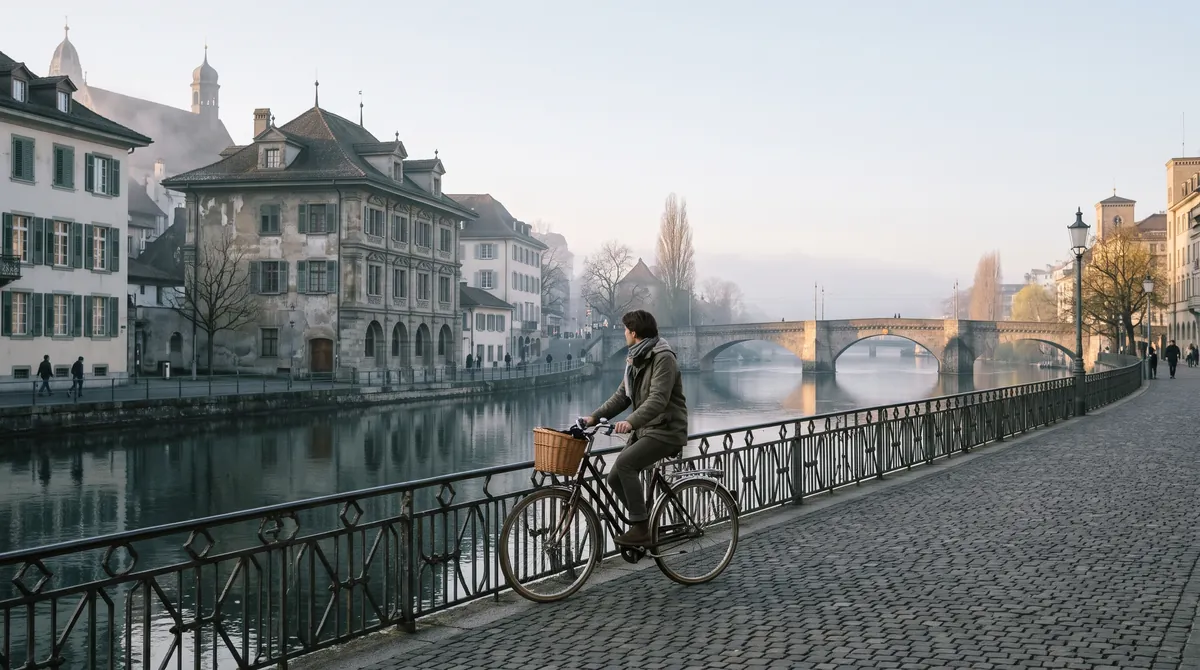
Ljubljana is a calm, green base at the start or end of the trip. Cars have long been absent from the centre, so you can stroll along the river and across its bridges, several of them shaped by the architect Jože Plečnik, whose works in the city joined the UNESCO World Heritage list in 2021. The city was European Green Capital in 2016, and a funicular climbs to the castle above the old town.
Trains from Ljubljana run to Lesce-Bled, about 4 kilometres from the lake, with local buses for the last stretch, and regular buses link Ljubljana with Bled and Bohinj. A second station, Bled Jezero, lies above the western shore of Lake Bled on the scenic Bohinj Railway, which continues to Bohinjska Bistrica in the Bohinj valley.
- Day one: a slow walk along the river in Ljubljana and up to the castle, then the train or bus to Bled.
- Day two: the loop around Lake Bled in the morning, a pletna to the island and an afternoon walk through the Vintgar Gorge.
- Day three: move on to Bohinj, walk along the lakeshore and climb the steps to the Savica waterfall.
- Day four: a long lakeside walk at Bohinj before the return to Ljubljana, or, with an extra day, a trip to the Soča valley.
Between walks, try mountain cheese from the high pastures, a bowl of hearty soup and a glass of Slovenian wine. Late spring to early autumn is the season for walking, and June and September are usually quieter than high summer, with long, soft evenings by the lakes.
Words in this article
- Julian Alps
- The mountain range of north-west Slovenia and north-east Italy, crowned by Triglav.
- Pletna
- A traditional flat-bottomed wooden boat on Lake Bled, rowed by a standing boatman.
- Kremšnita
- Bled’s cream cake: vanilla custard and cream between layers of pastry.
- Soča Trail
- A walking trail of about 20 kilometres that follows the Soča from its source through Triglav National Park.
- Ljubljanica
- The river that winds through the centre of Ljubljana.
Questions readers ask
Do you need hiking experience for these walks?
No. The loop around Lake Bled is level, the paths along Lake Bohinj are gentle, and the walkways of the Vintgar Gorge are well built. The steps up to the Savica waterfall and some sections of the Soča Trail are steeper, but they suit anyone used to walking. Comfortable shoes, a light rain layer and water are all you need.
How do you travel between Ljubljana, Bled and Bohinj without a car?
Trains run from Ljubljana to Lesce-Bled, about 4 kilometres from the lake, with local buses for the last stretch. Regular buses also link Ljubljana with Bled and Bohinj. The scenic Bohinj Railway stops at Bled Jezero above the lake and continues to Bohinjska Bistrica. Check current timetables, especially at weekends and outside the summer season.
When is the best time for walking in the Julian Alps?
Late spring to early autumn is the walking season. June and September are usually quieter than July and August, with comfortable temperatures and long evenings by the lakes. The Vintgar Gorge is open from April to October. In autumn the beech forests turn gold, a lovely time for gentle walks around both lakes.