Friluftsliv: a Scandinavian retreat by the lake
The Nordic idea of open-air life makes a gentle retreat: a cabin by the water, a morning swim, berries in the forest and long evenings in a canoe.
There is no timetable on a retreat and no treatment menu. The idea asks only that you spend your days outdoors: a swim before breakfast, a walk under the pines, lunch on a jetty and a canoe on the lake when the evening light turns the water silver. In Sweden, Finland and Norway, this simple way of living is less a holiday style than an everyday habit, and it travels well.
A word for open-air life
Friluftsliv translates literally as open-air life. The Norwegian dramatist Henrik Ibsen probably used the word for the first time in his 1859 poem På vidderne, On the Heights. Today Norwegians and Swedes use it for something they recognise at once: time spent outside, in all weathers, for its own sake.
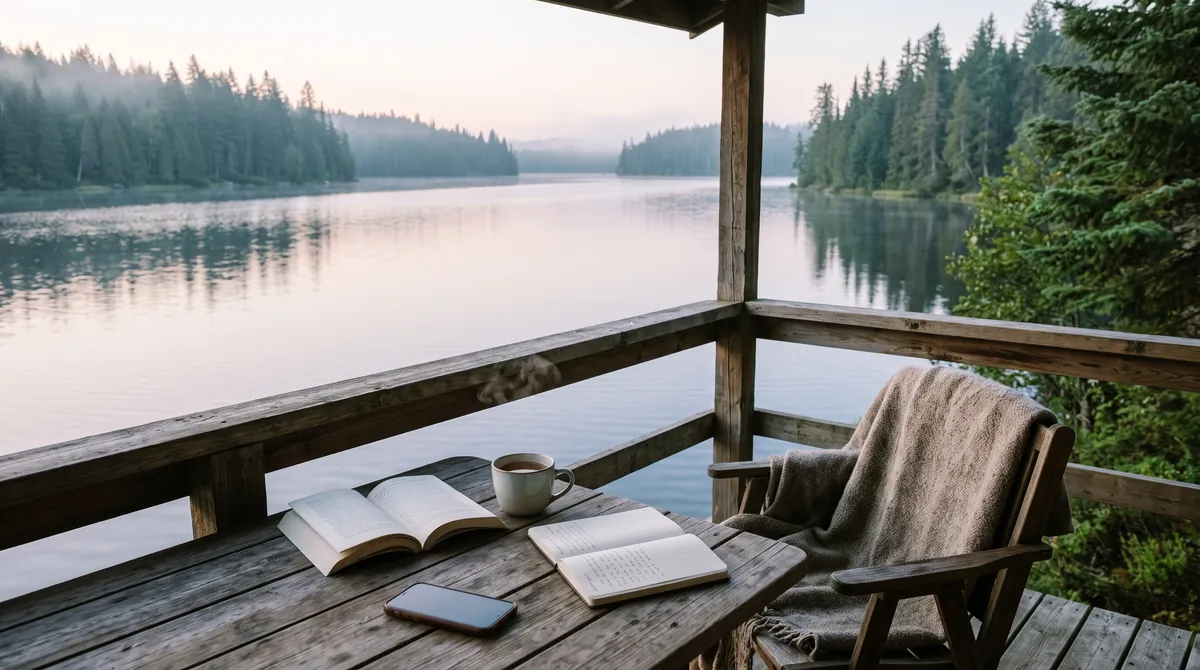
It is not about summits or personal bests. A friluftsliv day might mean a short walk to a lookout, an hour picking blueberries or simply sitting by the water with a flask of coffee. The point is to be outside, unhurried, with nature as the setting rather than the challenge. Many people find that a few days lived this way feel longer, and calmer, than a busy week.
The point is to be outside, unhurried, with nature as the setting rather than the challenge.
The right of public access, and how to honour it
What makes a Nordic retreat feel so open is the right of public access. In Sweden it is called , in Norway allemannsretten, and in Finland , everyone’s right, a term that has replaced the older jokamiehenoikeus. Broadly, it lets you walk through forests and meadows, swim in lakes and pick wild berries and mushrooms on uncultivated land, even when it is privately owned.
The Swedish summary is simple: do not disturb, do not destroy. Keep a respectful distance from houses and gardens, close gates behind you, leave birds and animals in peace and take all your rubbish home. Fires follow their own rules in each country.
- Norway: open fires in or near forests are generally not allowed from 15 April to 15 September.
- Sweden: fires can be banned locally in dry spells, so check current notices first.
- Finland: an open fire usually needs the landowner’s permission.
- Everywhere: where fires are allowed, use an existing fire place and leave it as you found it.
Three lake regions and a fjord
In western Sweden, Värmland is a province of forests and smaller lakes beside Vänern, Sweden’s largest lake. The writer Selma Lagerlöf was born at Mårbacka near Sunne, and her stories carry the moods of this landscape. A cabin on a quiet forest lake, with a rowing boat at the jetty, is the classic Swedish stay.
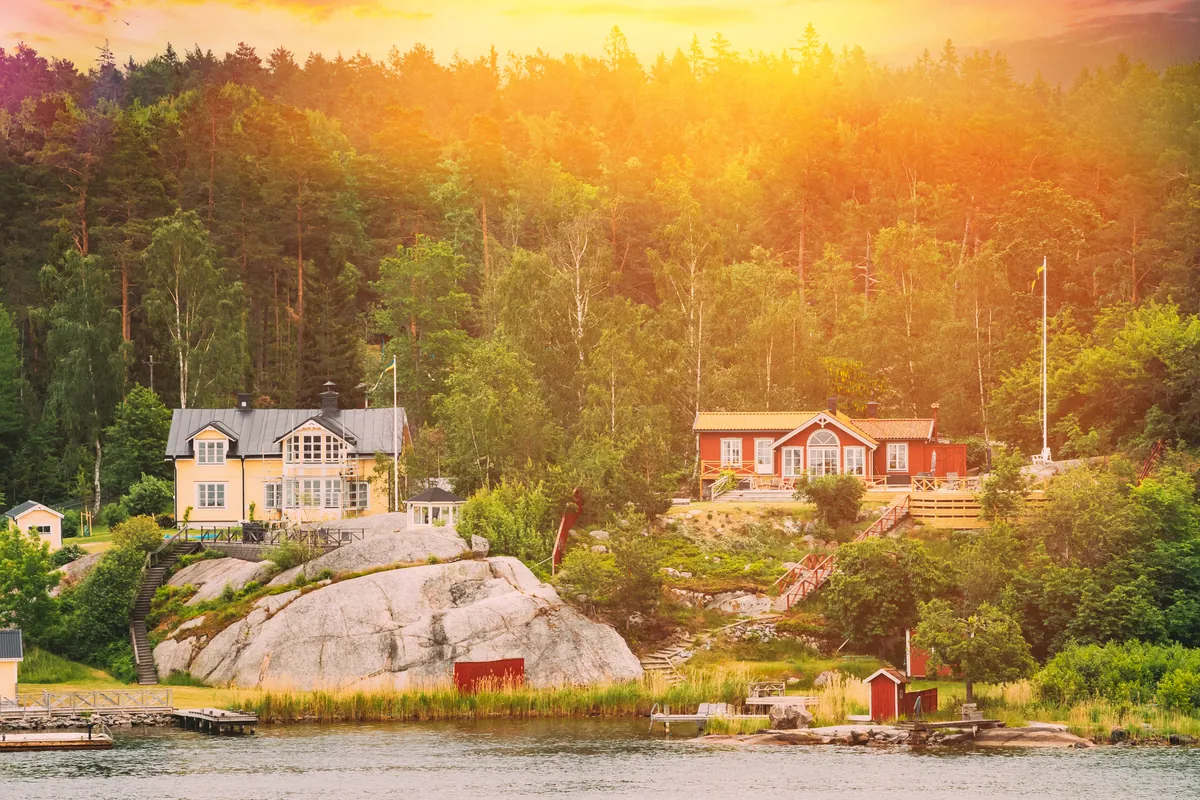
Further north, Dalarna gathers around Lake Siljan, which lies along the edge of a vast ring left by a meteorite impact some 377 million years ago. Mora and Leksand stand on its shores, and the Dala Line brings trains up from Uppsala, with connections from Stockholm. Red wooden cottages by the water complete the picture of a Swedish summer.
In eastern Finland, the Lakeland spreads around Saimaa, the country’s largest lake, a maze of islands, channels and wooded shores. In Linnansaari National Park you might glimpse the Saimaa ringed seal, which lives nowhere else in the world. Intercity trains from Helsinki stop at lakeside Mikkeli, and Savonlinna, with its island castle, is also reached by rail.
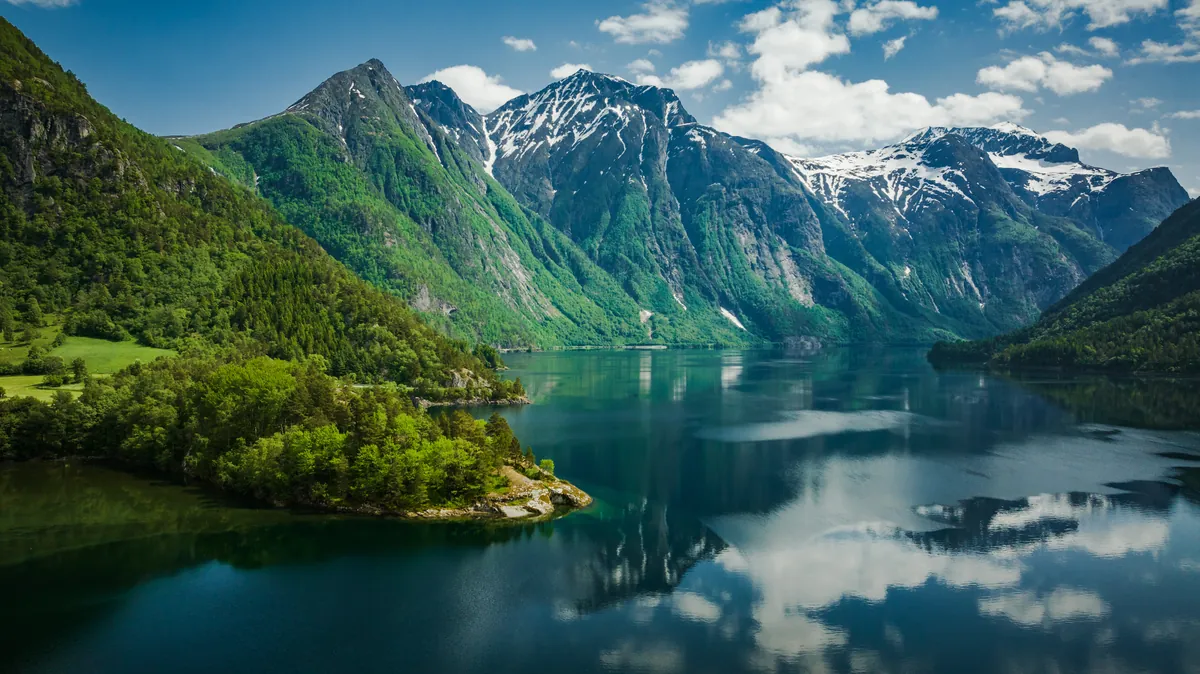
Western Norway swaps lakes for fjords. Along the Hardangerfjord, about 180 kilometres long and known as the fruit orchard of Norway, small cabins look out over still water and orchards. The Bergen Line crosses the mountains from Oslo, and at Myrdal the Flåm Line drops to the Aurlandsfjord, an arm of the Sognefjord.
A day by the water
The rhythm of a friluftsliv retreat is gentle and repetitive, and that is its appeal. Start with a swim from the jetty or a short walk before breakfast, when the lake is often perfectly still and the only sound is a bird somewhere across the water.
In late summer the forest floor turns blue and red with berries: blueberries first, then lingonberries as summer turns to autumn. An hour with a small pail is a quiet meditation of its own, and the harvest ends up on breakfast porridge or in a pancake. Lunch is eaten outside whenever the weather allows: bread, cheese, smoked fish, new potatoes with dill.
In the evening, take a canoe out as the low sun lights the shore, then come back to a simple dinner cooked on a small stove and a long, slow dusk. Many lakeside cabins, especially in Finland, have their own small wood-heated sauna by the shore, and a swim between rounds is the classic end to the day; our guide to sauna customs covers the rituals.
Light, colour and quiet: the seasons
June brings the light nights, when the sun sets late, rises early and the sky stays pale through the night. Midsummer is the high point: Swedes dance around a maypole on Midsummer Eve, a Friday in late June, Norwegians light bonfires on 23 June, and Finns celebrate with bonfires by the lakes.
Autumn is quieter and, for many, even lovelier. Birches turn yellow, the air is clear and the lakes lie calm under the first cool mornings. Winter brings snow, frozen lakes and a deep stillness: the days are short, but the low light is beautiful, and a cabin with a wood stove becomes a place for reading, walking on snowy tracks and early nights.
Practical notes for a slow trip
Much of this is possible without a car. Trains run from Stockholm towards Dalarna and from Helsinki into the Lakeland, and the Bergen Line links Oslo with the fjords. From the nearest station, a local bus, a taxi or a bike usually covers the last stretch, and once you arrive, a canoe is often all the transport you need.
Book early for July, when many Scandinavians take their own summer holidays and the most popular lakeside cabins fill up. June and August are often easier, and September can be wonderfully quiet. Pack for changeable weather:
- Layers, including a warm jumper for the evenings
- A rain jacket and shoes that can get wet
- Swimwear and a quick-drying towel
- Insect repellent for summer evenings by the water
- A small bag to carry your rubbish home
Words in this article
- Friluftsliv
- Norwegian and Swedish for open-air life: time spent outdoors in nature, for its own sake.
- Allemansrätten
- Sweden’s right of public access, letting everyone walk, swim and pick berries in nature with respect.
- Jokaisenoikeus
- Finnish for everyone’s right, the right of public access, formerly called jokamiehenoikeus.
- Juhannus
- The Finnish midsummer celebration, marked with bonfires by lakes and the sea.
Questions readers ask
What does friluftsliv mean?
Friluftsliv means open-air life. Henrik Ibsen probably used the word for the first time in an 1859 poem, and today Norwegians and Swedes use it for time spent outdoors for its own sake: walking, swimming, picking berries or simply sitting by the water. It is about being outside in all weathers, not about sport or performance.
When is the best time for a lake retreat in Scandinavia?
June brings the light nights and midsummer, July is warmest but busiest, and August combines warm water with berry picking. September is quiet, with clear air and the first autumn colours. Winter suits travellers who love snow, short days and evenings by a wood stove. Book early if you plan to travel in July.
Do you need a car for a friluftsliv retreat?
Not always. Trains run from Stockholm towards Dalarna, from Helsinki into the Finnish Lakeland and from Oslo along the Bergen Line to the fjords. From the nearest station, a local bus, taxi or bike usually covers the last stretch. Once you arrive, a cabin with a canoe or rowing boat makes a car almost unnecessary.