
Sleeping well on a short trip: the first night, light and noise
Three nights away pass quickly. How to choose a quiet room, manage light and noise, keep a gentle rhythm and enjoy late Spanish dinners while still resting well.
On a short trip, every night counts. With only three of them, a restless first night can feel like a real loss, and a well slept one makes the whole city look brighter. The good news is that a handful of simple habits, most of them about light, sound and timing, help you rest well almost anywhere.
Why the first night often feels lighter
Many travellers notice that they sleep more lightly on their first night in a new place, even in a comfortable bed. Sleep researchers call this the . A common explanation is that part of us stays a little more alert in unfamiliar surroundings, ready to notice new sounds. It is a perfectly normal response to a new room, and it usually eases as the place becomes familiar.
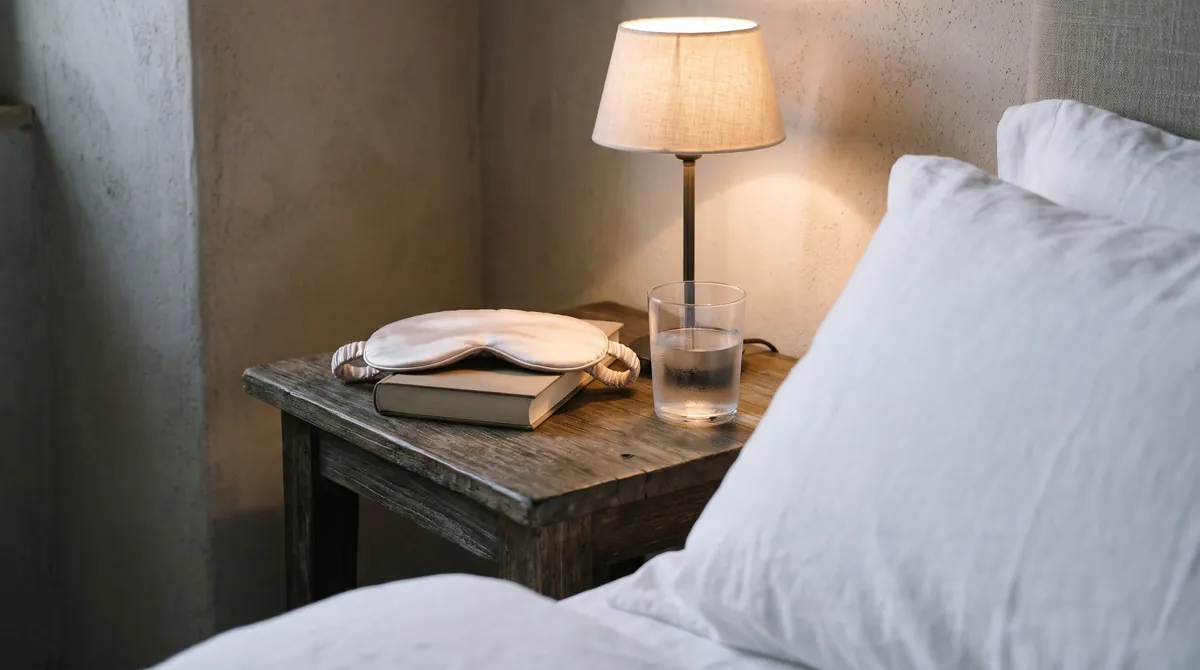
This is one reason why three nights in one place often feel more restful than three one-night stops. You can help a room feel familiar quickly: unpack properly, put a few of your own things on the bedside table and keep a small bedtime routine from home, such as reading a few pages or taking a warm shower.
Choosing and asking for a quiet room
Noise is the biggest variable in any hotel room, and it is worth a polite request when you book. Ask for a room on a higher floor, at the back of the building and away from the lift, the bar and the breakfast room. In old towns, streets that feel calm by day can be lively in the evening, so a is often the best choice.
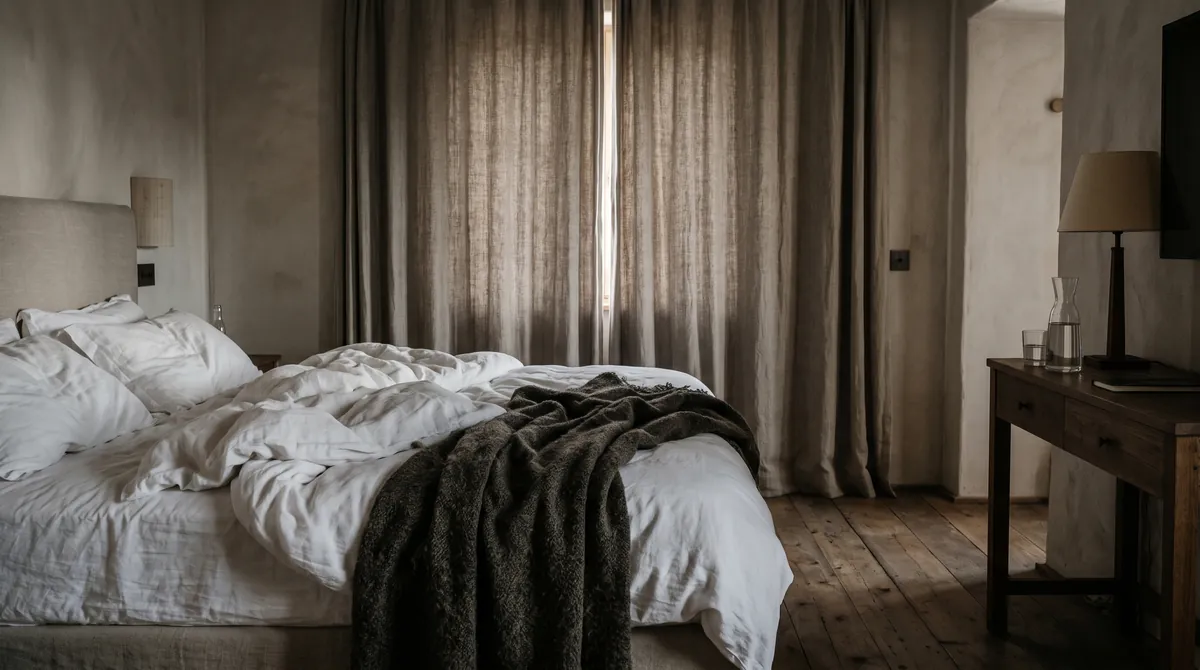
When you arrive, take a minute to check the room. Listen for a humming minibar or air conditioning, see whether the curtains close fully and find out how to switch off any small standby lights. If something bothers you, mention it at reception early in the evening, when changing rooms is still easy.
Holiday apartments follow the same logic. Look at a map before you book: a flat above a square full of terraces will hear the whole evening, while one on a side street or facing a garden is usually calmer. Guest reviews that mention quiet nights are worth more than those praising the view.
Darkness, earplugs and temperature
A dark room makes a big difference to how cosy a bedroom feels. Many hotel curtains leave a strip of light at the edges, so an eye mask is one of the most useful things you can pack. Soft foam or wax earplugs take up no space and soften the sound of traffic, early deliveries or a neighbour’s door.
Most people find a slightly cool room more comfortable for sleeping, so set the air conditioning or heating a little lower than during the day, or open the window if the street is quiet. An extra light blanket from the wardrobe is better than a stuffy room.
- An eye mask
- Earplugs, foam or wax
- A light layer for a cool room
- A small night light for finding your way without switching on the main lights
- A paper book for the last half hour of the day
- Your own pillowcase, if familiar textures help you settle
Light, rhythm and small time changes
Light quietly sets the tone of the day. Step outside in the morning, even if it is only for a coffee on a terrace, and enjoy the daylight. In the evening, dim the room, choose bedside lamps over ceiling lights and give screens a rest for the last stretch before bed.
Try to go to bed and get up at roughly the same times as at home, even on holiday. A short trip rarely needs a new rhythm, and keeping your usual one makes the return easier. Small time zone changes are simple: Portugal keeps the same time as the United Kingdom, while most of continental Europe is one hour ahead of it. For a one hour shift, simply live on local time from the first day.
If you arrive late after a long journey, resist the urge to stay in bed until noon. A slightly earlier start, a walk in the morning light and an early night are a pleasant way to settle into the trip, and the second day often feels like the real beginning of the holiday.
On a short trip, every night counts.
Late dinners, coffee and evenings in Spain
Spain runs on a later clock. Dinner usually begins around 9 or 10 pm, and dining rooms can be almost empty at 8. Rather than resisting, adapt the whole day: a later breakfast, a long lunch in the early afternoon, a quiet hour when the streets are hot and still, and a lighter dinner or a few tapas in the evening.
Afterwards comes the , the unhurried evening stroll through squares and along seafronts that is one of the loveliest Spanish customs. It is a gentle way to end the day, and you return to your room relaxed rather than rushed.
Coffee is part of the pleasure of travel, from a Lisbon to an espresso standing at an Italian bar. Many travellers simply enjoy it in the morning and early afternoon and switch to something without caffeine later in the day, such as a herbal tea or a glass of water with lemon.
A simple plan for three good nights
- Before you go, request a quiet room and pack an eye mask and earplugs.
- On the first evening, unpack fully, take a short walk and keep dinner light.
- Each morning, get outside into daylight early, ideally with breakfast.
- Each evening, dim the lights, put the phone aside and read for a while.
- On the last night, pack most of your bag before dinner so the morning stays calm.
Words in this article
- First-night effect
- The lighter sleep many people notice on their first night in an unfamiliar place.
- Courtyard room
- A room facing an inner courtyard rather than the street, usually the quieter choice.
- Paseo
- The Spanish evening stroll through squares and along seafronts.
- Bica
- The name used in Lisbon for a short, strong espresso.
Questions readers ask
Why does the first night away often feel restless?
Many people sleep more lightly on their first night in an unfamiliar room, which sleep researchers call the first-night effect. Part of us stays a little more alert to new sounds and surroundings. It is a normal response, and it usually eases as the room becomes familiar. Unpacking fully and keeping a small routine from home both help.
How do you ask for a quiet hotel room?
Add a short, friendly note to your booking asking for a quiet room on a higher floor, away from the lift, the street and the bar. A courtyard side is often ideal. When you check in, mention it again. If the room still feels noisy, ask at reception early in the evening, when another room is easier to arrange.
Should you change your bedtime for a short trip abroad?
For a trip of three nights, it is usually easiest to keep your normal rhythm and adapt only gently. Within Europe, time differences are small: Portugal keeps the same time as the United Kingdom, and most of continental Europe is one hour ahead. In Spain, shift the whole day a little later to enjoy the late dinners.